بصمة النظرة: كيف تتفق العين واليد على التوقيت سريع
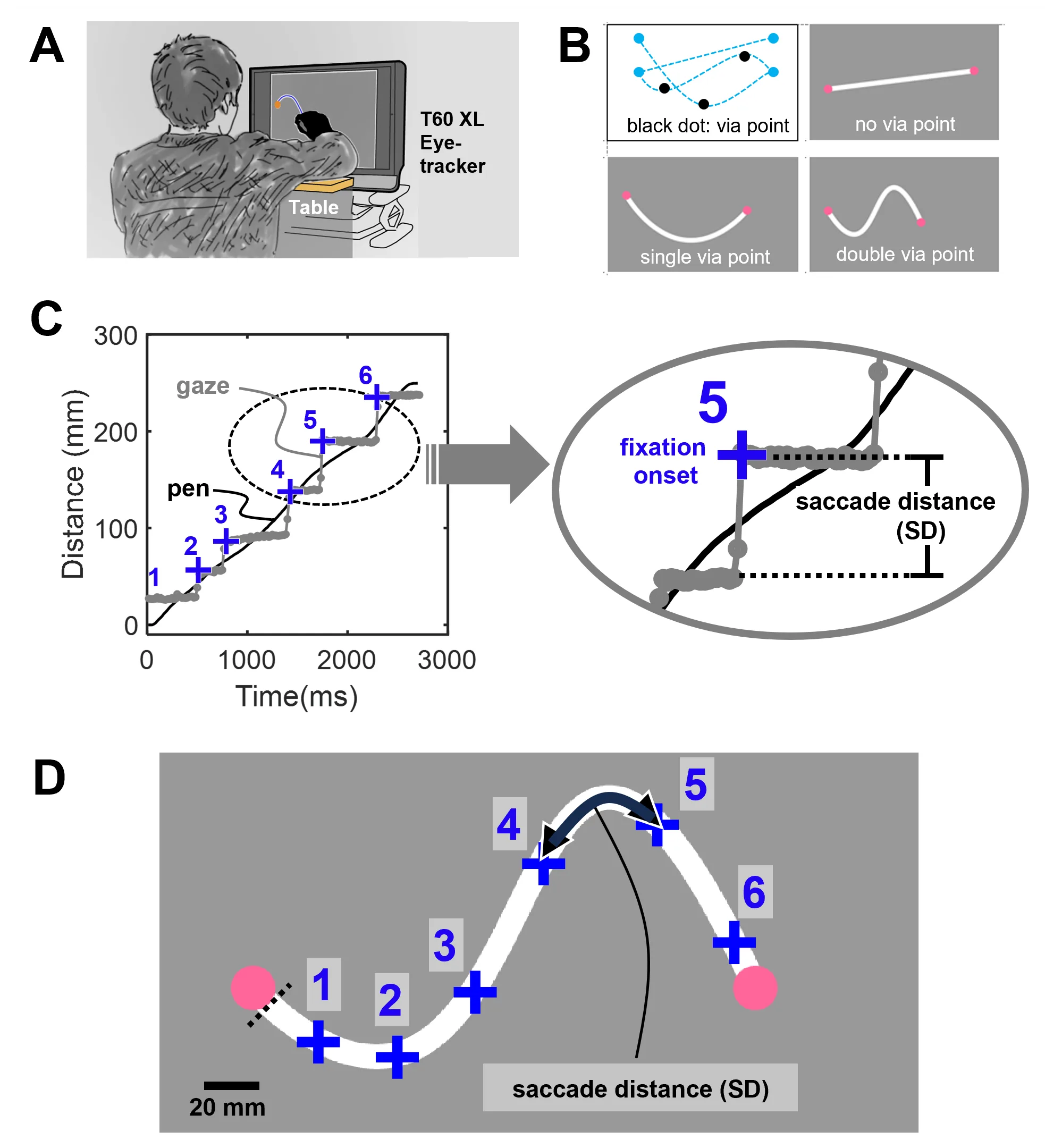
عندما ترسم اليد خطًا، تكاد النظرة دائمًا أن تسبقها — مثل كشاف يتقدم ليرى ما خلف المنعطف قبل أن يصل إليه الجيش. ولكن إلى أي مدى تتقدم النظرة؟ اتضح أن لكل شخص مسافة مختلفة، وهي لا تتغير من محاولة إلى أخرى.
في التجربة، قام خطاطون محترفون وأشخاص عاديون بتتبع محيط على الشاشة، بينما سجّلت الأجهزة حركات العين والقلم. عند البعض، تقدمت النظرة على اليد بمقدار 50 ميلي ثانية، وعند آخرين بما يصل إلى 400 ميلي ثانية. هذه النافذة الزمنية للتنبؤ، مثل منطقة زمنية شخصية، ثابتة لكل مشارك وتتزامن مع اللحظة التي تلحق فيها اليد بالنظرة. العين لا تتبع اليد فحسب، بل تسبقها إلى النقطة التي ستصل إليها اليد بالسرعة المناسبة.
هذا يعني أن استراتيجيات مختلفة تؤدي إلى الهدف نفسه: البعض يمسح النظر بعيدًا إلى الأمام، والبعض الآخر يُبقي نظره قريبًا من سن القلم، لكن كلاهما يمكن أن يعمل بشكل جيد بنفس القدر. الدماغ لا يبحث عن طريقة واحدة صحيحة، بل يختار الأكثر اقتصادية لجسم معين — هكذا يعمل مبدأ الحد الأدنى من التدخل في التحكم الحركي.
لذا فإن «بصمة النظرة» ليست علامة على المهارة، بل بصمة الجهاز العصبي: لكل شخص إيقاعه الخاص في التنبؤ، ويبقى معه كبصمة الإصبع.
الملخص الأصلي
كما كتبه المؤلفون، بالإنجليزية arXiv:2602.07816
Human eye-hand coordination relies on internal forward models that predict future states and compensate for sensory delays. During line tracing, the gaze typically leads the hand through predictive saccades, yet the extent to which this predictive window reflects expertise or intrinsic individual traits remains unclear. In this study, I examined eye-hand coordination in professional calligraphers and non-experts performing a controlled line tracing task. The temporal coupling between saccade distance (SD) and pen speed (PS) revealed substantial interpersonal variability: SD-PS peak times ranged from approximately -50 to 400 ms, forming stable, participant-specific predictive windows that were consistent across trials. These predictive windows closely matched each individual's pen catch-up time, indicating that the oculomotor system stabilizes fixation in anticipation of the hand's future velocity rather than relying on reactive pursuit. Neither the spatial indices (mean gaze-pen distance, mean saccade distance) nor the temporal index (SD-PS peak time) differed between calligraphers and non-calligraphers, and none of these predictive parameters correlated with tracing accuracy. These findings suggest that diverse predictive strategies can achieve equivalent performance, consistent with the minimum intervention principle of optimal feedback control. Together, the results indicate that predictive timing in eye-hand coordination reflects a stable, idiosyncratic Predictive Protocol shaped by individual neuromotor constraints rather than by expertise or training history.
لكل شخص فترة زمنية ثابتة يتقدم فيها النظر على اليد، تتراوح من 50 إلى 400 ميلي ثانية، وهي لا تتغير من محاولة إلى أخرى.