لماذا تصمت النجوم السريعة الدوران؟ سريع
النجم مثل الشمس يطن كالجرس: فموجات صوتية بداخله تجعل سطحه يهتز بشكل بالكاد ملحوظ. ومن خلال هذا الاهتزاز، يستدل الفلكيون، مثلما يستدل الأطباء بالنبض، على درجة حرارة النجم وكثافته وعمره. لكن تلسكوب «كيبلر» لاحظ أمرًا غريبًا: لدى العديد من النجوم التي تدور بسرعة وتغطيها البقع، لا يُسمع أي اهتزاز. وكأنها فقدت صوتها.
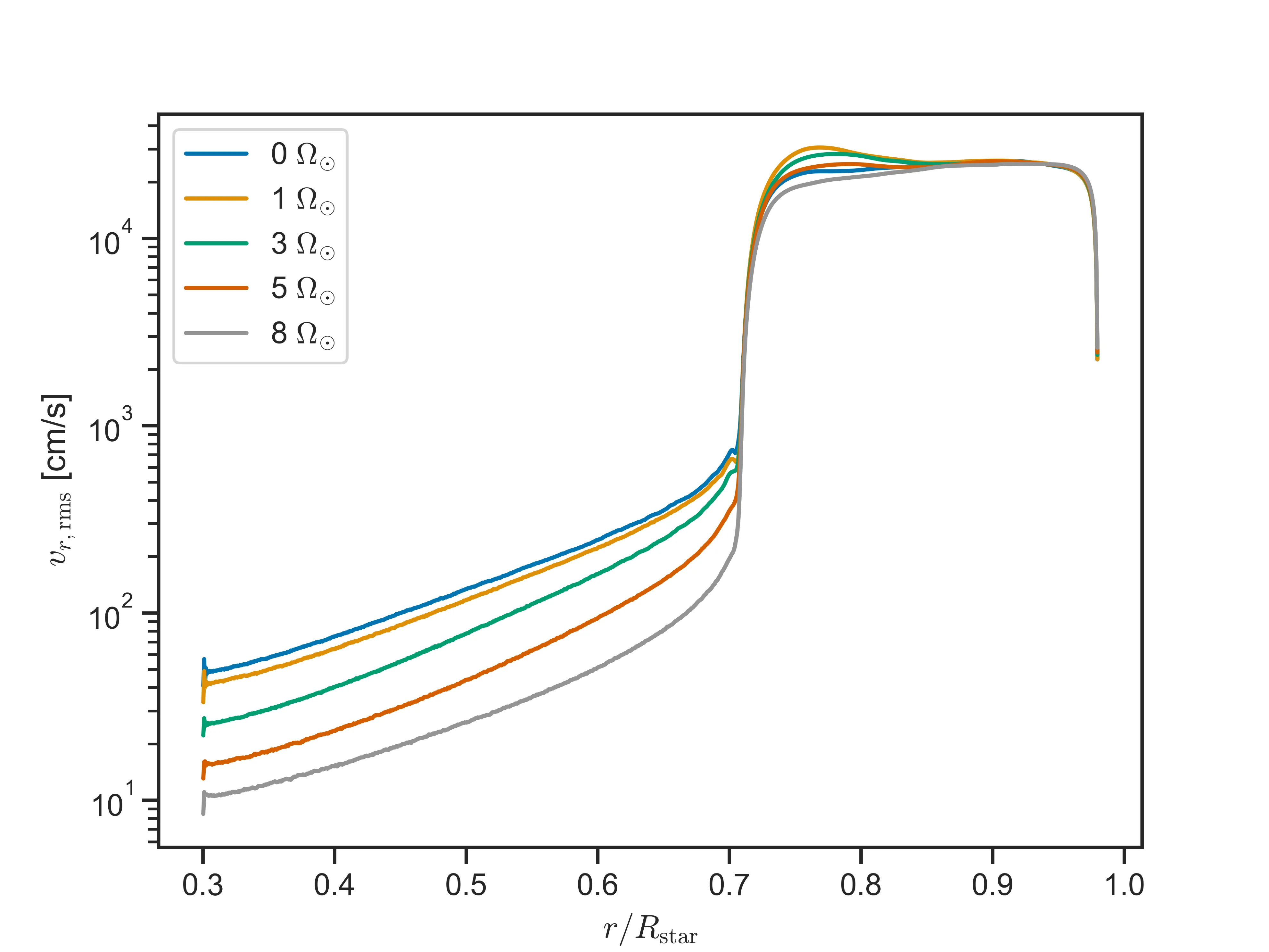
لفهم السبب، بنى العلماء نموذجًا حاسوبيًا لنجم وجعلوه يدور بسرعات متزايدة — من صفر إلى ثماني دورات، أي ما يعادل ثمانية أضعاف سرعة دوران الشمس. اتضح أن الدوران يخمد الحمل الحراري (convection) — أي خلط طبقات الغاز الساخنة والباردة، وهو ما يولد الموجات الصوتية. فتفقاعات الغاز الساخنة لم تعد قادرة على الصعود بحرية، تمامًا كما يتزاحم رواد الدوامة عندما تدور الدوامة بسرعة كبيرة.
إذن، صمت النجوم سريعة الدوران ليس مصادفة ولا عيبًا في الملاحظات. فالدوران بحد ذاته يغير الموسيقى الداخلية للنجم. وعلى الفلكيين الذين يستمعون إلى النجوم أن يأخذوا الآن في حساباتهم تأثير رقصها.
الملخص الأصلي
كما كتبه المؤلفون، بالإنجليزية arXiv:2602.15735
In solar-like stars, acoustic modes provide the main way of probing their internal structure and dynamics. Although these modes are expected to be ubiquitous in stars with convective envelopes, Kepler observations reveal that a significant fraction of solar-like stars show no detectable acoustic modes, particularly among rapidly rotating and magnetically active stars. Recent theoretical work has proposed that rotation tends to inhibit convective motions, thereby reducing the power available for stochastic excitation of low degree acoustic modes. Here, we test this prediction using fully compressible hydrodynamical simulations of a solar-like star. We perform a series of 2.5D simulations, which consider longitudinal symmetry, using the MUSIC code spanning rotation rates from 0 to 8 $$\Omega_{\odot}$$. We find a clear and systematic decline of acoustic mode amplitudes with increasing rotation rate. In the most rapidly rotating models, mode damping rates are also enhanced. The combined reduction in excitation and increase in damping with increasing rotation rate provide a physical explanation for the observed decrease in mode detectability in rapidly rotating solar-like stars. Our results demonstrate that rotation can significantly modify oscillation properties and must be accounted for when interpreting asteroseismic observations.
تدور الشمس دورة كاملة حول محورها في حوالي 27 يومًا أرضيًا، لكن خط استوائها يدور أسرع من قطبَيها — كما لو كانت الدوامة تدور بشكل غير متساوٍ.
في رواية «سولاريس» لستانيسلاف ليم، يُظهر محيط الكوكب نشاطًا غريبًا يحاول العلماء فهمه من خلال مؤشرات غير مباشرة — وهذا يشبه ما يفعله الفلكيون عندما يستمعون إلى اهتزاز النجوم ليكتشفوا ما بداخلها.