ضوء من فجوة ذرية سريع
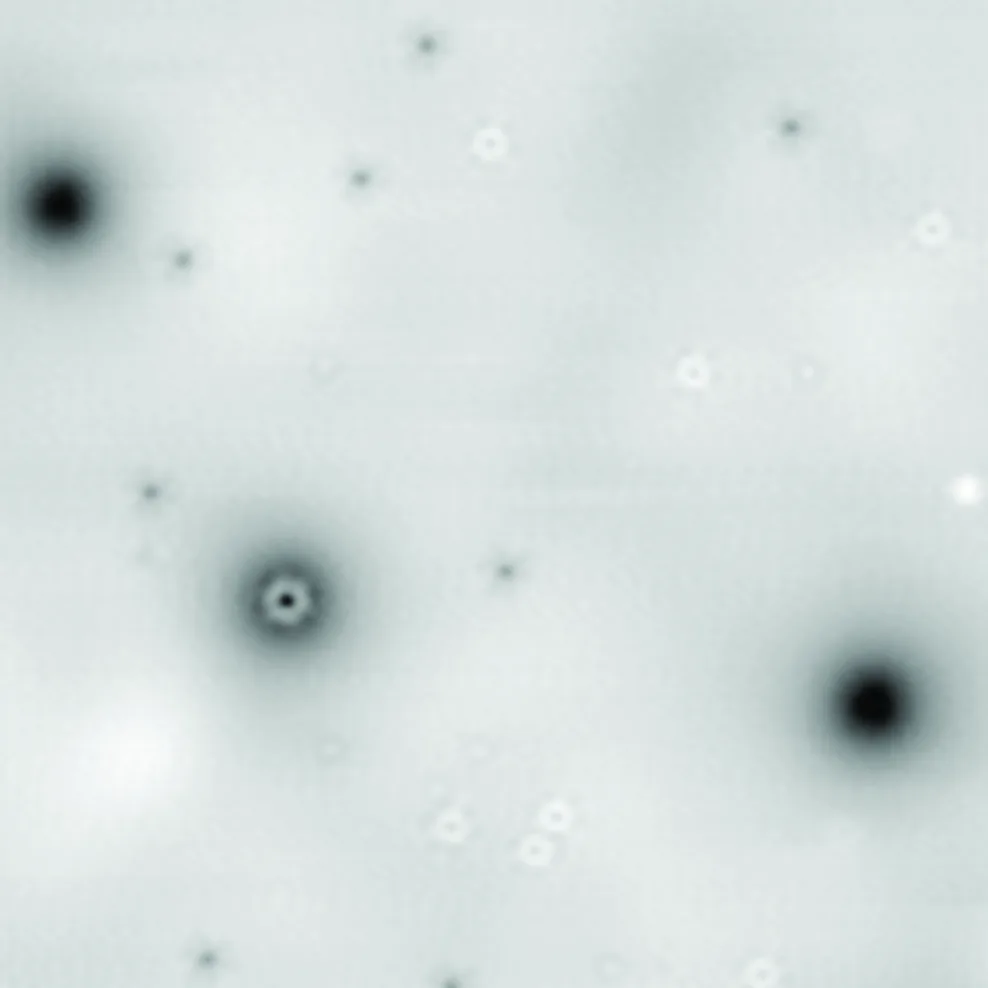
يقترب طرف مجهر المسح النفقي من سطح بلورة لدرجة يتدفق بينهما تيار كهربائي. تُحقن الإلكترونات من الإبرة في شبه موصل طبقي وتصل إلى شاغر ذري — موضع ينقصه ذرة واحدة في الشبكة البلورية. يعمل هذا الفراغ كفخ صغير للشحنة.
عندما يلتقي إلكترون وثقب في هذا الفخ، يولد فوتون واحد. يخرج الضوء إلى الخارج ويمكن التقاطه بكاشف. صورة الانبعاث تكرر شكل السحابة الإلكترونية للشاغر — كبصمة إصبع تُظهر أي عيب نتعامل معه. دقة الطريقة أقل من نانومتر، أي أدق من سلسلة من عشر ذرات.
تجمع هذه التجربة بين التحكم الكهربائي والقراءة الضوئية على مقياس ذرة واحدة. هذه الواجهة ضرورية للحواسيب الكمومية وخطوط الاتصال الآمنة، حيث تُنقل المعلومات بجسيمات ضوء مفردة. بدلًا من العدسات والليزرات الضخمة — إبرة رفيعة للغاية ونبضة كهربائية.
الملخص الأصلي
كما كتبه المؤلفون، بالإنجليزية arXiv:2602.23931
Atomically confined spins are emerging as active components in quantum optoelectronic devices such as quantum bits and sensors. However, interrogating single spins at atomic length-scales remains a sizeable challenge, limited by diffraction in conventional optics. Here we show that the highly-local excitation provided by injecting energetic charge carriers from the atomically sharp probe of a scanning tunneling microscope can trigger single-photon emission from individual atomic vacancy centers in a layered semiconductor. With an effective spatial resolution of <1 nm, we show that the captured light closely mirrors the orbital symmetry of the bound-state wavefunction of the vacancy center while photon correlation measurements confirm single-photon emission, as reflected in clear photon anti-bunching signatures. Our results constitute an important step toward the realization of an electrically addressable single-atom quantum light source and solid-state spinphoton interface, addressed at the atomic-scale.
التيار المار عبر إبرة المجهر صغير جدًا لدرجة أن عدد الإلكترونات المارة في الثانية يعادل تقريبًا عدد حبات الرمل التي تتسع في كشتبان.