ضوء من جزيء واحد سريع
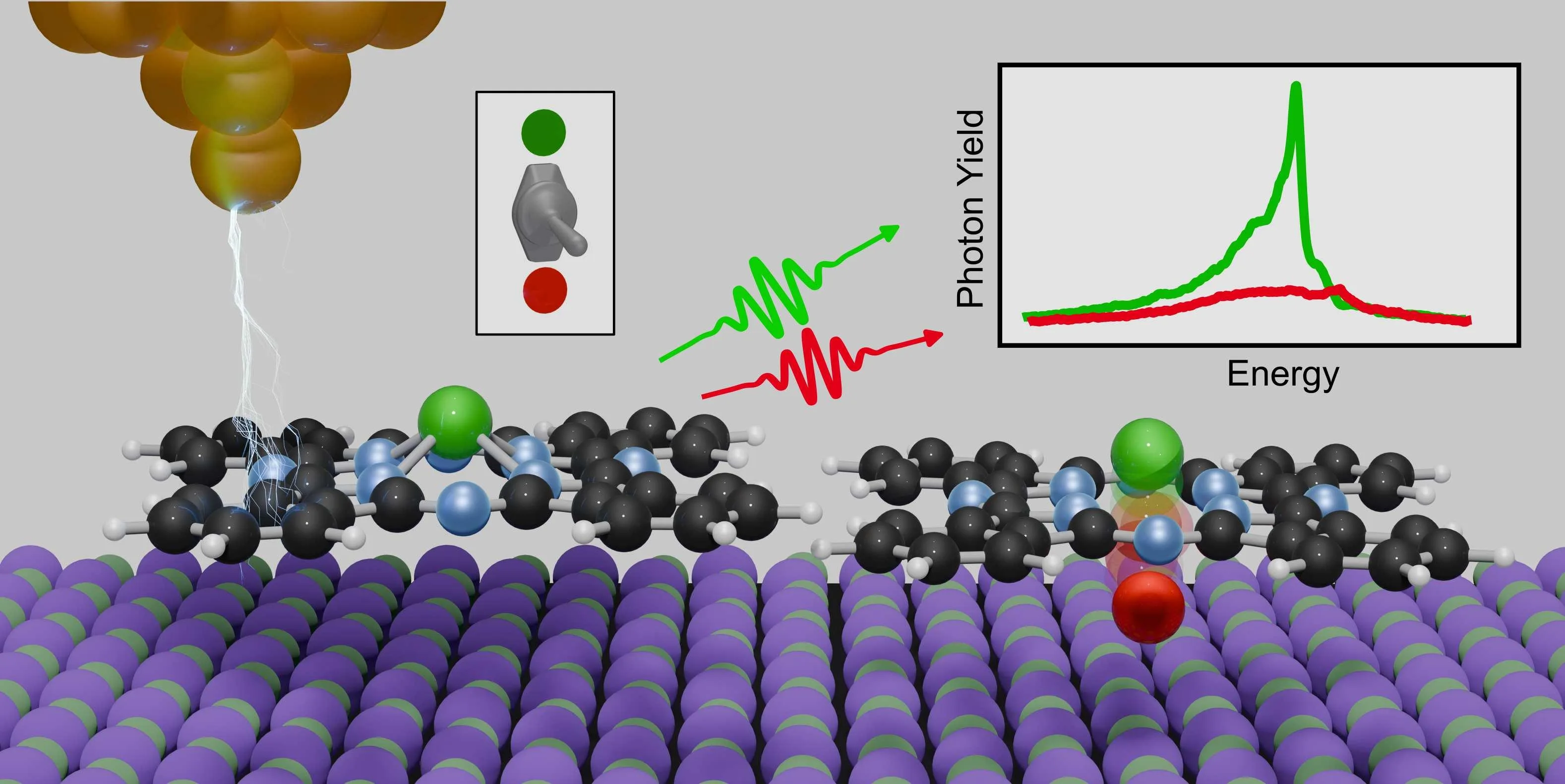
نقطة مضيئة بحجم جزيء. يمر بها تيار كهربائي فتنبعث منها وميضًا كلمبة صغيرة. هكذا تبدو تجربة مع جزيئات صبغة على سطح غشاء ملحي رقيق.
عندما يصل التيار إلى الجزيء، يمنحه إلكترون واحد طاقة. يعيد الجزيء هذه الطاقة فورًا على شكل ضوء. إنها مثل الأرجوحة: دفعة واحدة فتهتز ثم تسكن. لكن الجزيء لا يضيء بشكل ثابت: ضوءه يرتجف لأن الجزيء نفسه يهتز. في طيف الضوء تظهر هذه الاهتزازات كنغمات تصاحب اللحن الأساسي.
هذه ليست مجرد تجربة جميلة. إذا تعلمنا التحكم في ضوء جزيء واحد، يمكننا بناء دوائر بصرية بحجم ذرات قليلة. هذه الدوائر مفيدة في الحواسيب الكمومية وأجهزة الاستشعار فائقة الحساسية.
الملخص الأصلي
كما كتبه المؤلفون، بالإنجليزية arXiv:2603.01897
Tin-phthalocyanine molecules adsorbed on a NaCl ultrathin film on Au(111) exhibit electrofluorescence excited by a current across a scanning tunneling microscope junction. Exploring the dependence of the molecular monomer photon yield on the injected current evidences the one-electron excitation process underlying the neutral-exciton luminescence. Photon spectra of the monomer exhibit vibrational progression and hot luminescence, while the dimer electrofluorescence spectroscopic fine structure results from the coupling of the adjacent optical transition dipoles. The photon yield of the dimer is significantly altered upon changing the configurational state of one of the two molecules. In one of the bistable configurations light emission is amplified compared to the monomer, and it is reduced in the other.
جزيء الصبغة في هذه التجربة أصغر من الطول الموجي للضوء الذي يصدره، مثل جهاز إرسال بحجم ذرة غبار يبث على موجات طويلة.