موصل فائق يتذكر سريع
الذاكرة العادية في الحاسوب تستهلك الطاقة باستمرار لتخزين الأصفار والواحدات. أما الموصلات الفائقة فتنقل التيار دون أي فقدان — فإذا صُنعت منها ذاكرة، فإنها لن تستهلك الكهرباء تقريبًا. المشكلة أن الموصلات الفائقة لا تعرف كيف تتذكر: حالتها تتغير بسهولة شديدة.
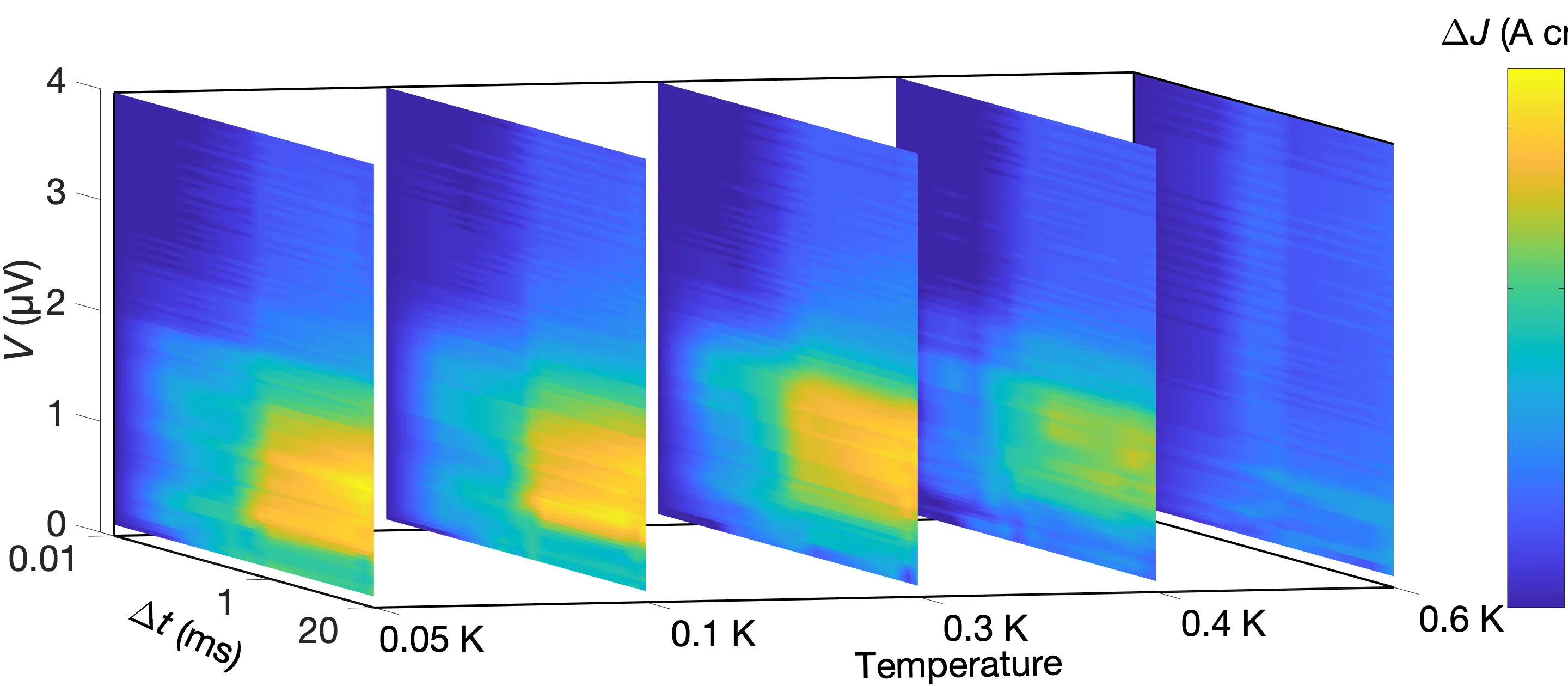
بلورة يورانيوم-ثنائي تيلوريد كانت استثناءً. إذا وُضعت في مجال مغناطيسي وأُرسلت إليها نبضة قصيرة من التيار، فإنها تنتقل إلى حالة يتدفق فيها التيار بشكل أفضل. والنبضة المتكررة تعيدها إلى الحالة الأولى. المادة «تتذكر» حالتها لساعات.
داخل الموصل الفائق، يتجمع المجال المغناطيسي في خيوط دوامية — أنابيب صغيرة جدًا يتدفق حولها التيار. في يورانيوم-ثنائي تيلوريد يوجد نوعان من هذه الخيوط. نبضة التيار تخلط بينهما، مما يحدث اضطرابًا يثبّت الخيوط في مكانها بشكل أقوى. لذلك يتدفق التيار بقوة أكبر. هذا يشبه كومة رمل: إذا هززتها، تستقر حبيبات الرمل بشكل أكثر إحكامًا وتصبح الكومة أكثر ثباتًا.
هذه الذاكرة لا تتطلب طبقات إضافية معقدة من المواد المغناطيسية أو أشباه الموصلات — فكل ما هو مطلوب موجود بالفعل في البلورة نفسها. وهذا يفتح الطريق أمام أجهزة تخزين فائقة الاقتصاد لحواسيب المستقبل.
الملخص الأصلي
كما كتبه المؤلفون، بالإنجليزية arXiv:2603.02450
If a computer could be assembled from superconducting components, the energy efficiency would far surpass that of conventional electronics. Historic research efforts towards this goal yielded pivotal breakthroughs in the development and discovery of scanning tunnelling microscopy and high temperature superconductivity. Although recent strides have been taken in advancing superconducting diode and switching technologies, harnessing read/writeable memory functionality in superconducting platforms has remained challenging. Here we show that bulk single crystal specimens of the triplet superconductor candidate uranium ditelluride (UTe$$_2$$) possess such properties. Upon applying a magnetic field to access an intermediate regime straddling two distinct superconducting phases, we find that direct current pulses can push the material in and out of a metastable state possessing an enhanced critical current $$J_c$$. This switching is controllable by the strength and duration of the stimuli, with the system `remembering' whether it is in the high or low $$J_c$$ state for extended periods. We interpret this to be due to competition between two distinct vortex species, which can be perturbatively pushed into a non-equilibrium high-disorder configuration with stronger pinning forces and thus higher $$J_c$$. Rather than requiring proximate magnetic or semiconducting interfaces, this memory functionality appears to be an intrinsic property of UTe$$_2$$ rooted in the superconducting order itself. Our findings underscore the rich complexity of quantum vortex matter, and demonstrate the viability of engineering a new class of superconducting memory elements with ultralow-power switching.
الموصل الفائق يورانيوم-ثنائي تيلوريد يظل موصلًا فائقًا حتى في مجال مغناطيسي قوي جدًا، حيث تستسلم الموصلات الفائقة العادية.