أشعة غاما بدون بروتونات سريع
أشعة غاما ذات طاقة تتجاوز مئة تريليون إلكترون فولت — مثل حجارة تُقذف بقوة لا تصدق. لفترة طويلة، كان يُعتقد أن هذه «الحجارة» لا يمكن أن تُطلق إلا بواسطة البروتونات — جسيمات ثقيلة معجلة في مسرعات كونية. لكن العمل الجديد يُظهر: في بعض الأحيان تكفي الإلكترونات الخفيفة.
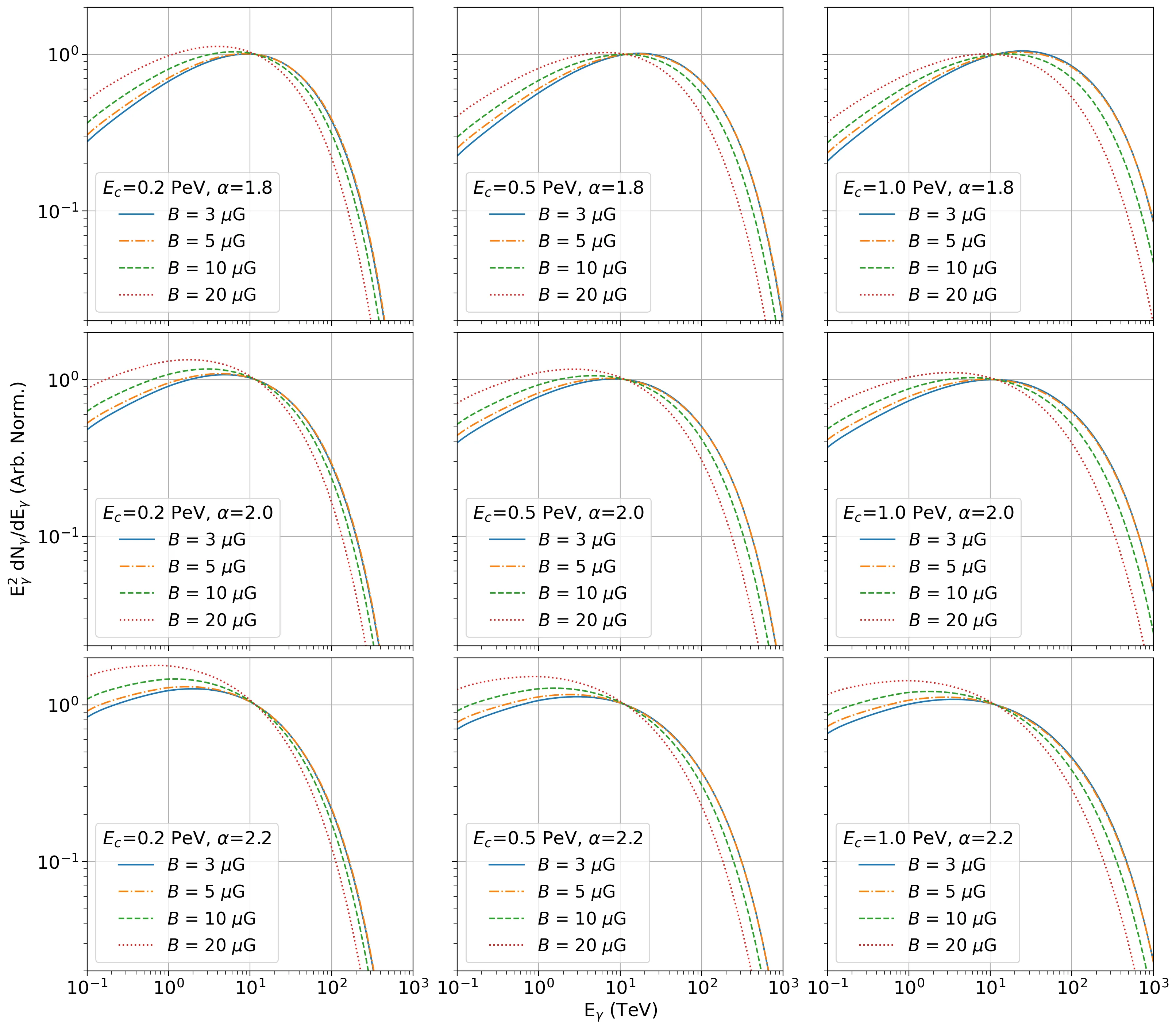
درس المؤلفون ثلاثة أجسام: الميكروكويزار SS 433، ومركز مجرتنا، وهالات تيرا إلكترون فولت — وهي سحب حول النجوم النابضة. في الحالات الثلاث، تُفسَّر الملاحظات بنماذج بسيطة حيث تولد الإلكترونات أشعة غاما وليس البروتونات. النموذج طابق بشكل جيد خاصةً حجم SS 433: العرض المحسوب للمصدر طابق المقاس.
لتحديد المسرع البروتوني بدقة، هناك حاجة إلى أدلة إضافية. على سبيل المثال، تدفق النيوترينوات — جسيمات لا تولد إلا مع البروتونات. أو تطابق إشعاع غاما مع سحب الغاز: البروتونات عندما تصطدم بالغاز تعطي إشارة مميزة.
أشعة غاما فائقة الطاقة — مثل توقيع فنان غير مرئي. في السابق كان يُعتقد أن هذا التوقيع لا يتركه إلا البروتونات. الآن أصبح واضحًا: الإلكترونات أيضًا تعرف كيف توقع.
الملخص الأصلي
كما كتبه المؤلفون، بالإنجليزية arXiv:2603.17012
Ultrahigh-energy gamma rays ($$E_{\gamma}>100 \, {\rm TeV}$$) have been detected from a handful of astrophysical sources. Due to the Klein-Nishina suppression of inverse Compton scattering at such high energies, it has sometimes been argued that these sources must be accelerators of PeV-scale protons, making them the long-sought-after Galactic ''PeVatrons.'' Here, we challenge this conclusion, demonstrating that these sources can be straightforwardly explained by simple leptonic models. In this context, we consider the microquasar SS 433, the Galactic Center, and TeV halos, showing in each case that the observation of PeV-scale gamma rays from these sources does not indicate that they are accelerators of hadronic cosmic rays. We also note that the measured angular extension of SS 433 is in good agreement with the predictions of our model, favoring a leptonic origin for the gamma-ray emission from this source. A definitive identification of a PeVatron would require additional information, such as the combined observation of the pion bump and synchrotron peak, the spatial correlation of gamma-ray emission with gas, or the detection of neutrinos with $$E_{ u} \gtrsim 100 \, {\rm TeV}$$.
الميكروكويزار SS 433 يقذف نفاثات من المادة بسرعة تعادل ربع سرعة الضوء تقريبًا — كما لو كان خرطومًا عملاقًا يروي الفضاء.