موجة صدمية ضعيفة على الشمس تسرّع الإلكترونات إلى 122 كيلوإلكترون فولت سريع
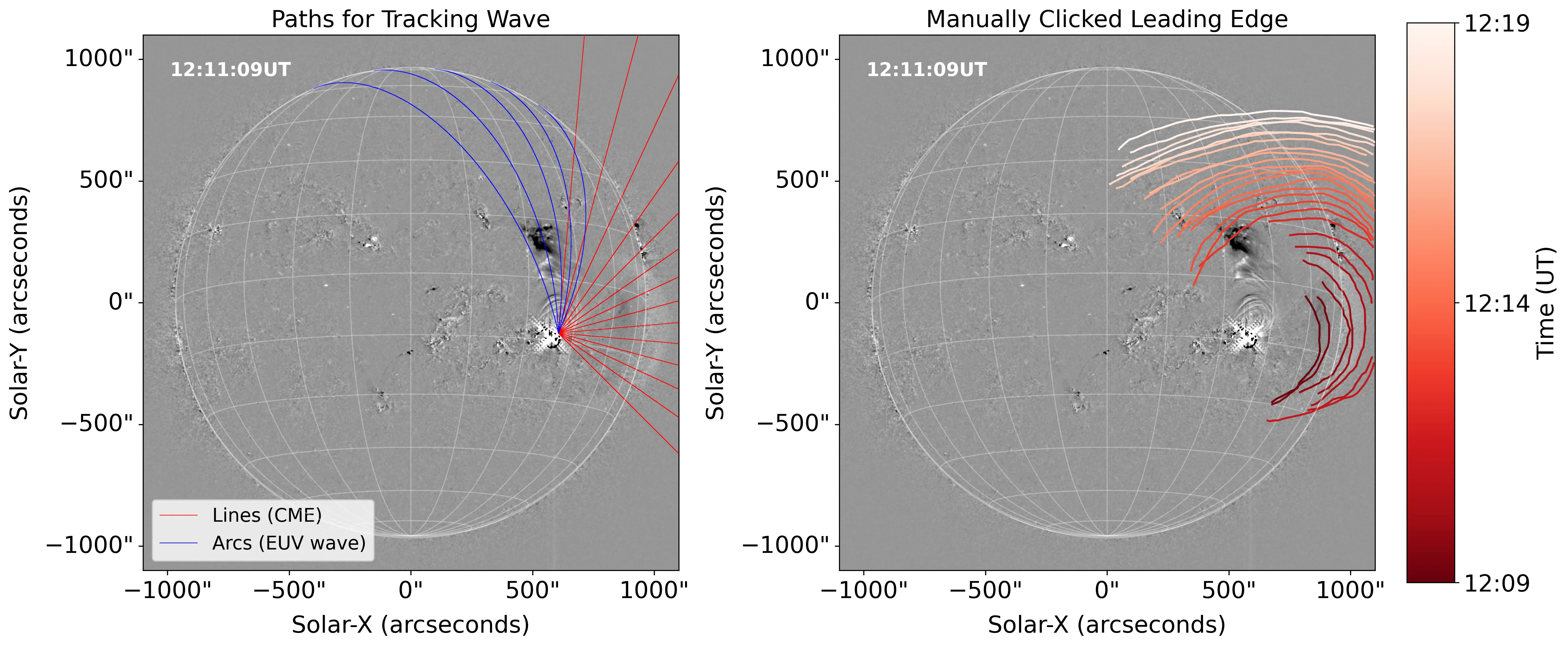
تشبه الموجة الصدمية في الهالة الشمسية الدوي الصوتي الناتج عن طائرة، لكن بدل الهواء هناك بلازما شديدة الحرارة، وبدل الصوت هناك قفزة في الكثافة والمجال المغناطيسي. في 10 مارس 2024، مرت هذه الموجة عبر الجزء الغربي من القرص الشمسي. كانت ضعيفة لدرجة أن سرعتها تجاوزت السرعة المحلية للموجات المغناطيسية بنصف بالمائة فقط (عدد ماخ حوالي 1.005). يبدو أن مثل هذه الموجة "الهادئة" لا يمكنها تسريع أي شيء.
لكن عندما وصلت الموجة إلى منطقة لا تنغلق فيها خطوط المجال المغناطيسي عائدة إلى الشمس، بل تمتد إلى الفضاء بين الكواكب، تغير كل شيء. هناك ضربت الموجة الخطوط المفتوحة بشكل شبه عمودي. في تلك اللحظة، التقطت التلسكوبات الراديوية ومضات تشبه "أشجار عيد الميلاد" المتكررة على الطيف الديناميكي — هكذا تبدو حزم الإلكترونات المقذوفة على طول الخطوط المغناطيسية. من ميل هذه "الأشجار" قُدّرت طاقة الإلكترونات: من 75 إلى 122 كيلوإلكترون فولت. للمقارنة، طاقة الجسيمات في لهب شمعة هي أجزاء من الإلكترون فولت.
هذه الحالة مهمة: كان يُعتقد سابقًا أن تسريع الجسيمات يتطلب موجات صدمية قوية من توهجات عنيفة. هنا كانت الموجة بالكاد مرئية، لكن هندسة الحقل — خطوط مفتوحة عمودية على الجبهة — قامت بالمهمة. هذا يعني أنه حتى الاضطرابات الضعيفة في الهالة يمكن أن تسهم في تدفق الجسيمات النشطة التي تصل لاحقًا إلى الأرض وتؤثر على الطقس الفضائي.
هكذا ذكّرتنا موجة هادئة، لا تكاد تميز عن الخلفية، بأنه في فيزياء الشمس ليس فقط قوة الضربة هي المهمة، بل أيضًا اتجاهها. الباب المفتوح أحيانًا أهم من القبضة.
الملخص الأصلي
كما كتبه المؤلفون، بالإنجليزية arXiv:2603.23335
Extreme ultraviolet (EUV) waves are global waves in the solar corona which can accelerate particles. The efficiency of the acceleration depends on local plasma characteristics e.g. Alfv\'en speed and the geometry of the magnetic field. This shock-driven particle acceleration can produce radio signatures such as Type II radio bursts and herringbone emission. Here we investigate signatures of particle acceleration by a weak coronal shock on 10 March 2024. In particular, we combine EUV images with radio imaging and spectral observations to determine how and where this weak shock could accelerate energetic particles. A potential field source surface extrapolation was used to examine the pre-eruption ambient magnetic field while the evolution of the global wave was probed using running difference and base difference EUV images. The EUV images enabled the speed and Alfv\'en Mach number of the EUV wave to be characterised. The combination of radio images and dynamic spectra provide evidence of beams of shock-accelerated electrons localised to a dimming region at the time the EUV wave passes through it. The speeds and energies of these electrons were estimated from the drift rates of their herringbones. The EUV wave initially propagated West, channelled by loop systems, before changing direction northward. From the EUV intensity jump at the wavefront, the Alfv\'en Mach number was estimated to be approximately 1.005 at the time that the herringbones were produced. The herringbone drift rates revealed accelerated electron energies of 75-122 keV, using Newkirk density models with scaling factors of 1.3-2.6. These observations suggest that the weak lateral shock impacted quasi-perpendicular open field in a dimming region, enabling localised particle acceleration. This indicates that the geometry of the ambient magnetic field relative to the shock strongly governs where particles can be accelerated.
طاقة 122 كيلوإلكترون فولت تعني أن الإلكترون يطير بسرعة حوالي 60% من سرعة الضوء. لو استطاع مثل هذا الإلكترون الجري في سلك، لدار حول الأرض في ثانية.
في رواية آرثر كلارك "العاصفة الشمسية"، يعطل تدفق الجسيمات المتسارعة من الشمس التقنيات على الأرض — وهو السيناريو الذي يُدرس من خلال هذه الملاحظات.