مطرٌ يعدّ القطرات سريع
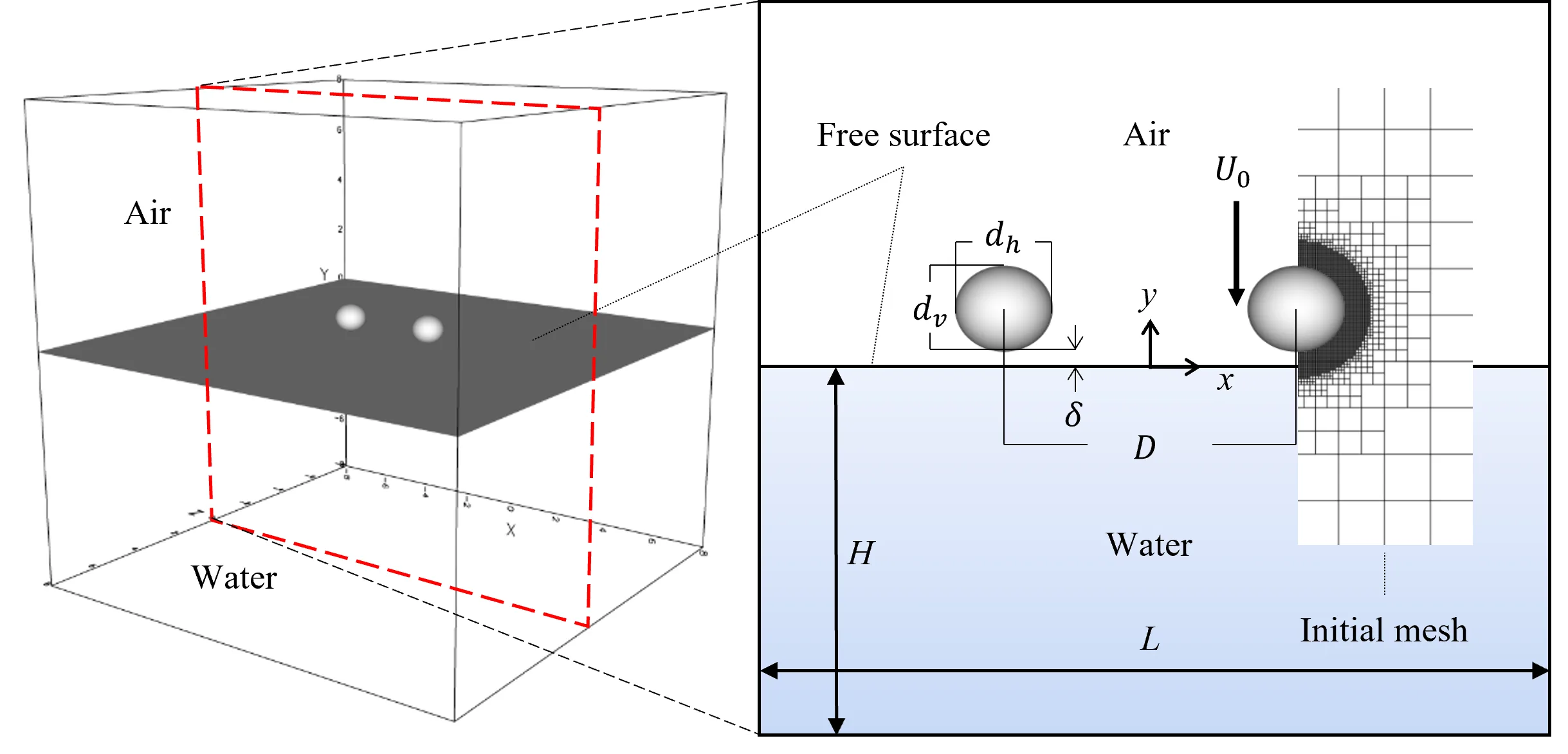
تسقط قطرة المطر في بركة ماء، فيتطاير نافورة صغيرة من الرذاذ عند الاصطدام. كل واحدة من هذه الرذاذات هي قطرة جديدة ثانوية. كم عددها، وما حجمها، وكم تعيش؟ يعتمد ذلك على عوامل كثيرة: سرعة السقوط، وحجم القطرة، وخصائص الماء. قرّر العلماء أن يفكّكوا هذه الفوضى باستخدام المحاكاة الحاسوبية.
أعادوا بناء سقوط قطرة واحدة وقطرتين من المطر في الماء. كانت السرعة مثل سرعة المطر الحقيقي — 7 أمتار في الثانية، وحجم القطرات يتراوح بين 1 و4 مليمترات. كما غيّروا التوتر السطحي (القوة التي تشدّ سطح السائل مثل غشاء رقيق). تبيّن أن عدد القطرات الثانوية ينخفض بشدة مع ازدياد حجمها: الرذاذ الصغير أكثر بكثير من الكبير. إذا رسمنا رسمًا بيانيًا، نحصل على علاقة قوة (power law) بأس سالب خمسة على اثنين. هذا يعني أن قطرة نصف قطرها أصغر بمرتين تُصادف حوالي 6 مرات أكثر.
عندما تسقط قطرتان متجاورتان، تصبح الصورة أكثر تعقيدًا. قد تقع القطرة الثانية في القمع الذي تركته الأولى، فتتطاير الرذاذات بشكل مختلف. لاحظ العلماء أن عمر الرذاذات وعددها يعتمدان على المسافة بين القطرات المتساقطة. إذا سقطت القطرات قريبة من بعضها، فإن قمع الأولى لم ينغلق بعد، فتغوص الثانية أعمق وتُحدث رذاذًا أقل. أما إذا كانت بعيدة، فكل قطرة تتصرف بشكل شبه مستقل.
لكن الأكثر إدهاشًا: عند إعادة حساب كل البيانات باستخدام المعادلة الجديدة، تقع جميع النقاط من المحاكاة المختلفة على منحنى واحد. هذا يعني أن قانون توليد الرذاذ عالمي — لا يعتمد على حجم القطرة أو سرعتها أو التوتر السطحي. يبدو أن المطر يخضع لرياضيات بسيطة، مثل رقاقات الثلج المتساقطة أو رقاقات الجليد المتدلية.
الملخص الأصلي
كما كتبه المؤلفون، بالإنجليزية arXiv:2604.10491
Secondary droplets produced by interactions between falling fluid drops and a liquid pool play a significant role in engineering applications and geophysical processes in nature. This study uses direct numerical simulations to investigate the dynamics of secondary droplets generated by raindrop-liquid pool interactions. The raindrop parameters feature a realistic speed of 7 m/s, effective diameters of 1-4 mm, and surface tension values ranging from $$25\%$$ to twice the typical air-water interface value. The numerical configurations include both a single raindrop and two raindrops separated by distances between two and four times the raindrop diameter. The secondary droplet size distribution, $$N_d$$, is found to scale with the droplet radius, $$r_s$$, as $$N_d(r_s)\propto r_s^{-5/2}$$, with additional dependencies on surface tension and raindrop diameter. When normalized according to this new scaling law, the droplet size distribution obtained from simulations with different parameter values collapses onto a single curve. Analysis of the impact morphology reveals distinct stages of raindrop interactions and identifies the formation and breakup of a central liquid film. Spatial and temporal analyses of the secondary droplets show that raindrop interaction can influence both the percentage of droplets captured by the cavity and the duration over which they re-merge with the pool. These behaviors arise from the combined effects of differences in the birth times of secondary droplets of various sizes and aerodynamic forcing associated with the cavity airflow.
عند سقوط قطرة المطر في بركة، لا يتشكّل نافورة صاعدة فحسب، بل أيضًا غشاء رقيق من السائل يتمدد بسرعة ثم يتمزق إلى رذاذ — مثل فقاعة صابون تنفجر عند لمسها.