كيف ينصهر السبيكة: أنماط من المصهور سريع
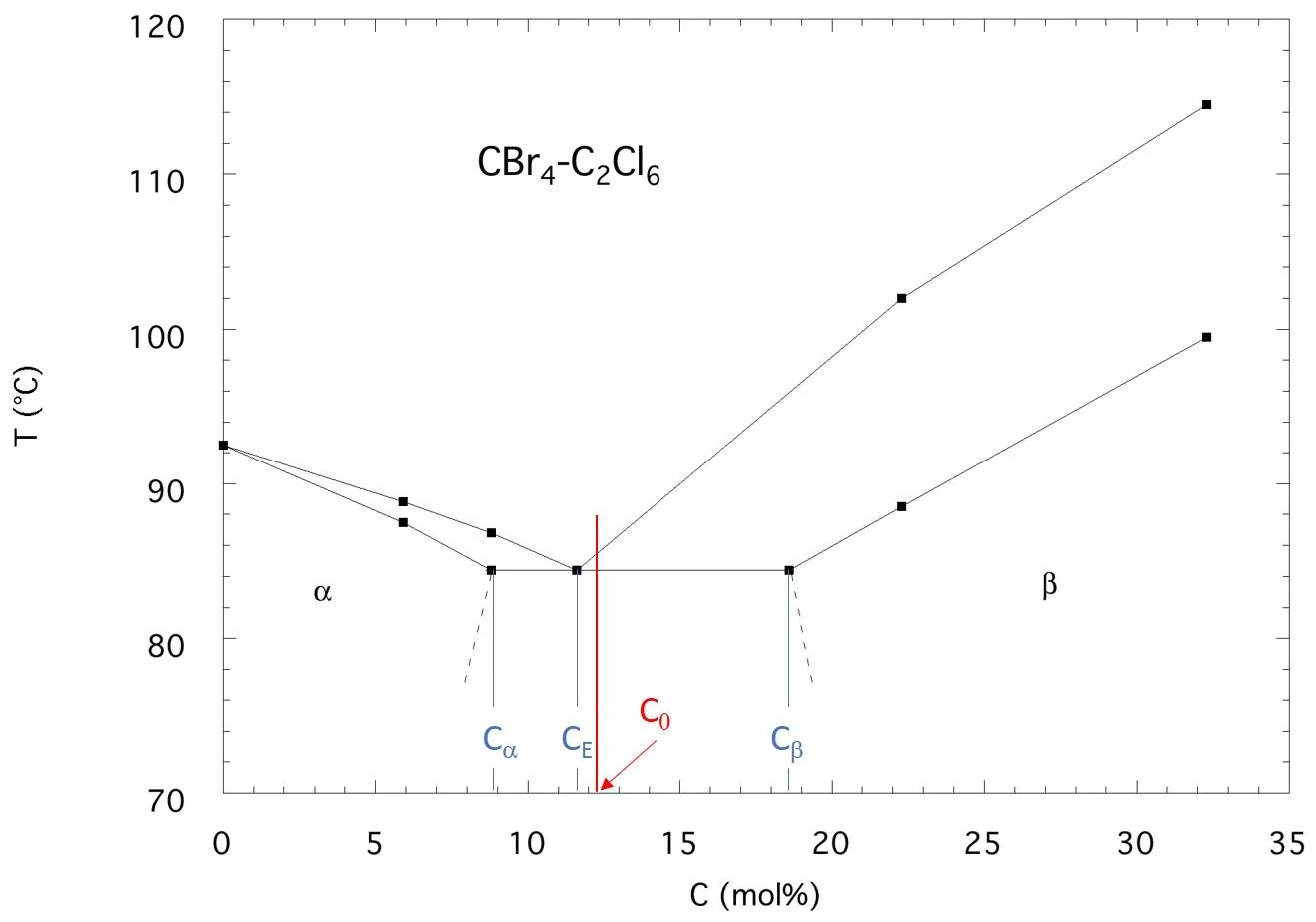
في قطعة صلبة من سبيكة القصدير والرصاص، ترقد طبقات المعدنين كما ترقد الصفحات في كتاب. عند التسخين من جهة واحدة، لا تنصهر الطبقات بشكل متساوٍ، بل بألسنة وأصابع غريبة. درس العلماء هذه العملية على سبيكة شفافة يمكن رؤيتها من الداخل تحت المجهر، وقارنوها بنموذج حاسوبي.
عند التسخين السريع، يندفع السائل على طول الحدود بعيدًا إلى الأمام، تاركًا خلفه جزرًا صلبة. وعند التسخين البطيء، تتسمك أصابع أحد المعدنين، مزاحمةً الطبقات المجاورة. وإذا كانت الطبقات متراصة جدًا من البداية، يظهر تأثير غير متوقع: يبدأ النمط في التكرار عبر طبقة واحدة، مضمومًا دورته.
هذه الأنماط تساعد على فهم سلوك المعادن في الطباعة ثلاثية الأبعاد، حيث يُصهر المسحوق بالليزر ويتجمد فورًا. التحكم الدقيق في الانصهار سيمكن من صنع قطع أقوى وخالية من العيوب الداخلية.
الملخص الأصلي
كما كتبه المؤلفون، بالإنجليزية arXiv:2604.14821
We present a study of the melting dynamics of a two-phase eutectic solid. In situ, thin-sample experiments using a transparent eutectic alloy and two-dimensional phase field simulations calibrated for the very same alloy are combined to assess pattern formation during directional melting in a temperature gradient. Depending on the melting velocity $$V_m$$ and the spacing $$\lambda$$ of the pre-solidified lamellar microstructure, an unexpectedly rich diversity of melting patterns is observed, with good agreement between experiments and simulations. We unravel the different physical mechanisms leading to this diversity, and establish the scaling behaviors of (i) the penetration of the liquid along the solid-solid interface at large $$V_m$$, (ii) the thickening of the primary-phase fingers at low $$V_m$$, and (iii) a period-doubling instability for small $$\lambda$$ values. Our study provides a fundamental basis for further investigations of eutectic melting, including additive manufacturing during which melting/solidification cycles take place.
السبيكة الشفافة من القصدير والرصاص تتيح رؤية الانصهار من الداخل، كما في حوض سمك، رغم أن كلا المعدنين معتم بمفرده.