صدى الضوء يقلب كيمياء الجزيئات سريع
في قاعة فارغة، يرتد الصوت بين الجدران متحولاً إلى صدى أجوف.
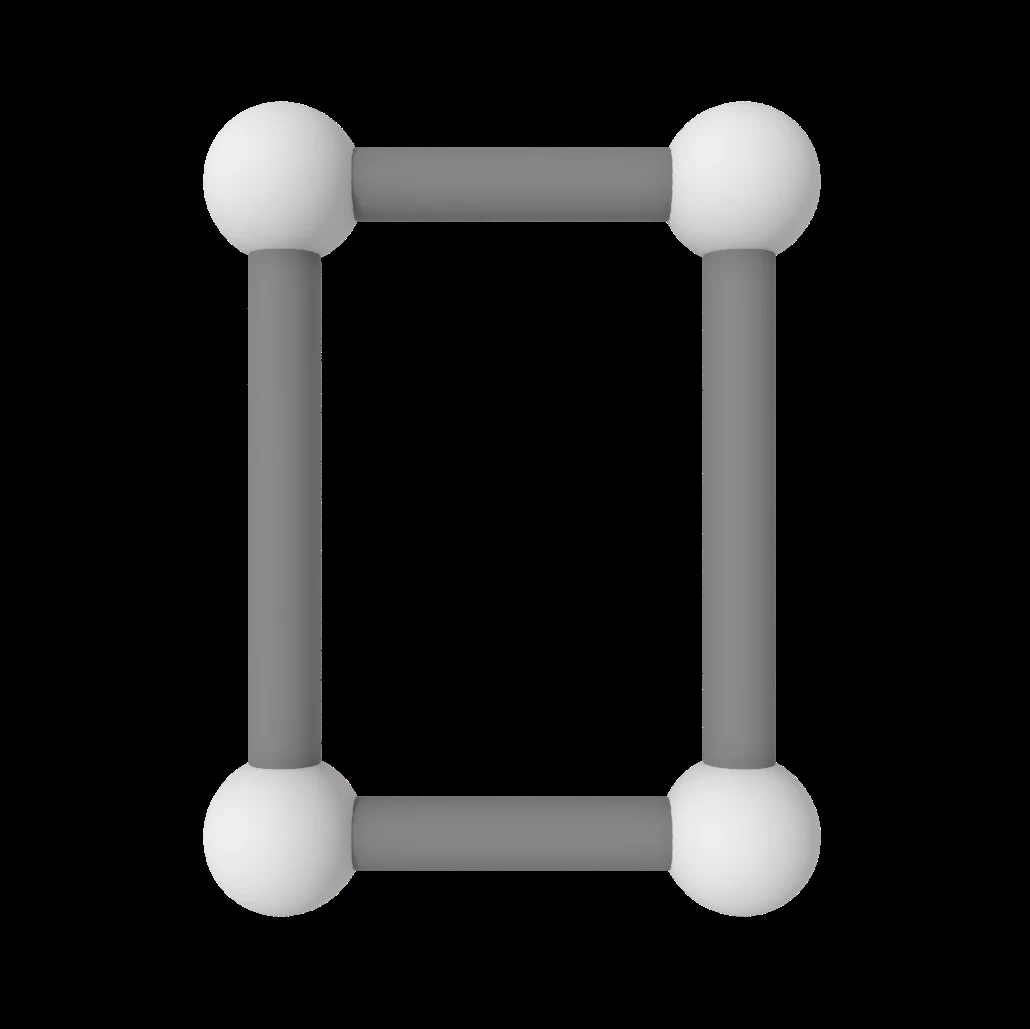
بالنسبة لـالهيدروجين (H₂)، يتبادل الاستقرار والإثارة الأدوار، كما لو أن ميزانًا انقلب. الجزيئات الحلقية مثل H₄ أو C₄H₄ (كربون وهيدروجين) تنحني عادةً من أجل البقاء في الظروف العادية. لكن غرفة الصدى تقوّمها إلى تناظر مثالي.
كلما زاد عدد الجزيئات داخل التجويف، اشتد التأثير — فالازدحام لا يخمد الظاهرة الشاذة، بل يزيدها اشتعالاً.
يسمح لنا المطيافية — تحليل الضوء الخارج — برؤية هذه التحولات. هكذا يعلمنا صدى الضوء تشكيل جزيئات بخصائص لا تصدق، من حساسات فائقة الحساسية إلى مواد تغير العالم.
الملخص الأصلي
كما كتبه المؤلفون، بالإنجليزية arXiv:2604.20969
We investigate the effects of coupling a quantum-magnetic cavity field to molecules. Our high-precision auxiliary-field quantum Monte Carlo calculations capture the effect of the cavity field in the presence of electron correlations, and their interplay and competition. In H$$_2$$, we find that a strong enough cavity coupling makes the original bound ground state metastable, along with inverting the singlet-triplet gap. In ring molecules (e.g., H$$_n$$), the magnetic cavity coupling stabilizes symmetric geometries. As a consequence, open-shell rings such as H$$_4$$, H$$_8$$, or C$$_4$$H$$_4$$, which would undergo Jahn-Teller distortions outside of the cavity, obtain exotic spin or ring-current polarized, antiaromatic ground states. These effects are enhanced by increasing the molecule concentration inside the cavity. Our results suggest cavity quantum electrodynamics beyond the long-wavelength approximation as a promising avenue for cavity-altered chemistry.
بدون غرفة الصدى، تتشوه حلقات H₄ أو C₄H₄ بشكل عشوائي. أما داخلها، فتتجمد في شكل مثالي، ويسري فيها تيار إلى ما لا نهاية — والنتيجة مغناطيس دون أسلاك أو بطاريات.
كما في أفلام الخيال العلمي حيث تُنشأ حقول قوى، يعيد صدى الضوء تجميع الجزيئات حسب الطلب — لتُولد مواد بمواصفات غير مسبوقة.