الطقس الفضائي حسب الفصول سريع
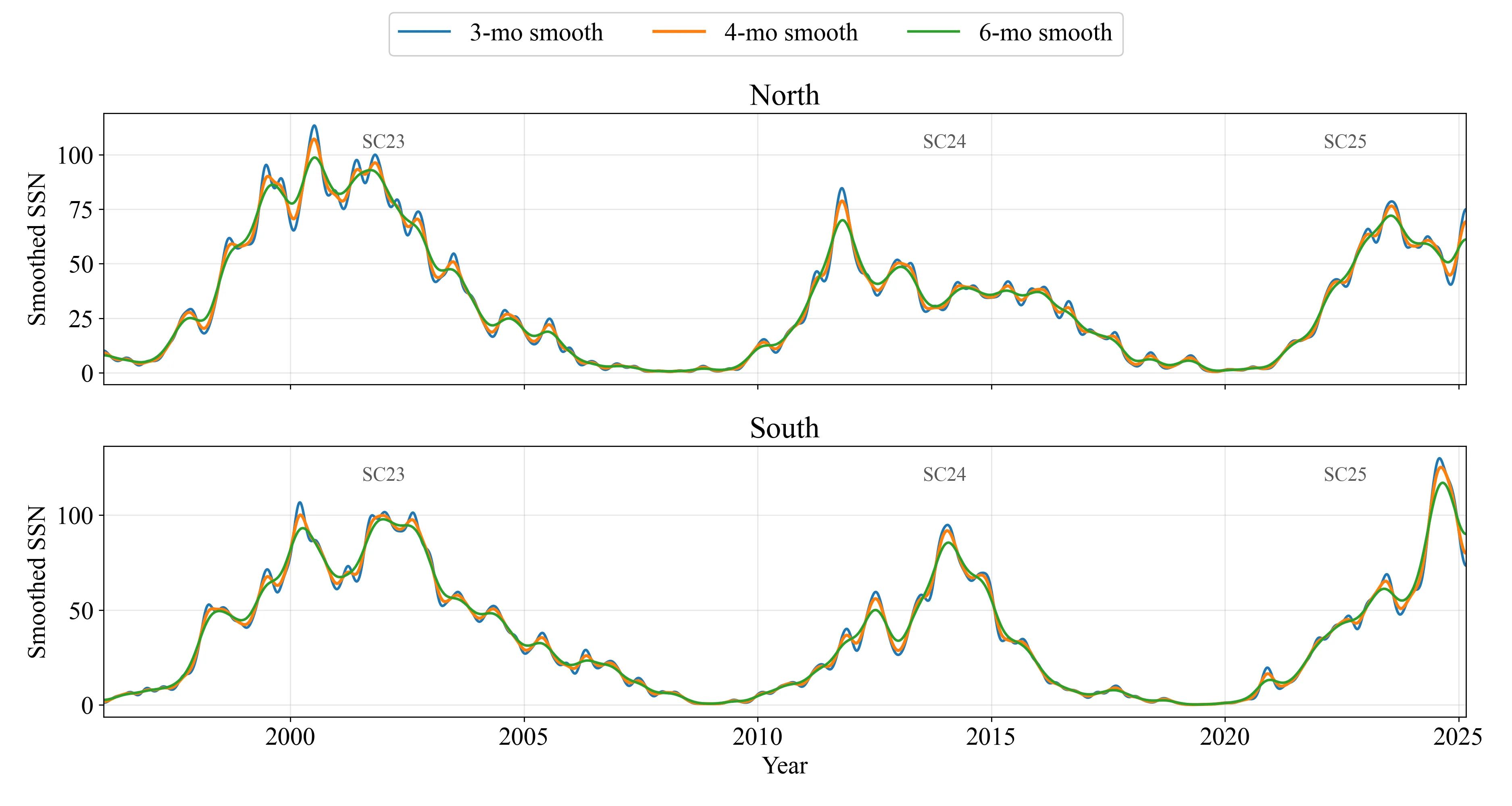
الشمس لا تتوهج بشكل ثابت، بل تنفجر في سلسلة من النوبات. مثل نار المخيم التي تهدأ أحيانًا ثم تطلق فجأة شرارات متطايرة. تستمر هذه "المواسم النارية" من ستة أشهر إلى سنة ونصف، وخلالها تظهر على النجم بقع كثيرة بشكل خاص. أخذت مجموعة من الباحثين بيانات عن البقع الشمسية منذ عام 1878، وعلّموا الكمبيوتر التعرف على اقتراب النوبة النارية التالية.
بدلاً من النظر إلى الشمس ككل، قسموها إلى شمال وجنوب. كل نصف كرة يعيش بإيقاعه الخاص: النصف الشمالي أصدر ذروة حوالي 70 بقعة في مارس 2025، بينما النصف الجنوبي كان أكثر نشاطًا حيث وصل إلى 130 بقعة في نفس الوقت تقريبًا. تم التقاط الفرق باستخدام نموذج رياضي يشبه توقع المبيعات الموسمية في متجر: فهو يأخذ في الاعتبار الاتجاه التدريجي والقفزات الحادة.
ثم دخل "متنبئ الغابة" — خوارزمية الغابة العشوائية التي تتعلم من الأمثلة. تم إطعامها مئات الانفجارات السابقة، وأصبحت تخمن قوة الانفجار التالي. هذا المزيج من الإحصاء والتعلم الآلي أشار بالفعل بشكل صحيح إلى ارتفاع النشاط في أواخر 2024 وأوائل 2025. من المتوقع حدوث الانفجار التالي في ديسمبر 2025، حيث سيقود النصف الجنوبي مرة أخرى. تعتمد القوة الإجمالية للعواصف عليه بشكل أساسي.
الملخص الأصلي
كما كتبه المؤلفون، بالإنجليزية arXiv:2605.27057
We present a hybrid forecasting strategy that combines numerical modeling, statistical forecasting, and machine learning methods to predict enhanced bursts of solar activity. These bursts, referred to here as space weather seasons, occur on intermediate timescales of approximately 6 to 18 months. We analyze monthly smoothed sunspot number data from 1878 to 2025 and use Gaussian fitting to identify burst events and characterize their amplitudes and durations. The sunspot number data are divided into training, testing, and forecasting intervals to evaluate both hindcast performance and future predictions. Each solar hemisphere is modeled separately using a seasonal autoregressive integrated moving average approach. This baseline forecast is refined using an asymmetric Gaussian override to represent the rapid rise and gradual decay of burst activity. Burst amplitudes and durations are then estimated using a random forest regression model. The hybrid method successfully reproduces burst timing between November 2024 and May 2025, with the Northern Hemisphere reaching a peak sunspot number of about 70 around March 2025. The next Northern Hemisphere burst is forecast to occur around December 2025, with a slightly lower peak sunspot number of about 60. In contrast, the Southern Hemisphere shows more complex behavior, with multiple burst amplitudes beginning around October 2024 and continuing until October 2025. The dominant Southern Hemisphere burst reaches an amplitude of about 130 in sunspot number, and the next burst is forecast to occur around December 2025. When the hemispheric forecasts are combined, the total sunspot number is found to be mainly controlled by the stronger activity cycle in the Southern Hemisphere.
بقعة شمسية بحجم مدينة صغيرة يمكن أن تسبب عاصفة مغناطيسية على الأرض تعطل الملاحة.