الضوء الذي يعمل في فريقٍ يقيس المسافات بدقة أكبر سريع
جهاز قياس المسافة العادي يرسل نبضة ضوئية واحدة وينتظر عودتها – مثل شخص يصرخ في الفضاء الفارغ ويستمع إلى الصدى. لكن إذا استخدمنا عدة مصادر تضيء بتناغم، وحللنا ليس قوة الإشارة بل إيقاع تتابع الومضات المنعكسة، تصبح الصورة أكثر وضوحاً. تأثير الوميض المتزامن – الإشعاع الفائق – معروف من أعمال روي جلاوبر. وقد طُبِّق الآن في قياس الضوء: حيث لا يقاس السطوع فحسب، بل تناسق الومضات.
باستخدام اثنين من هذه «اليراعات» (مصادر الضوء) ينخفض الخطأ إلى الربع، ومع زيادة عدد المصادر تزداد الدقة أسرع من التناسب البسيط. عملياً، يعني هذا أن أجهزة قياس المسافات الليزرية المستقبلية للطائرات بدون طيار وأعمال المساحة ستقوم ب«تحسس» الفضاء بهامش خطأ لا يتجاوز أجزاء من المليمتر. الضوء الذي يعمل ضمن فريق يلاحظ ما قد يفوته الفرد الواحد.
الملخص الأصلي
كما كتبه المؤلفون، بالإنجليزية arXiv:2605.28378
In recent years, light detection and ranging (LIDAR) has seen a steep rise in the sensitivity of measuring the distances of remote objects. Here, we propose to enhance the sensitivity of LIDAR even further by exploiting Dicke's concept of superradiance, i.e., the collective light emission of statistically independent light sources. By using $$N$$ thermal light sources (TLS) and measuring intensity correlations of order $$m \geq 2$$ instead of $$m=1$$, i.e., the intensity, we show that the Cram\'er-Rao bound on the measurement of the distance of a remote object undercuts that of traditional LIDAR by a factor of $$N$$, and can be reduced further with increasing correlation order $$m$$. Our numerical calculations are supported by analytical expressions for the special cases of two and three TLS and a general approximate expression for any number of TLS.
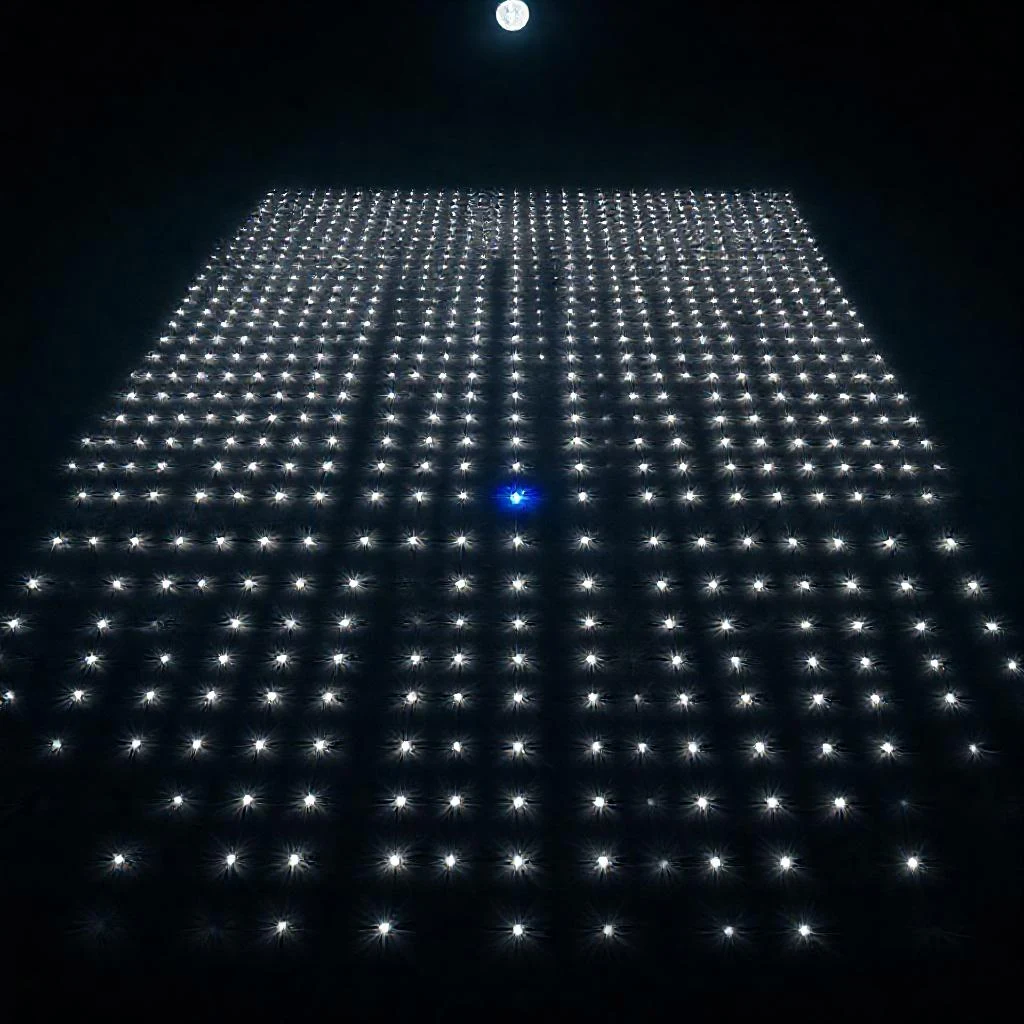
الومضات المتزامنة لليراعات تُرى من بعيد – وبالمثل، يجمع الإشعاع الفائق الضوء في إشارة قوية ودقيقة.
كان بإمكان الروبوتات من «حرب النجوم» المزودة بأجهزة قياس المسافات هذه أن تكتسب إحساساً بديهياً بالمسافة.