رصاص أثري يصطاد أكسيونات الشمس سريع
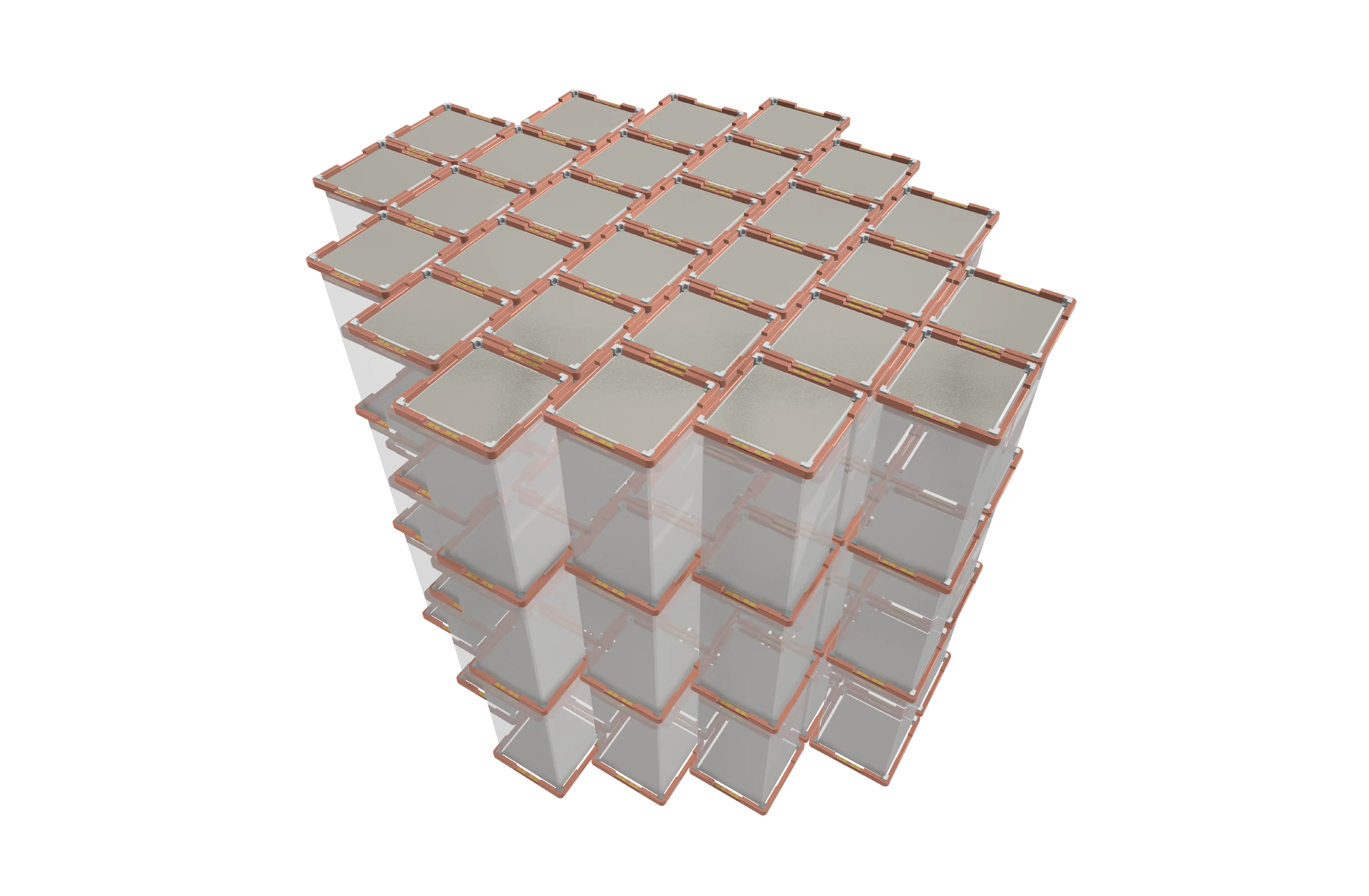
في أعماق الأرض، في صمت المبرد (cryostat) — وهو حاوية مبردة — توجد بلورات من الرصاص كانت يوماً جزءاً من سفينة رومانية قديمة. هذه المادة لا تصدر إشعاعاً خلفياً تقريباً — فخلال ألفي عام اضمحلت النظائر غير المستقرة فيها، وأصبحت الآن نقية تماماً لاصطياد الأحداث النادرة. بُنيت تجربة RES-NOVA لالتقاط استجابة النيوترينوات (neutrinos) من انفجار مستعر أعظم في مجرتنا. لكن البلورات نفسها اتضح أنها مصيدة ممتازة لأكسيونات الشمس — جسيمات خفيفة غير مرئية لم يرها أحد بعد.
تولد الأكسيونات في بلازما الشمس الحارة بعدة طرق. على سبيل المثال، يتحول الفوتون إلى أكسيون في المجال الكهربائي للنواة — وهذا ما يسمى تأثير بريماكوف (Primakoff effect). أو أن الإلكترون، عندما يتباطأ، يصدر مثل هذا الجسيم. في بلورة تنجستات الرصاص (PbWO4) تحدث العملية العكسية: يمتص الأكسيون، معطياً طاقته لإلكترون أو مولدا فوتوناً جديداً. هكذا تنشأ الإشارة — قفزة صغيرة في درجة الحرارة في الكاشف. يمكن أن يلاحظها بولومتر فائق الحساسية (bolometer) — وهو جهاز لقياس التدفقات الحرارية الضئيلة.
تحليل البيانات الأولى من نموذج أولي وزنه 13 غراماً أعطى بالفعل قيوداً على قوة تفاعل الأكسيونات مع الفوتونات. وذلك دون نماذج معقدة للخلفية، بطريقة إحصائية بسيطة. في المستقبل، مع تجميع تعرض طن-سنة (طن-سنة، وهو مقياس للبيانات المتراكمة)، ستتمكن RES-NOVA من فحص ثلاث قنوات مختلفة لتفاعل الأكسيونات في وقت واحد: مع الفوتونات والإلكترونات والنيوكليونات. هكذا يصبح الرصاص القديم جسراً بين الفيزياء الفلكية وفيزياء الجسيمات.
الملخص الأصلي
كما كتبه المؤلفون، بالإنجليزية arXiv:2607.21363
RES-NOVA is a cryogenic experiment based on PbWO4 scintillating bolometers produced from archaeological lead, originally designed to detect coherent elastic neutrino-nucleus scattering (CEvNS) from galactic core-collapse supernovae. We show that the same high-density, high-Z absorbers and sub-keV energy resolution make RES-NOVA an appealing probe of solar axions. We compute the expected signal from the Primakoff, ABC (atomic recombination and de-excitation, Bremsstrahlung, Compton), longitudinal-plasmon (LP), and 57Fe nuclear-line components of the solar axion flux, folded through the inverse-Primakoff and axioelectric detection channels in PbWO4, which probe the axion couplings to photons (g_a-gamma), electrons (g_ae), and nucleons (g_aN), respectively. We derive projected sensitivities for a 1 ton*y exposure of the RES-NOVA demonstrator in the (g_ae,g_a-gamma), (g_ae,g_aN), and (g_a-gamma,g_aN) planes. The projected reach in g_ae approaches that of XENONnT to within a factor of ~2, despite a background roughly four orders of magnitude higher, thanks to the large target mass, the high-Z enhancement of the axioelectric and inverse-Primakoff cross sections, and the sub-keV energy resolution. Because the inverse-Primakoff constraint on g_a-gamma relies on absorption rather than coherent conversion, it is independent of the axion mass, unlike bounds from magnetic helioscopes. We complement these projections with the first solar-axion exclusion limit obtained on real data with a 13 g PbWO4 prototype grown from archaeological lead, using a background-model-independent optimum-interval analysis. These results establish RES-NOVA as a promising multi-coupling probe of solar axions, with simultaneous sensitivity to g_ae, g_a-gamma and g_aN that is complementary to existing helioscope and direct-detection searches.
الرصاص المستخدم في الكاشف تم انتشاله من سفينة رومانية غارقة عمرها حوالي 2000 عام. خلال هذا الوقت، اضمحل النظير المشع رصاص-210 بالكامل تقريباً، مما يجعل المادة أنقى بمئات المرات من الرصاص الحديث.