Dark matter is the invisible glue that keeps galaxies from falling apart. Back in the 1930s, Fritz Zwicky suspected its existence, and in the 1970s Vera Rubin proved that without it, stars would fly apart.
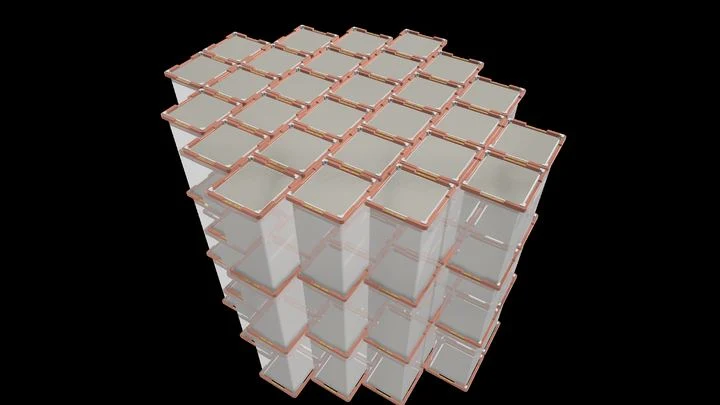
Ancient lead that lay on the seafloor for two thousand years has become the heart of a detector searching for the most elusive substance in the universe. From it, researchers grew a transparent lead tungstate crystal weighing 13 grams and cooled it to near absolute zero.
In a dark mine under the Italian Alps, a tank holds three tons of liquid xenon. When a particle hits it, it knocks faint flashes of light and electron clouds out of the atoms. Following these tracks, physicists hope to see an ultra-rare decay: a xenon-136 nucleus turning into barium-136, emitting two electrons and no neutrinos.
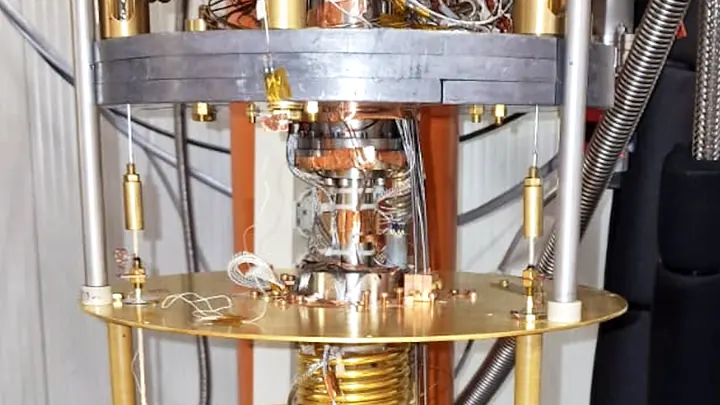
Deep underground, in the silence of a cryostat (a cooled container), lie crystals of lead that once belonged to an ancient Roman ship. This material barely emits background radiation — over two thousand years, unstable isotopes have decayed, leaving it perfectly clean for hunting the rarest events.