كيف تمسك بالتسارع من ذيله سريع
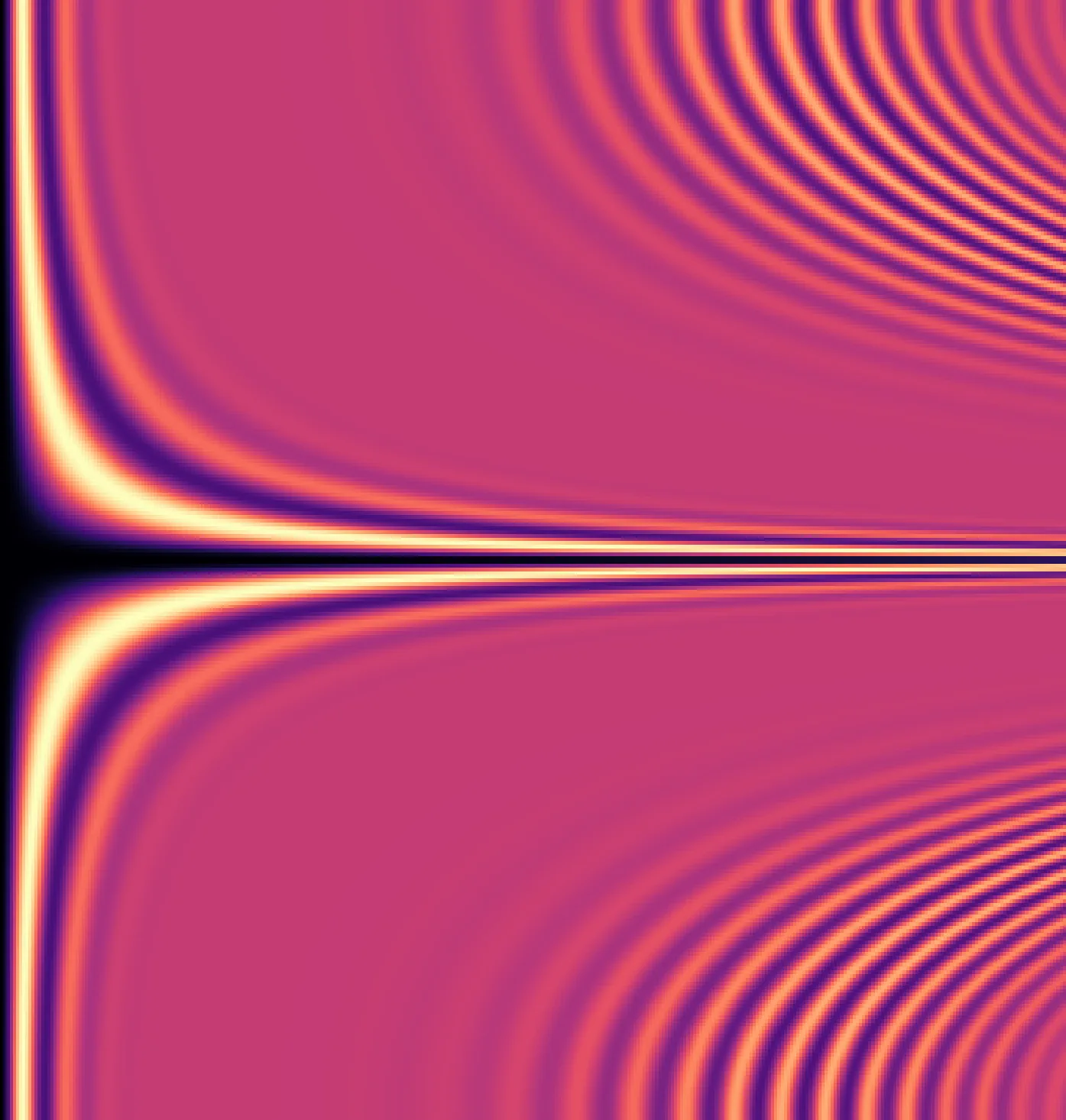
مصيدة ضوئية تُمسك بذرة شبه ثابتة — ككرة صغيرة على نابض لين. لكن بمجرد ظهور تسارع، مثل قوة الجاذبية، يتحول التوازن. تنزاح الذرة في موجة ضوئية واقفة، وهذا يغيّر المعدل الذي تتبادل به الطاقة مع المجال. يصبح تردد هذا التبادل مؤشرًا مباشرًا على التسارع.
حسب المؤلفون نموذجًا تبدأ فيه الذرة والمجال من الحالة الأكثر هدوءًا، ثم حلّوا معادلات الديناميكا بدقة. اتضح أن معلومات التسارع تتراكم في الحالة المشتركة للذرة والضوء. يمكن استخراجها، وكلما طال الانتظار، زادت الدقة — إذ تزداد الدقة تربيعيًا مع الزمن.
يمكن قراءة النتيجة بطرق مختلفة. عند عقدة الموجة الواقفة، يصلح الأسلوب الطوري (phase method) — فهو يحس بإشارة التسارع. بعيدًا عن العقدة، من الأفضل عدّ الفوتونات أو استخدام الكشف المتغاير (homodyne detection) بطور معدَّل. حتى لو كانت هناك خسائر في الرنان، يوجد زمن قياس أمثل عندما لا تكون الضوضاء قد التهمت كل المعلومات المفيدة. يشبه هذا الأسلوب وزن حمولة غير مرئية من ارتعاش النابض — فقط دور النابض تلعبه بنية الفراغ نفسها.
الملخص الأصلي
كما كتبه المؤلفون، بالإنجليزية arXiv:2607.23324
We derive an effective trapped atom--cavity model in which a constant gravitational acceleration shifts the oscillator equilibrium and changes the local standing-wave coupling, thereby encoding the acceleration in the Jaynes Cummings exchange frequencies. With the atom and motion initially in their ground states and the cavity field initially coherent, we solve the closed-system carrier dynamics exactly and derive the displaced-frame quantum Fisher information (QFI) of the joint atom-cavity state. This QFI is proportional to the square of the local coupling slope, grows quadratically with interrogation time, and scales linearly with mean photon number. At the node, phase-referenced Ramsey detection gives a sign-sensitive estimate of axial acceleration and locally saturates the joint QFI. Away from the node, photon counting and phase-optimized homodyne detection provide cavity readouts when the cavity state carries more QFI than the atomic state. At the off-node operating point studied, Lindblad simulations show that cavity loss produces a finite-time QFI optimum. Lamb Dicke and sideband-suppression conditions control the carrier approximation. In the closed-system benchmark, the carrier-model QFI agrees with the atom-cavity QFI obtained from the unexpanded model after tracing out motion.
إزاحة توازن الذرة في المصيدة بسبب الجاذبية تساوي تقريبًا قطر البروتون — لكن هذا يكفي لتغيير تردد تبادل الضوء بشكل ملحوظ.