Saif Al-Kuwari

5 articles · 10 co-authors · latest: 2026-07-25
4 citations · h-index 1 · 15 papersData: Semantic Scholar

We have retold 5 papers by this author. most often about: qubit, gravimetry, quantum measurement. 10 co-authors across our retellings.

Links in the knowledge graph
Quantum Physics2026-01-011 minarXiv:2601.00425express
A Gravimeter the Size of a Chip
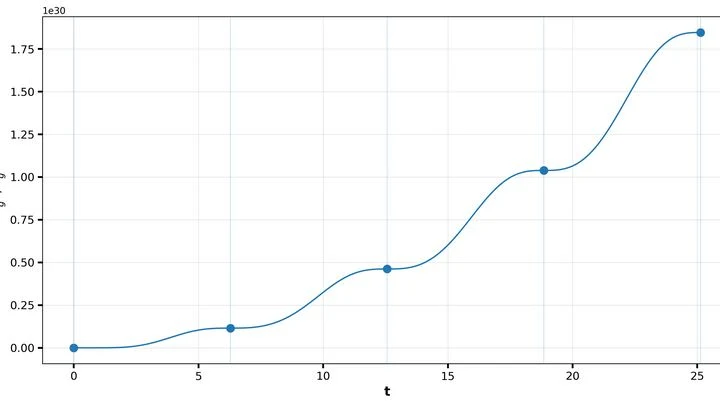
Accurate measurements of gravity are needed by geologists and navigators alike. But conventional gravimeters are bulky instruments that take a long time to 'settle' after each measurement. What if you need to track rapid changes in gravity — say, while moving underground or in flight? That calls for a device that is small and responsive.
Quantum Physics2026-02-201 minarXiv:2602.18524express
The Clocks That Throw Off the Scales
Ultra-precise scales that catch the slightest changes in gravity work like a keen ear: they hear even the whisper of distant underground voids or the tremors of the Earth's crust. But such instruments have a hidden enemy: their own internal clocks. Time inside the sensor also jitters, and this jitter smears the picture.
Quantum Physics2026-04-192 minarXiv:2604.17262express
A Gradient That Hears a Whisper
A fisherman casts a net into a quiet backwater. The longer the rope, the weaker he feels the faintest nibble — the wave fades along the way. But what if the signal didn't die out but grew stronger? That's roughly the trick described by the authors of a study on an ensemble of particles placed in a field with a special 'stepped' force gradient.
Quantum Physics2026-05-272 minarXiv:2605.28289express
Quantum Scales on a Web of Light
A levitating dust grain in an optical trap is an ideal pendulum for measuring gravity. It hangs in vacuum, never touching the walls, and its motion depends only on external forces. The new work proposes an improved sensor: a mechanical 'squeezed' qubit based on a nonlinear oscillator.
Quantum Physics2026-07-251 minarXiv:2607.23324express
How to Catch Acceleration by the Tail
An optical trap holds an atom almost motionless, like a ball on a soft spring. But as soon as acceleration appears, say gravity, the equilibrium shifts. The atom moves within the standing light wave, and this changes the rate at which it exchanges energy with the field. The frequency of this exchange becomes a direct indicator of acceleration.
