The Brain Prints Itself: How Electrode Pairs Speed Up Mind Reading express
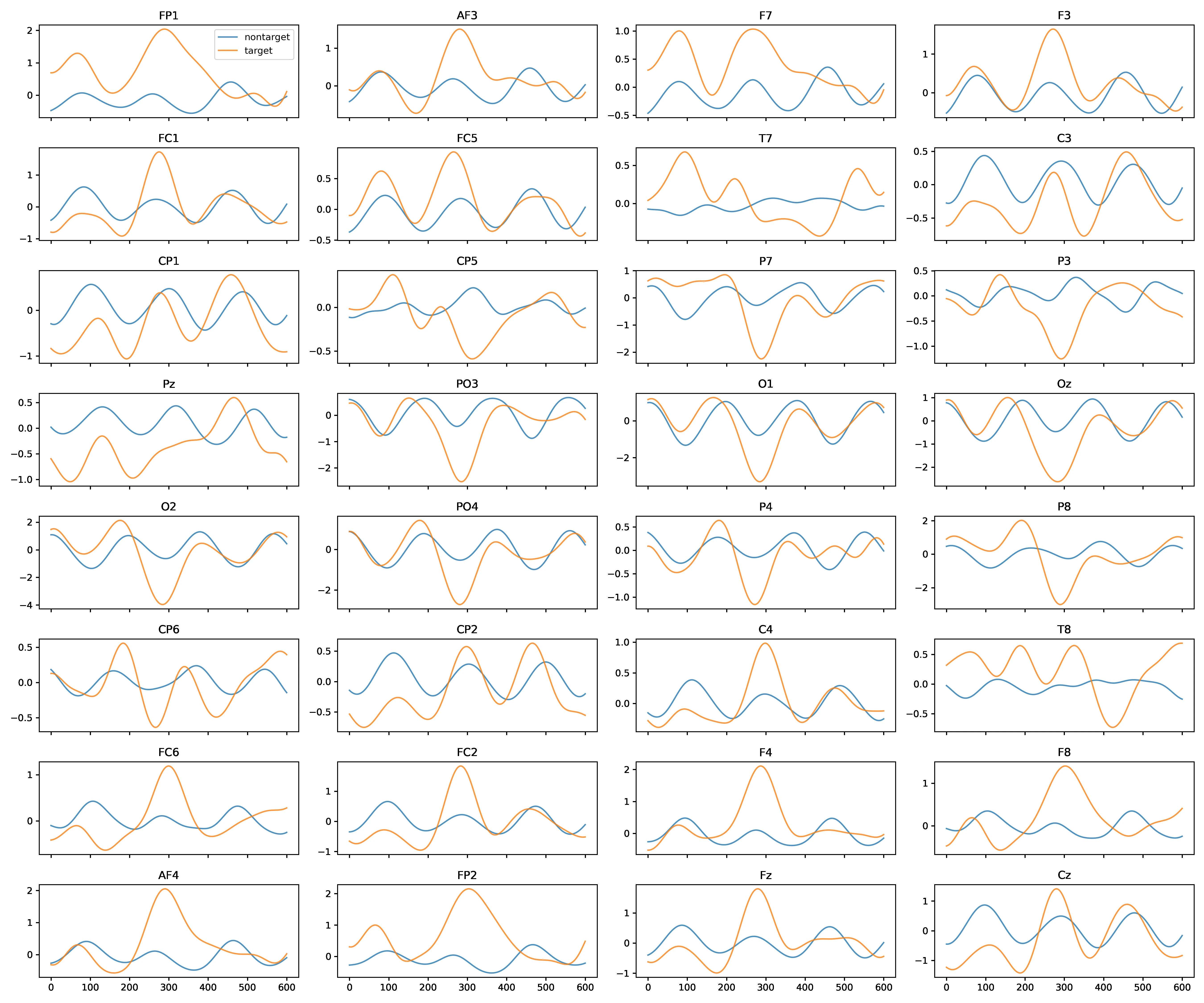
A person looks at a screen where letters flash. They don't move a hand or an eye: they only mentally note the desired symbol. Sensors on the head pick up the brain's faint electrical waves, and the computer figures out which letter the person chose. That's how a brain–computer interface works: it gives a voice to those who can't speak or move.
Previously, the machine looked at each sensor individually, like listening to an orchestra while recording only one violin and missing the cello playing nearby. The new model pairs up sensors, like a conductor who hears how instruments call to each other. It decides on its own which signal pairs matter at each fraction of a second and discards excess noise.
The improvement was especially noticeable in people who don't drink alcohol: their accuracy rose by 18 percent. Why that is remains a puzzle, but the model adapts to each person like a tailored suit. This is a step toward making mental typing fast and reliable for everyone.
Original abstract
as written by the authors arXiv:2602.17772
Electroencephalography (EEG)-based P300 brain-computer interfaces (BCIs) enable communication without physical movement by detecting stimulus-evoked neural responses. Accurate and efficient decoding remains challenging due to high dimensionality, temporal dependence, and complex interactions across EEG channels. Most existing approaches treat channels independently or rely on black-box machine learning models, limiting interpretability and personalization. We propose a sparse Bayesian time-varying regression framework that explicitly models pairwise EEG channel interactions while performing automatic temporal feature selection. The model employs a relaxed-thresholded Gaussian process prior to induce structured sparsity in both channel-specific and interaction effects, enabling interpretable identification of task-relevant channels and channel pairs. Applied to a publicly available P300 speller dataset of 55 participants, the proposed method achieves a median character-level accuracy of 100\% using all stimulus sequences and attains the highest overall decoding performance among competing statistical and deep learning approaches. Incorporating channel interactions yields subgroup-specific gains of up to 7\% in character-level accuracy, particularly among participants who abstained from alcohol (up to 18\% improvement). Importantly, the proposed method improves median BCI-Utility by approximately 10\% at its optimal operating point, achieving peak throughput after only seven stimulus sequences. These results demonstrate that explicitly modeling structured EEG channel interactions within a principled Bayesian framework enhances predictive accuracy, improves user-centric throughput, and supports personalization in P300 BCI systems.
The word 'alcohol' in the study isn't about the drink itself, but about the fact that some people's brain electrical patterns change after consuming it, making standard algorithms worse at recognizing them. The new model, which accounts for pairwise connections, proved more robust to these changes.
In the series 'Black Mirror,' people control technology with their thoughts; this work brings that scenario closer, but for medical assistance rather than entertainment.