A model in physics is a simplified mathematical or conceptual representation of a physical system that captures its essential features while ignoring irrelevant details. Models are the working tools of physicists: they allow complex phenomena to be analyzed, predictions to be made, and experiments to be designed. A good model balances accuracy with tractability — it must be simple enough to solve or simulate, yet faithful enough to describe the real world. Models range from idealized point particles to full numerical simulations of galaxies, and they are constantly refined as new data and computational power become available.
History
The use of models in physics dates back to ancient Greek atomism, but the modern approach emerged with Galileo and Newton, who used idealized models like frictionless planes and point masses. The term 'model' became standard in the 19th century with the development of statistical mechanics and field theory.
How it works
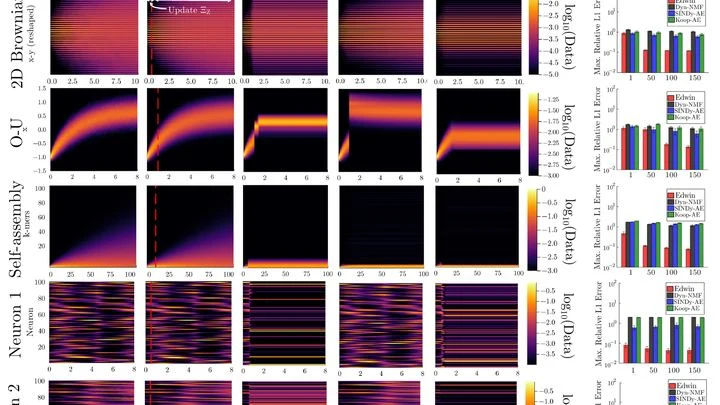
A model typically starts with a set of assumptions about the system's components and their interactions, expressed in mathematical form — often as equations of motion or field equations. The model is then solved, either analytically or numerically, to produce predictions. These predictions are compared with experimental data; if they agree, the model is retained; if not, it is modified or discarded. Modern models often incorporate machine learning techniques, where neural networks are trained to represent physical laws directly from data, as described in the article 'Нейросети, усвоившие законы природы'.
In practice
Models are used everywhere in physics and engineering: from climate models that predict global warming, to particle physics models like the Standard Model, to cosmological models of the universe's evolution. They are also essential in designing aircraft, bridges, and electronic devices.
Fun fact
The Standard Model of particle physics, which describes all known elementary particles and forces, fits on a single page of equations — yet it has predicted the existence of particles like the Higgs boson decades before they were observed.
A voice recorder captures a city square. You hear the hum of a crowd, footsteps, snatches of conversation, the rumble of traffic. Somewhere in that sonic stew, a street musician plays a simple tune on a flute. Hearing it isn't easy: there's just too much mixed together.
The Pacific Ocean, ten thousand kilometers wide, breathes: warm water shifts eastward, cold water retreats, and this in-and-out repeats every few years. A model that captures this breathing takes weeks of computation even on a supercomputer.