Popular

Machine Learning cs.LG

14 articles

Machine learning research: supervised, unsupervised, reinforcement learning, bandit problems, and related topics.

articles

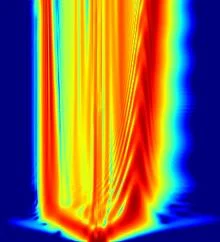
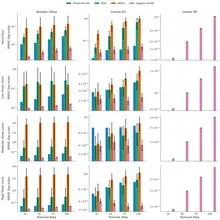
Vibration-Absorbing Layer Cake: The Material That Chooses Quiet

A material with an internal structure of nested patterns of different sizes suppresses several frequencies at once—like a stack of sieves with different mesh sizes. The computer finds the right shapes on its own, and the large details don’t interfere with the small ones. This paves the way for ultra
arXiv:2408.08428 · 2024-08-15

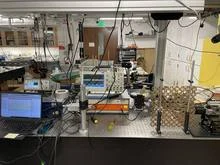
Light in Glass: Optical Fiber Learns to Read Digits

Ordinary optical fiber without processors has learned to recognize handwritten digits with 93% accuracy. Light passed through the glass strand performs computations on its own — like water swirling into vortices changing its pattern. This is a cheap way to create thinking machines.
arXiv:2503.03649 · 2025-03-05

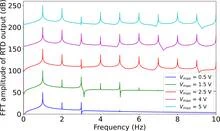
A Diode Chip That Sees Images

Physicists built a computer out of tunnel diodes that directly converts pictures into voltage patterns. No need to program each 'neuron' — physics does all the work. The chip already reads handwritten digits and tells fruits apart in photos, rivaling graphics cards.
arXiv:2507.15158 · 2025-07-20

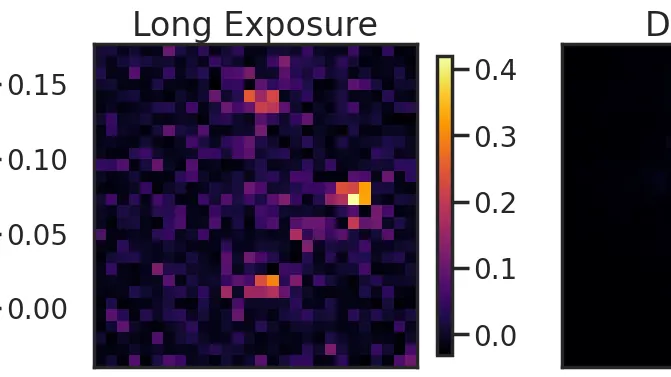
Photo Editor for Quantum Computers

Quantum computers based on neutral atoms are tripped up by slow state readout. The GANDALF program acts like a filter in a photo editor: it takes a short, noisy exposure and reconstructs a clear signal, doubles the speed of error correction, and slashes failures by tens of times.
arXiv:2510.25982 · 2025-10-29

Why neural networks are like black holes: a lesson from 'bald' models

Inside language models like LLaMA lie tangled patterns, their strength depending on the training method. But to an outside observer, the model always yields the same result—much like a black hole that 'forgets' every detail of the matter it swallows. This explains why simple fine-tuning methods are
arXiv:2601.06788 · 2026-01-11

Quantum Entanglement Helps Play Pong

Quantum entanglement, where particles are linked at a distance as if by an invisible thread, helps a computer learn Pong faster. A hybrid algorithm with quantum vision sees hidden connections and outperforms ordinary programs. Quantum effects step out of labs onto the playing field.
arXiv:2603.10289 · 2026-03-11

Quantum Rainbow: How a Tiny Computer Sorts Mountains of Data

Researchers have proved that even a tiny quantum processor can outperform massive classical computers in sorting and analyzing big data. The 'quantum sketch' algorithm was successfully used to decode genes in individual cells and to gauge the sentiment of movie reviews. All of this was accomplished
arXiv:2604.07639 · 2026-04-08

Graph Labels: When Quantum Methods Yield to Simplicity

A comparison of network node description methods: quantum algorithms inspired by light analysis better recognize molecular structures, while classical ones are more efficient in social networks with minimal data. The choice becomes informed.
arXiv:2604.15273 · 2026-04-16

Wings in a Minute: How AI Became an Aerodynamic Genius

A new AI training method: first learn from 30,000 shapes, then fine-tune for the task. Just 450 examples reduce error to 0.36%. This speeds up the search for the best aerodynamic solutions.
arXiv:2604.18062 · 2026-04-20

AI assistant tackles cosmology's trickiest math

Scientists test new theories of gravity to explain the accelerating expansion of the Universe without dark energy. They need to solve equations describing how tiny clumps after the Big Bang became galaxies. This used to take a lot of time. Now researchers connected a language model to a computer alg
arXiv:2605.08212 · 2026-05-06

Quantum Assistant Detects Rare Frauds

Q-SYNTH combines quantum and classical computers to synthesize fake fraudulent payments. In a world where real scams make up only 0.1% of all transactions, training on imagined threats makes detectors sharper. The artificial examples become so realistic that the system itself sometimes mistakes them
arXiv:2605.21164 · 2026-05-20

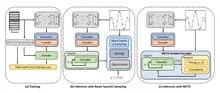
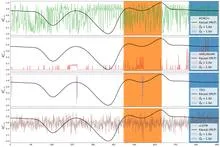
Stellar Orthography: How ExoVeil Reads Missed Planets

Traditionally, astronomers caught planets by waiting for multiple passes across stars. ExoVeil breaks this mold: a transformer neural network learns to predict the star's normal twinkling and spots even a lone shadow. A blind analysis of Kepler data revealed 179 new candidates, and on TESS data with
arXiv:2606.02778v3 · 2026-06-01

The Quantum Secret to Fast AI Training

When training neural networks on thousands of machines, data exchange slows down the process and creates a risk of leaks. Replacing ordinary signals with quantum communication allows transmitting twice as much information at once with full privacy: entangled particles prevent spying. The method work
arXiv:2606.20344 · 2026-06-18

Cosmic Calligraphy: A General-Purpose Neural Network Catches Fast Radio Bursts

Fast radio bursts—ultra-short but colossally powerful radio flashes from distant galaxies—leave an elegant curved trace on spectrograms, resembling a calligraphic flourish. For decades they were hunted with heavy algorithms and narrow neural networks, until the most unexpected tool was tried: a mult
arXiv:2607.07382 · 2026-07-08