Scales for Thoughts: How to Measure Whether a Neural Interface Really Speaks
In the 1980s, the DARPA speech recognition challenge settled the debate between statistical methods and hand-written rules, setting a common standard for the entire field.
AI techniques that analyze speech patterns, pauses, and textual cues to interpret or evaluate spoken language.AI speech analysis uses machine learning to extract meaning from spoken language, going beyond mere transcription to interpret prosody, pauses, emotional tone, and even physiological state. Modern systems analyze acoustic features like pitch, rhythm, and spectral content, combined with linguistic context, to infer things like speaker emotion, cognitive load, or health conditions. This field bridges signal processing, linguistics, and artificial intelligence, enabling machines to understand not just what is said, but how it is said.
Early work on speech recognition in the 1970s used hidden Markov models, but deep learning approaches became dominant after 2010. The specific application of AI to analyze emotional and paralinguistic aspects of speech gained momentum with the rise of large-scale emotion recognition datasets in the 2010s.
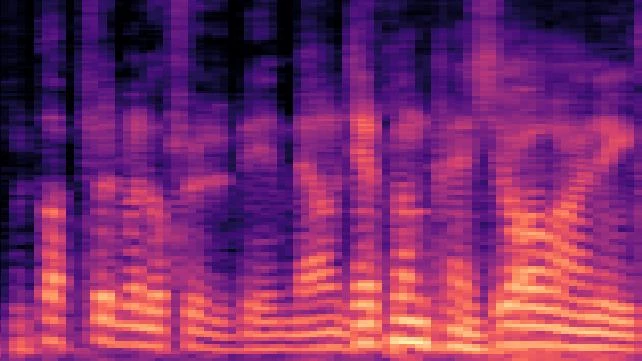
Speech is first converted into a spectrogram or a sequence of feature vectors capturing acoustic properties over short time windows. Deep neural networks, often transformers or convolutional architectures, then process these features to map them to linguistic units (phonemes, words) and simultaneously to higher-level attributes like emotion or intent. The models are trained on large labeled datasets where human annotators have marked emotional states, speaking styles, or medical conditions, allowing the network to learn subtle acoustic patterns associated with each category.
AI speech analysis is used in call-center sentiment monitoring, mental health screening (detecting depression or anxiety from voice), voice-based biometric authentication, and assistive technologies for people with speech impairments.
AI can detect early signs of Parkinson's disease from speech patterns with up to 90% accuracy, sometimes years before motor symptoms appear.
| Q | variable | Query matrix — query matrix |
| K | variable | Key matrix — key matrix |
| V | variable | Value matrix — value matrix |
| d_k | variable | Dimension of keys — dimension |
| softmax | operator | Normalizes rows to probability distributions — softmax function |
| ⊤ | operator | Matrix transpose — transpose operator |
| √ | operator | Square root — square root |