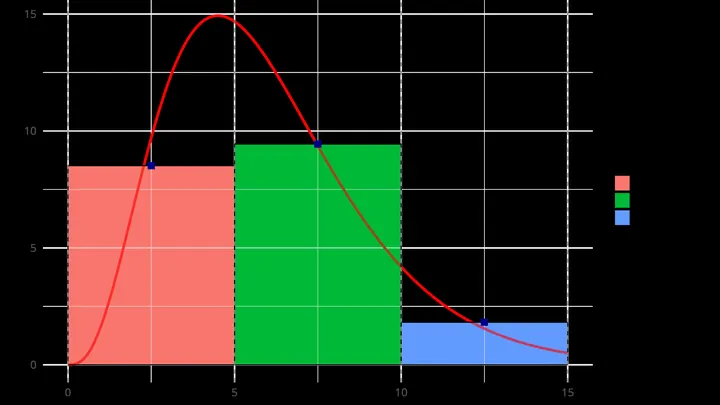
A Bayesian hierarchical model is a statistical model that has multiple levels of parameters, where parameters at one level are themselves modeled by parameters at a higher level. This structure allows you to simultaneously model individual observations and the population from which they come. For example, you might model the test scores of students in many schools, where each school has its own average score, but those school averages are drawn from a common distribution representing all schools. This 'borrowing strength' across groups improves estimates, especially for groups with few data points.
History
Hierarchical models have roots in the work of Charles Stein in the 1950s on shrinkage estimators, and were formalized in Bayesian terms by Lindley and Smith in 1972. They became widely used with the advent of MCMC in the 1990s.
How it works
The model is built in layers. At the lowest level, you have the likelihood for each observation given individual-level parameters. At the next level, those individual parameters are assumed to come from a common distribution with hyperparameters. The hyperparameters themselves may have priors. Inference is done by computing the joint posterior over all parameters, often using Markov Chain Monte Carlo (MCMC) methods. The hierarchical structure allows the data to inform both the individual estimates and the population-level distribution, leading to shrinkage of extreme estimates toward the group mean.
In practice
They are used in meta-analysis, education research, clinical trials with multiple centers, and ecology for modeling species distributions across sites.
Fun fact
Hierarchical models are the statistical foundation behind 'Bayesian shrinkage', which can improve predictions by pulling extreme estimates toward the overall average — a phenomenon known as Stein's paradox.
A translator learns a language not from a dictionary but from living conversations: they hear fragments of phrases, street noise, different accents. Out of that chaos they assemble rules that are written in no book.
An old mattress stops bouncing back: the filling clumps up, and the springs lose their resilience. The ovary changes with age in much the same way, except that instead of filling, stiff connective tissue grows inside it, and the role of springs is played by the cells that support the eggs.
A translator at the negotiating table doesn't listen to every word; they grasp the meaning of whole phrases. Electron microscopy poses a similar challenge: you need to figure out the crystal's thickness and its tilt in the beam, and all you have is a diffraction pattern, a mosaic of thousands of bright and dark spots.
At the end of every chromosome sits a cap made of repeating DNA letters: the telomere. For a long time it was measured as an average length across all chromosomes, as if judging a library by the average thickness of its books. But in humans, three ends, 17p, 20q, and 12p, are consistently shorter than the rest, and they are the ones more often linked to genome damage.
A protein engineer is like a chef trying to make a dish that is tasty, healthy, and cheap all at once. Change one ingredient, and you risk ruining another. In the past, computer assistants could only evaluate protein properties one at a time, missing how they are connected.
A lone fish sees a shadow overhead. Should it flee? If it's just a leaf, it wastes energy and gives away its position to a predator. If it's a heron, hesitation is fatal. That's the eternal trade-off of the solitary individual: quick reactions mean many false alarms, while caution means risking being eaten.
In a school, it's different.
Every winter, hospitals fill up, and by summer they seem to empty. Epidemics breathe like the tide. But why do waves of disease keep rolling in, even without new mutations? Mathematicians found an answer in a tug-of-war between two strains.
Within a single epidemic, two virus variants often coexist.
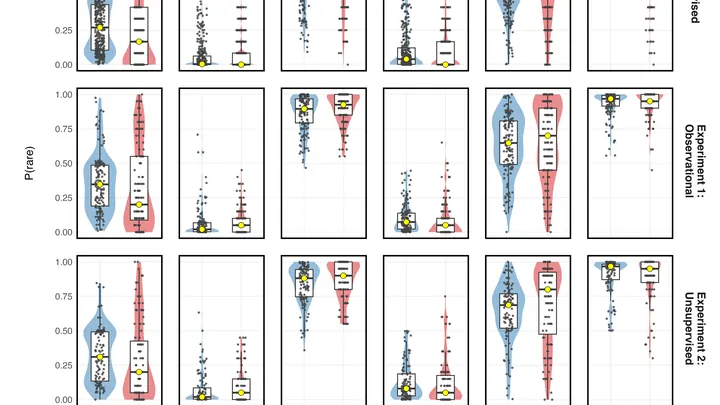
In a warehouse, there are boxes of apples and pears. There are many apples and few pears. But when the stock clerk says "a fruit with smooth skin," we are somehow more likely to recall the rare pear than the common apple. This is the inverse base-rate effect — a persistent glitch in how the brain resolves ambiguity between categories.
Water droplets shoot out of a nozzle one after another, like cyclists on a narrow track. The faster ones catch up with the slower ones and merge into larger drops. This simple mechanism is called ballistic aggregation, and until now it had only been observed on cosmic scales: this is how dust particles stick together to form planets.
A hundred thousand stars in the dense core of a globular cluster move like steel balls in a giant pinball machine. Each 'bump' — a gravitational encounter between a binary system and a single star — triggers a cascade of unpredictable events.
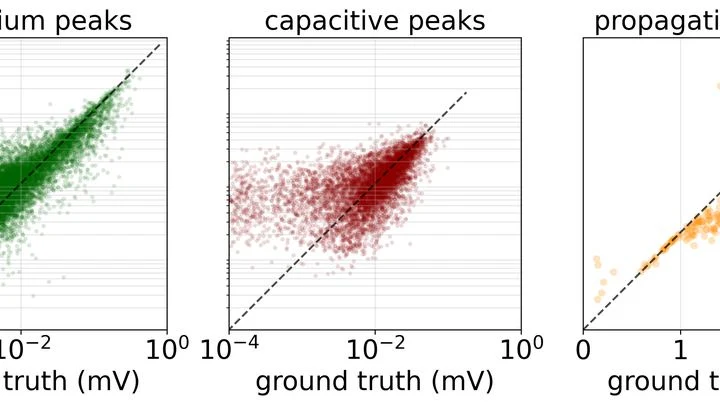
Reconstructing a full picture from fragments is like discerning an orchestra's melody in a noisy hall. Such challenges arise in photometry, where a star's brightness is recovered from faint twinkling. Traditional methods need precise noise information, which is almost always unknown.
Ordinary models assume that infection is like a steady flow of water that washes over everyone equally. In reality, the stream from a sick person fluctuates: right after infection it barely trickles, then turns into a raging downpour, and later subsides. The chance of catching the virus depends on the strength of this flow at the moment of contact.
A family tree becomes a tangle if you account for adopted children and remarriages. Evolution often resembles such a tangle: although the Standard Model, the traditional view of divergent evolution where species branch like a tree, paints a neat tree of species, in reality genes travel not only by inheritance but also directly between unrelated organisms — a process…
For a long time, identifying quantum phases was like interrogating a witness: you had to reach every corner of the system to uncover its secret. In the era of Landau, order was tied to symmetry breaking and a local parameter — everything plain as day.
A neuron is like a complex musical instrument. To understand how it responds to a touch, you used to have to connect to each string directly — a delicate, slow procedure that only works for individual cells.
Molecules float in a pot of broth. Some copy themselves, others help their neighbors, and still others just get in the way. This isn't soup: it's a model of early life: a replicator system. Usually, we assume the rules of the game are fixed once and for all: whoever reproduces fastest wins. But the authors of this study proposed something different — the rules can change too, just very slowly.
60 mice, 1,980 samples, 234 lung cancer patients. Behind each number lie thousands of genes. Their activity is measured to understand the disease. But the data aren’t uniform: for one patient, you assess a protein level (a continuous number), make a diagnosis (yes/no), and determine the tumor subtype (a category).
You buy a new kitchen scale, but instead of exact weight, it only shows deviations from some "norm." To find out how much an apple weighs, you first have to weigh dozens of other apples and calculate the average.
Spacetime is often pictured as a smooth fabric. But at the very microscopic level, this fabric might not be continuous; instead, it could consist of individual 'atoms'—events linked by causality. This picture of the world is called causal set theory.
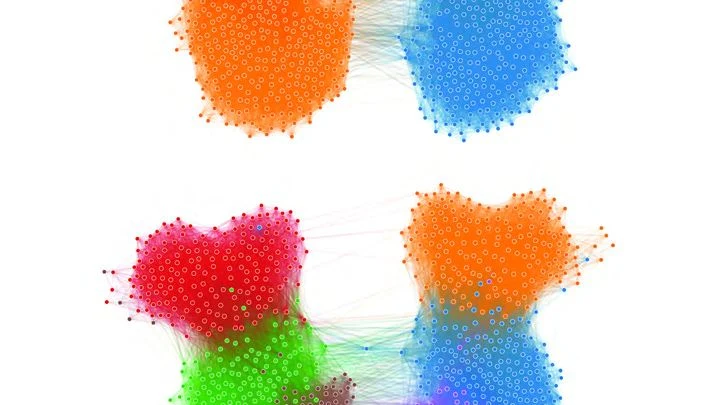
A social network is like a city: there are giant neighborhoods and tiny alleys. When an algorithm looks for tight-knit groups, it often picks out a couple of huge clusters and many small fragments. But the client (say, a municipality) needs districts of roughly equal size to distribute clinics or schools evenly.
In space, merging black hole pairs are common, and often one is noticeably more massive than the other. This mass difference isn't just a number: it's a key to their shared history.
Astrophysicists studied the stable mass transfer channel — a process where matter flows smoothly from one star to another without disrupting the system.
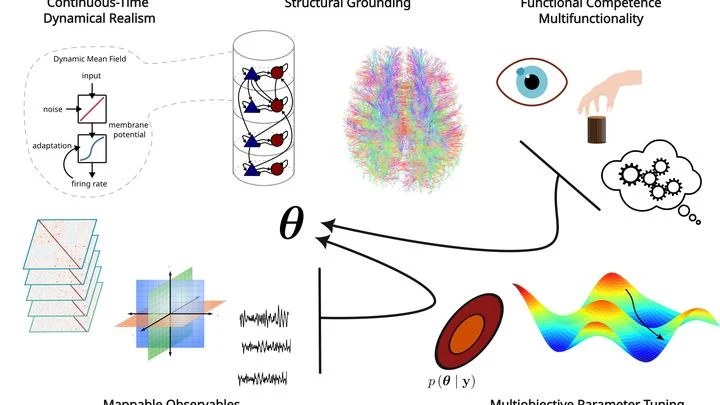
Engineers are building a car. Some assemble an exact replica of the engine, every piston and spark plug, but the car doesn't move: there's no steering wheel or wheels. Others build a fast self-driving go-kart, but its engine is made of playdough and doesn't resemble a real one. This is roughly the situation in brain science.
Dip your finger into water once, and from that single sensation, try to guess its temperature. In the quantum world, such one-shot measurements happen all the time, except you have to guess invisible parameters: say, the squeezing strength of a laser beam.
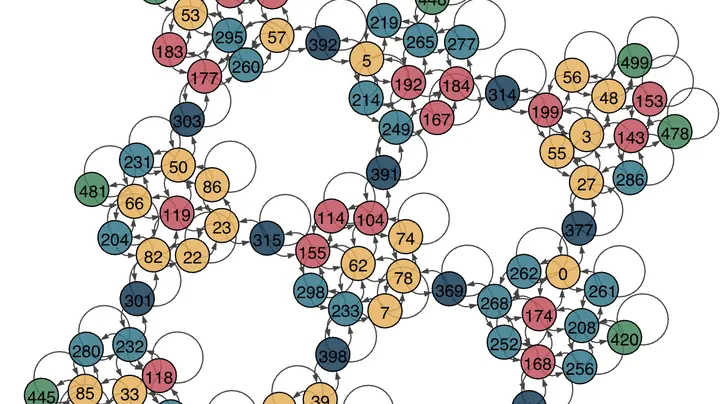
At a party, guests don't just chat in pairs; they gather in circles of shared interests: three discussing movies, four debating sports. The usual acquaintance map, like a phone's contact list, can't capture that: it only sees one-on-one links.
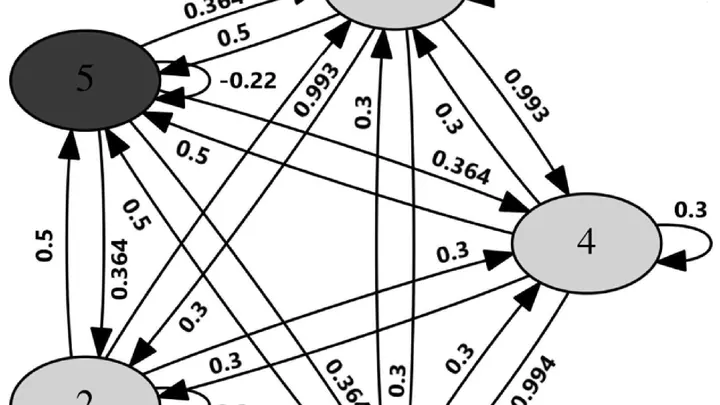
Every group has its unspoken trios: three friends who are always together. And there are pairs that exist on their own. It turns out that how much trios "contain" pairs determines how everything, from a virus to a new idea, spreads through the group.
Scientists introduced a measure they call the nesting coefficient.
The brain is like a multi-story building: lower floors process simple signals, while upper floors assemble them into complex perceptions. Scientists have long suspected that this order is tied to how neurons work together. But exactly how has remained a puzzle.
Your hand rests on the table, and two short vibrations arrive at your wrist — one after the other. You need to say which is stronger. The task seems simple, but the answer depends on which vibration came first. If the first is weak and the second is strong, the difference feels larger than when they are swapped.
An album with hundreds of family photos holds countless stories. If you look at each picture on its own, you might easily decide that Uncle is a real giant: that day he happened to stand a step higher than everyone else. But flip through the whole album, and it becomes clear — his height is perfectly ordinary; it's just that a step showed up in a couple of frames.
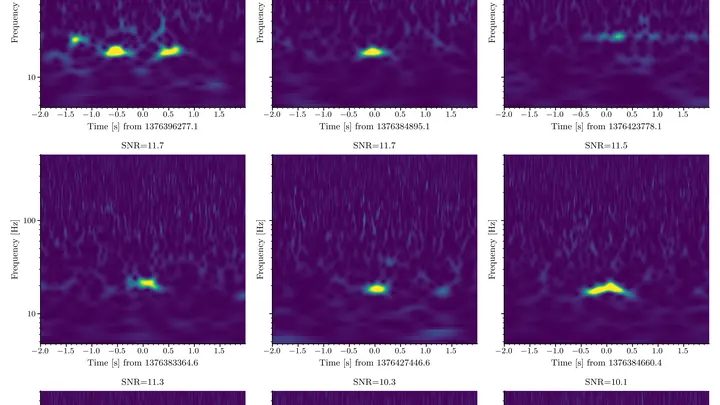
In the headphones used to listen to a distant orchestra, there is an occasional crackle. The crackle can be so loud that it drowns out the music or even blends in with it.
A dense social network: everyone is connected to almost everyone else, and in this web it's hard to see who really matters. Too many threads — computers choke, simulations stall. Scientists have figured out how to prune such networks without losing what's essential.
The idea is to remove connections that don't participate in shortest paths.
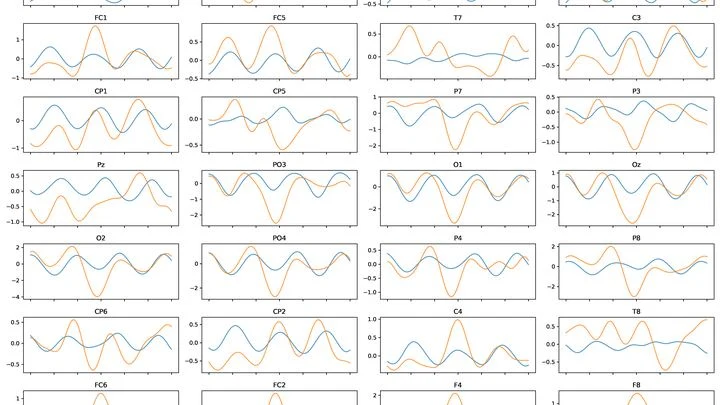
A person looks at a screen where letters flash. They don't move a hand or an eye: they only mentally note the desired symbol. Sensors on the head pick up the brain's faint electrical waves, and the computer figures out which letter the person chose. That's how a brain–computer interface works: it gives a voice to those who can't speak or move.
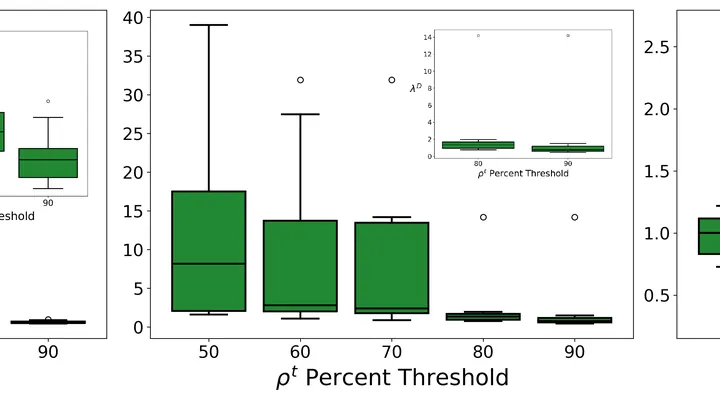
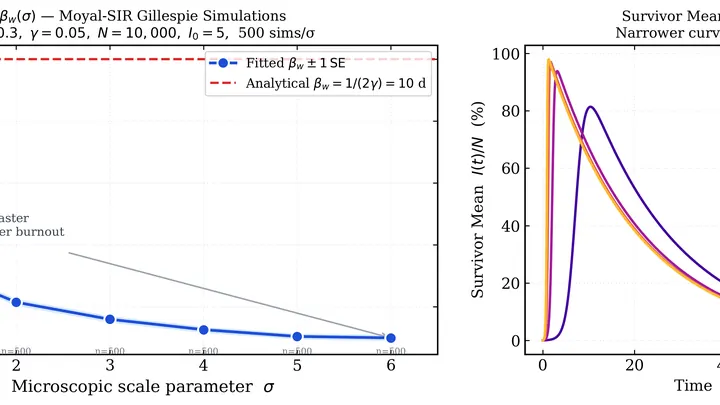
An epidemic is not a steady stream but a series of hits. One carrier may infect no one, while another infects fifty people at once. Such rare but powerful events are called 'dragon kings': they stand out from the overall pattern and determine how severe a disease wave will be.
In the new study, the virus is compared to a billiard ball.
When moving to a new apartment, a person doesn't relearn how to open doors or turn on lights. Experience from the old home transfers automatically: a kitchen is a place with a stove and a sink, a bedroom is a place with a bed. The brain doesn't store an exact map but a flexible schema that it overlays onto unfamiliar space.
Scientists have built a computer model of this transfer. It has two levels.
A steel plate with an 8×8 grid of cells dampens elastic waves in two frequency corridors at once. This is not a lucky accident but the outcome of a calculation using a new scheme: first a coarse template for the low frequency, then fine-tuning within free pixels for the high frequency.
A rough sketch of a portrait: a few confident lines define the shape, but the details are not yet refined. That is how a parametric model, such as vector autoregression (VAR), describes a time series: it captures the main structure, but if the real data deviate from its assumptions, the portrait comes out distorted.
A meteorologist stares at a pressure map, trying to figure out where the cyclone will go. They have a model, but it is flawed, and fresh measurements, but they are incomplete. Merging the two so that the forecast remains physically meaningful is harder than it seems: classical methods sometimes produce negative temperatures or impossible probabilities.
The barometer in the port of Papeete on Tahiti and the one in Darwin, Australia, are separated by 7,400 kilometers. When one shows high pressure, the other often shows low, and this difference, called the Southern Oscillation, drives rainfall from India to Brazil. Predicting it even a month ahead is a problem with a century-long history.
An orchestra plays a complex piece, and each group of instruments enters on its own schedule. The violins might slow down while the woodwinds keep the same tempo, and the percussion might suddenly burst into a roll. The conductor hears everything at once, but pinpointing the exact moment when the flutes, not the cellos, changed rhythm is nearly impossible.