A Powder That Whips Itself into Shape express
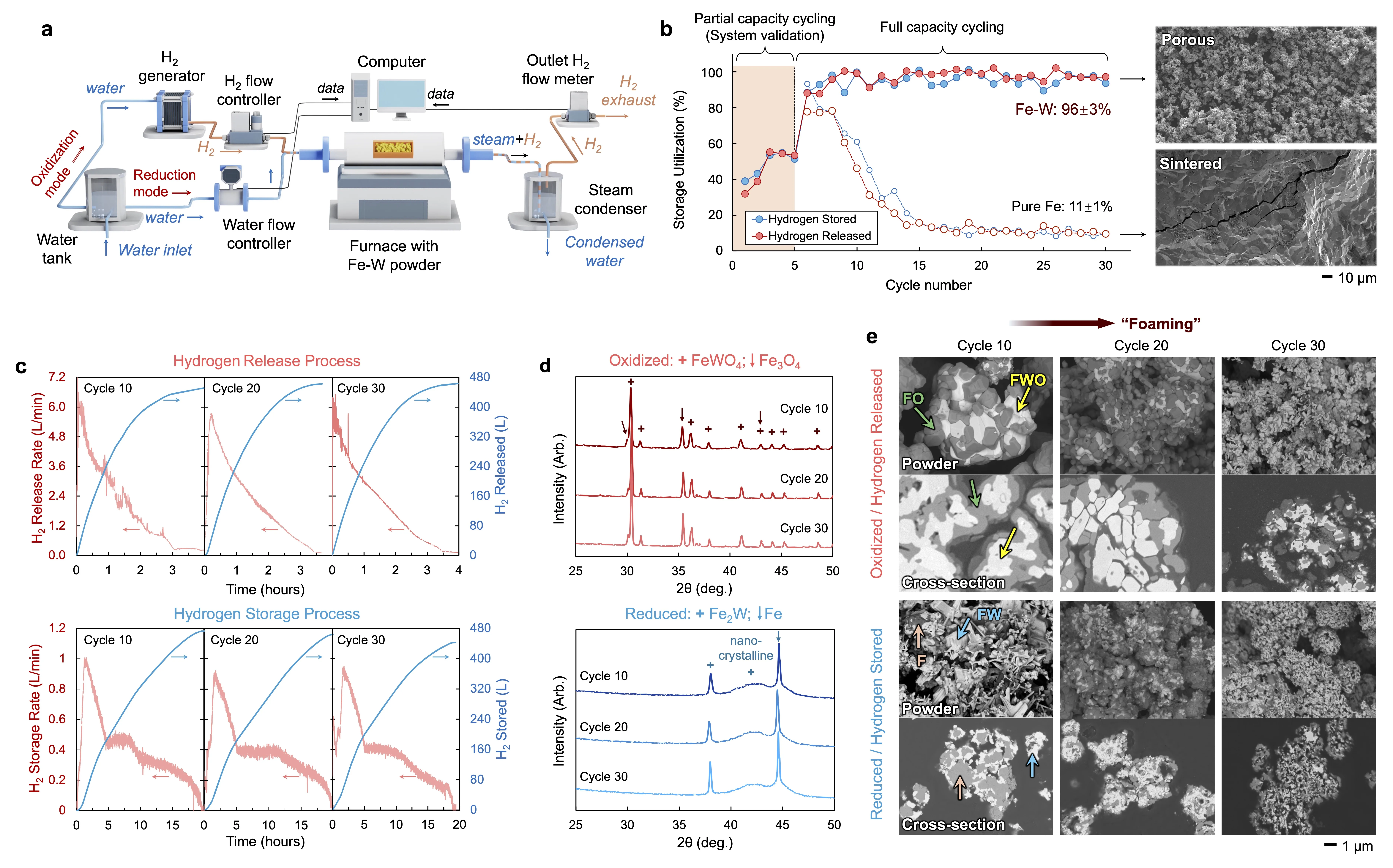
Iron powder heated to 650–800 degrees absorbs hydrogen like a dry sponge soaks up water. But after a few cycles, the particles fuse into a dense lump, and the sponge stops working. Adding tungsten changes the picture: with each heating, the powder foams itself, staying loose and porous.
In a reactor with a kilogram of such powder, researchers managed to store 42 grams of hydrogen and use 96% of its capacity over 30 cycles. Even after 90 incomplete cycles, the powder didn't lose its ability to absorb gas. Tungsten evaporates when heated and travels through the pores, preventing particles from sticking together.
This storage method is safer than pressurized tanks and cheaper than cryogenic containers. Iron powder with tungsten is a compact and reliable "sponge" for hydrogen, which can be used at fueling stations or in energy storage facilities.
Tungsten is one of the most refractory metals: it melts at 3422°C, but in this process it evaporates already at 650°C and travels through the powder like steam through a teapot.