Scientist

Theodore Lyman

1874–1954 · spectroscopy, atomic physics, astrophysics
American physicist who discovered the ultraviolet series of hydrogen (the Lyman series), widely used in astrophysics to study the interstellar and intergalactic medium, as well as in cosmology (Lyman-alpha forest).

Biography

He studied at Harvard University, where he later worked. He headed the physics laboratory at Harvard and worked on spectroscopy.

Key discoveries

💡 Lyman was a wealthy man and paid for some of the equipment for his ultraviolet research out of his own pocket.
"He thought that the true value of a discovery is sometimes not immediately visible, and it only becomes apparent over time when others find applications for it."
Concepts
hydrogeninterstellar mediumredshiftspectroscopystar formation
Laws
Rydberg formula
Scientists
Robert HookeJohann Jakob BalmerJocelyn Bell BurnellArno PenziasCharles TownesJames Clerk MaxwellErwin SchrödingerCecilia Payne-Gaposchkin

Related articles

Quantum Physics2025-10-031 minarXiv:2510.03024express
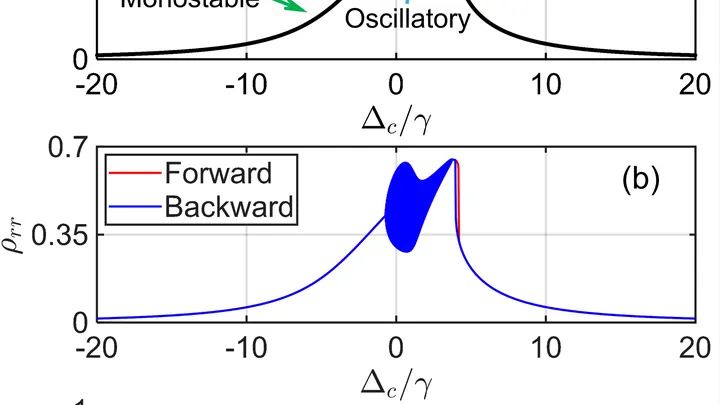
Light with One-Way Motion: The Magic of Rydberg Atoms
Ordinary light scatters in all directions, but physicists turned it into something like a conveyor belt — a one-way stream that doesn't turn back. To do this, they sent two counter-propagating beams through a cloud of Rydberg atoms, bloated to the size of a tiny dust speck.
Atomic Physics2026-02-162 minarXiv:2602.14980express
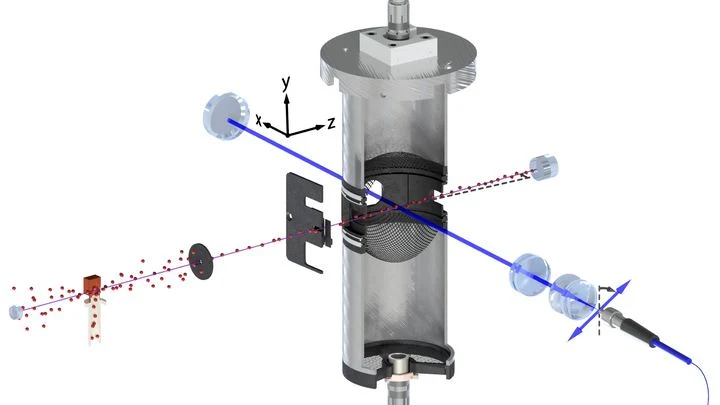
Hydrogen Atom Measured to Trillionths
The hydrogen atom is like a tiny clock, ticking with a precision engineers can only dream of. When an electron jumps between orbits, it absorbs or emits light at a strictly defined frequency: that's the 'tick.' In the new work, physicists caught one such transition, between the 2S and 6P states, and measured its frequency with an…