The Climate Pendulum with a Long Memory ✛
A barometer on Tahiti and one in Darwin, Australia, breathe in opposite phases. When pressure rises on one, it falls on the other, and this difference, known as the Southern Oscillation Index, serves as a pendulum for the global climate. But this pendulum is not a simple one: it swings not only under the influence of momentary nudges but also remembers its own past movements.
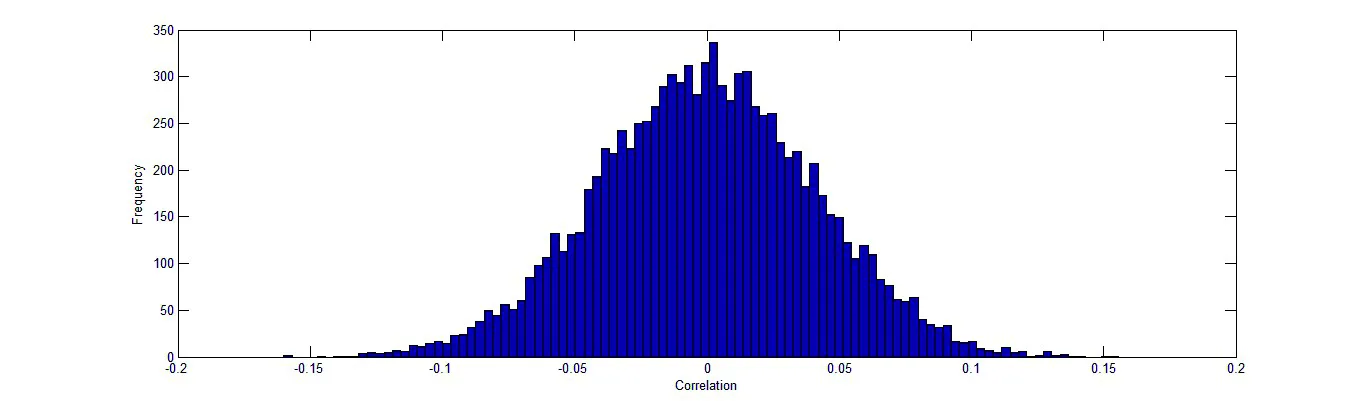
The researchers took monthly values of the index from 1951 to 2015 and checked how long this memory persists. It turns out that the link between past and future does not fade quickly: even after two, three, and sometimes five years, traces of earlier oscillations remain in the data. It is as if a swing, once pushed, continues to sway gently long after the person has stepped off.
Such memory does not make the climate fully predictable. Calculations show that the index behaves chaotically: two very similar initial states can diverge in the future like two leaves that fall into the same stream but get caught in different currents. The horizon of reliable prediction is limited, but not zero.
For a launch site where a rocket launch can be disrupted by a gust of wind, such a link is not an abstraction. If it is known several months in advance that the Pacific has entered a warm phase, one can expect windier weeks and adjust the preparation schedule accordingly. The climate pendulum continues to swing, but now its motion can be at least partially anticipated.
The Southern Oscillation Index is calculated from the difference in atmospheric pressure between Tahiti (in the Pacific Ocean) and Darwin (in Australia, on the shore of the Indian Ocean). These two points are about 7,500 kilometers apart, yet their out-of-phase 'breathing' reflects global shifts in tropical circulation.