A prediction is the output of a model that estimates the likely outcome of a system before it happens. In science, predictions are not guesses but calculated expectations based on physical laws, statistical patterns, or machine learning algorithms. They are central to testing theories: if a model's prediction matches observation, the model gains credibility; if not, it must be revised. In modern research, predictions range from forecasting whether a gene is methylated in a cell to anticipating how a tumor will respond to chemotherapy.
History
The formal concept of prediction as a testable scientific output dates to the scientific revolution, but its modern statisticalformulation emerged in the 20th century with the work of figures like R. A. Fisher in hypothesis testing and later with the rise of computational modeling.
How it works
Predictions are generated by models that encode relationships between input variables and outcomes. In physics-based models, these relationships are derived from equations of motion or conservation laws. In data-driven models, such as neural networks, the relationships are learned from large datasets of past examples. The model takes new input data, processes it through its internal rules, and outputs a probability or a most-likely value. The accuracy of a prediction depends on how well the model captures the underlying dynamics and how representative the training data are.
In practice
Predictions are used everywhere: weather forecasting, medical prognosis, financial risk assessment, and in physics to anticipate the behavior of complex systems like plasma turbulence or protein folding.
Fun fact
In some chaotic systems, predictions are fundamentally limited by the 'butterfly effect' — tiny uncertainties in initial conditions grow exponentially, making long-term forecasts impossible even with perfect models.
Picture a wind map over a mountain range. The wind mostly blows downhill, following elevation changes. But if you look closely, in some valleys the air swirls into little eddies that keep the wind from simply flowing down. That is exactly what the mutation field in human DNA looks like.
An interpreter gets distracted by every rustle in the hall, and a one-hour meeting stretches into two. Similarly, molecular foundation models learn the language of molecules from vast corpora, but each new conversation requires fine-tuning. Monroe changes the rules: it doesn't learn a new language but instantly finds common meaning from a few examples.
As you slowly turn the tuning knob of an old radio, the sound doesn't fade in gradually from the static: it bursts forth in a sudden jump, the moment the antenna hits resonance with the wave. Genes in a living cell behave much the same way.
A hundred thousand stars in the dense core of a globular cluster move like steel balls in a giant pinball machine. Each 'bump' — a gravitational encounter between a binary system and a single star — triggers a cascade of unpredictable events.
In combat, a pilot needs to instantly understand what an object is and what its intentions are. Conventional systems wait for complete radar data — like a goalkeeper who only reacts after the shot. The new algorithm works like an experienced goalkeeper: from the attacker's first moves, it predicts the target's maneuver.
The cells of an organism are like twin chefs sharing a kitchen. They have the same cookbook (DNA), but when copying the recipe to a cheat sheet and assembling the dish, random errors occur. This unpredictability, entropy, means that in identical cells, protein levels are sometimes high, sometimes low.
An experienced detective doesn't calculate a criminal's path using the laws of physics: he checks a file of similar cases. The new prediction method works the same way: instead of complex equations, it has a vast archive of trajectories that have already happened — planetary motions, currency exchange rates, signals from space.
Gravitational signals from dying massive stars are whispers reaching us from the most violent laboratories in the Universe. Einstein predicted these gravitational waves over a century ago, but only today, with detectors like LIGO, are we beginning to hear them.
You buy a new kitchen scale, but instead of exact weight, it only shows deviations from some "norm." To find out how much an apple weighs, you first have to weigh dozens of other apples and calculate the average.
For a long time, we only saw proteins in their final form — like photographs of dancers frozen in a beautiful pose. Programs like AlphaFold learned to predict that pose from a chain of carbon links. But the real magic is how a protein finds this shape faster than you can blink, performing a swift dance.
A lab sends a robot a list of a thousand candidate molecules for a new drug. The predictor robot, trained on old data, gives each one a 'fit or no fit' score. But when the list comes from an unfamiliar area, a different virus or a rare tumor, the robot starts to get confused. Its confidence stays high, while actual hits drop to zero.
Every morning you pick up the same mug, but the coffee tastes either bitter or just right. It's not about the coffee, and not about your character. Inside us, an invisible panel with dozens of sliders is constantly shifting: fatigue, hunger, anxiety, hormone levels.
In a car, the steering, brakes, and accelerator gradually fail. At first, you can still swerve around a pothole, but each year the maneuver takes more effort. At some point, even a perfect road becomes impassable — the car no longer obeys the driver.
That's exactly how the authors describe aging: not as the accumulation of rust or wear and tear, but as the loss of "controllability" of the body.
A melody plays, and the brain doesn't just listen note by note. It works like a conductor who already knows the score: each next note is expected because the previous ones still echo in memory. But how do neurons hold on to that echo?
A forecaster issues a week-long forecast in seconds but cannot explain a single decision. That is roughly how modern AI weather models work: they already match classical numerical methods, yet their internal logic is hidden behind millions of parameters.
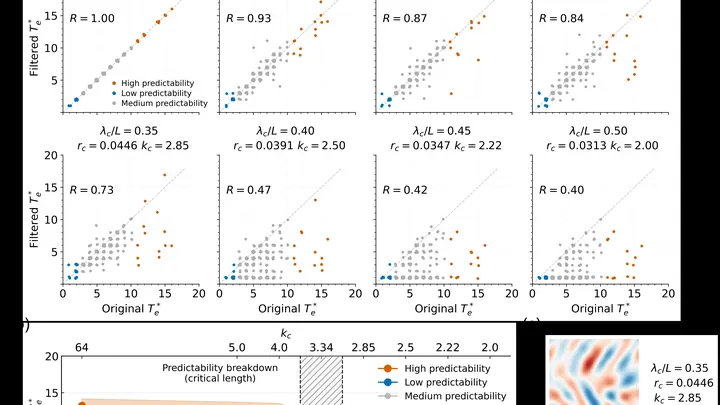
In a turbulent flow, like a raging river, energy constantly cascades from large whirlpools to small ones. Occasionally, particularly powerful bursts occur, resembling sudden waves crashing against the shore. Scientists asked: can we know in advance when such a "wave" will strike? It turns out the answer depends on which vortices are present in the flow at that moment.
To understand a mechanism, you have to poke it. A child taking apart an alarm clock doesn't just stare at the gears: they turn the wheel and listen to how the ticking changes. Scientists do the same: instead of passive observation, they feed specially chosen signals into the system and watch the response.
In a heart-lung machine, blood flows through narrow tubing and past rapidly spinning pump blades. Sometimes red blood cells can't take it: their membranes rupture, and hemoglobin spills into the plasma. For a patient, this is like pouring sand into a car's fuel system — small damages accumulate and wreck the whole mechanism.
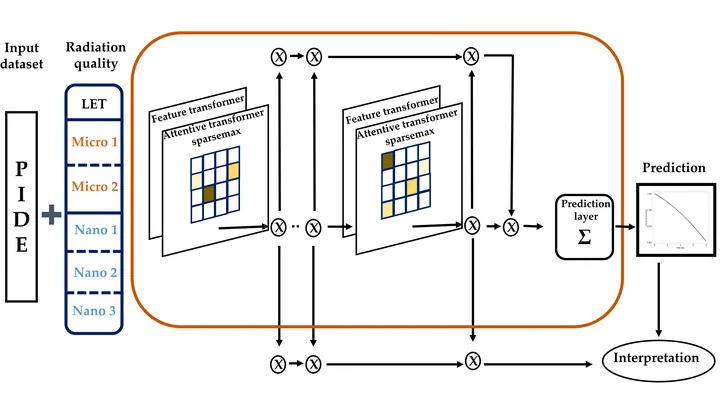
A cell hit by a proton beam is like a city after a pinpoint bombing: some blocks are leveled, others just have broken windows. Whether the city survives depends on which buildings are hit and how the strikes are distributed.
A neutron star is a sphere the size of a city, but it weighs as much as one and a half Suns. Inside such a sphere, matter is so compressed that a teaspoon of it would weigh billions of tons. But physicists don't fully know what this matter is made of.
Inside a neutron star, matter is compressed to unimaginable densities. Previously, scientists speculated about its exact makeup, cycling through possible equations linking pressure and density. The new method tosses out guesswork: it directly ties the measurable mass and radius to the internal structure.
The liver is a quiet workhorse. It processes everything we eat and drink, and rarely complains out loud. By the time the first obvious symptoms of cirrhosis appear, the disease has already destroyed a significant portion of the organ. Doctors have long sought a way to see into the liver's future, and a new study offers an unexpected tool — ordinary hospital records.
In 1992, Hurricane Andrew tore through Florida, leaving insurers with $$15.5 billion in losses. Many companies went bankrupt, and the market devised a way to shift disaster risk onto investors: catastrophe bonds. These securities pay generous coupons as long as a specified disaster does not occur, such as a hurricane of a certain strength or an earthquake in a particular region.
Science is a vast kitchen where scientist-cooks seek new recipes. Once, they sifted ingredients by hand; now artificial intelligence, a seasoned chef, lends a hand. AI memorizes millions of flavors and suggests surprising pairings: through information search, the algorithm uncovers hidden patterns.
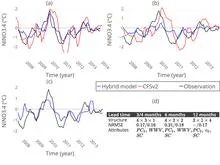
Every spring, El Niño forecasts lose their edge, like a translator who gets distracted by every rustle in the room and turns a one-hour meeting into a two-hour one. Scientists call this the spring predictability barrier: in March and April, models that confidently predicted a warm phase in the Pacific back in January start making mistakes twice as often.
In the Pacific Ocean, every few years the water off the coast of Peru warms up, and fishermen call it El Niño. Sometimes the warming is mild, sometimes so strong that it changes weather across the entire planet. Forecasting a strong El Niño six months to a year ahead is a task at the edge of possibility: weather is forgotten within two weeks, while climate remembers for decades.
A translator who learned a language from thousands of books can interpret a conversation without being distracted by noise in the hall. Similarly, a neural network trained on 127,137 years of model climate produces a winter forecast in a fraction of a second, faster and more accurately than bulky dynamical systems.
Imagine a map where each patch of ocean is colored with its own shade: in some places the color is saturated, meaning the future of the system is predetermined; in others it is pale, meaning the outcome depends on a random gust of wind.
A translator who jumps at every rustle in the hall starts mixing up words by the end of the meeting. Their confidence in being right grows, while their accuracy drops. That is roughly how poorly calibrated probabilistic forecasts behave: the model claims a high probability for an event, but reality disagrees.
In 2010, the Pacific Ocean was brewing a strong El Niño, but all forecasting models collectively overestimated it. They looked at water temperatures and missed the key point: the ocean had already begun to reorganize, not loudly but quietly, linking distant points in pairs.
In 1988, the surface temperature of the Pacific Ocean began to change long before meteorologists declared the onset of El Niño. Points on the map scattered along the equator started behaving in concert: if water warmed in one place, it did so in a neighboring one too.
The puppet master pulls the strings, and the marionette dances. In forecasting the future from time series, the puppet masters are the few variables that truly control the system. The rest merely echo their movements, creating an illusion of complexity. The challenge is to find these puppet masters and watch only their fingers, not the whole stage.