Light Stress and the Escape into the Sand express
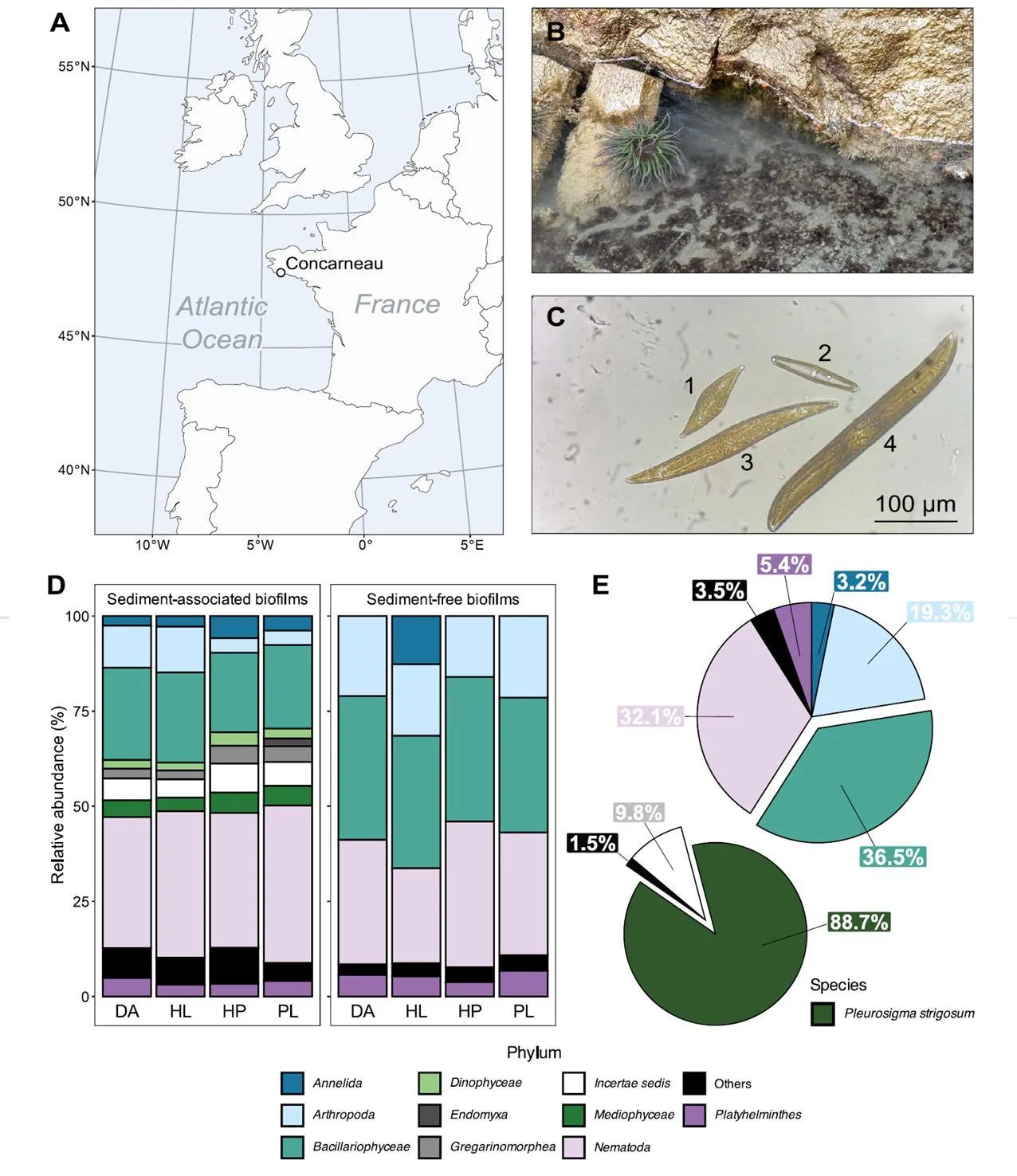
In the coastal shallows, where water retreats and returns, life follows the rhythm of the sun. The brownish film on the mud's surface is not just dirt but a dense community of tiny diatoms. By day they get plenty of light for photosynthesis, but when the sun gets too intense, a chemical storm brews inside the cells. Excess energy spawns reactive oxygen species — aggressive molecular fragments that can wreck the cell's delicate machinery.
The algae are not defenseless. Some switch on an internal repair kit, the xanthophyll cycle, which quenches excess energy before it causes harm. But there is a more radical option: the tiny diatoms wriggle through their mucous sheaths and dive into the sediment. Until now, it was unclear what exactly triggers this movement. Researchers studied two communities — one that could freely migrate through the mud, and another that was deprived of this ability. They subjected them to three kinds of stress: bright light, cold plasma, and direct exposure to hydrogen peroxide.
The result was unequivocal: under any type of oxidative stress, the algae unanimously moved downward. The main signal for escape was hydrogen peroxide — the very molecule we use to clean scrapes. But then come the subtleties. When migration was blocked, the xanthophyll cycle kicked into high gear — a plan B for saving photosynthesis. This means that the pathways controlling movement and internal protection are separate in the cell, but they work in concert: if you can't run, you boost your chemical shield.
Original abstract
as written by the authors arXiv:2607.03958
Diatom-dominated intertidal microphytobenthic biofilms experience daily fluctuations in irradiance, which can lead to oxidative stress within the photosynthetic apparatus through the production and accumulation of reactive oxygen species. To maintain photosynthetic efficiency, benthic diatoms have developed protective strategies, including mobilization of the antioxidant xanthophyll cycle and the ability to migrate vertically through sediments. However, mechanistic understanding of signaling pathways underlying migration remains poorly characterized. This study investigated the triggering effect of reactive oxygen species on behavioral and photophysiological responses through the analysis of lipophilic pigments and fluorescence parameters. To this end, two microphytobenthic communities, one with sediment allowing vertical migration and another without sediment restricting it, were exposed to irradiance, cold atmospheric plasma, and hydrogen peroxide stresses. Results showed a consistent downward migration response under all oxidative stresses, highlighting the key role of reactive oxygen species, especially hydrogen peroxide, in triggering this microphytobenthic behavior. Moreover, a difference was observed between the pathways involved in vertical migration and those underlying photoprotective responses. Hydrogen peroxide and cold atmospheric plasma stresses highlighted the necessity for substantial microphytobenthic migration, whereas irradiance induced a specific and controlled response involving engagement of the xanthophyll cycle, acting in synergy with the migration strategy by showing stronger activation when migration was impaired.
Diatoms don't move with flagella; instead, they secrete mucus and glide along it, like tiny caterpillars.