Biological Physics physics.bio-ph

172 articles

Molecular, cellular and neurological biophysics, membrane biophysics, quantum phenomena in biological systems, and related methodologies.

articles

Noise That Works for Us
An old aviation instrument sometimes sticks: the needle catches on the scale and doesn't move, even though the plane is already changing altitude. Engineers found a simple solution: add a slight vibration. The shaking doesn't hinder; on the contrary, it helps the needle break free and show the truth.
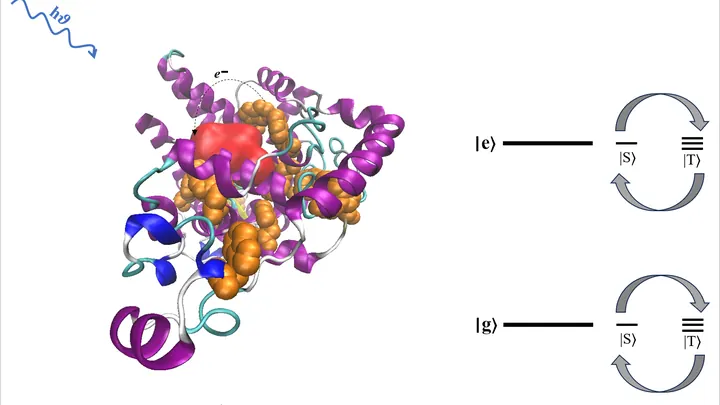
Radical Dance, Frozen by Chirality: How Birds See the Magnetic Field
In the eye of a migratory bird, a quantum drama quietly unfolds. The protein cryptochrome is its stage. Here, radical pairs are born: two molecules with unpaired electrons whose spins are entangled in a whimsical dance foreseen by John Stewart Bell.
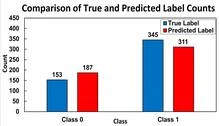
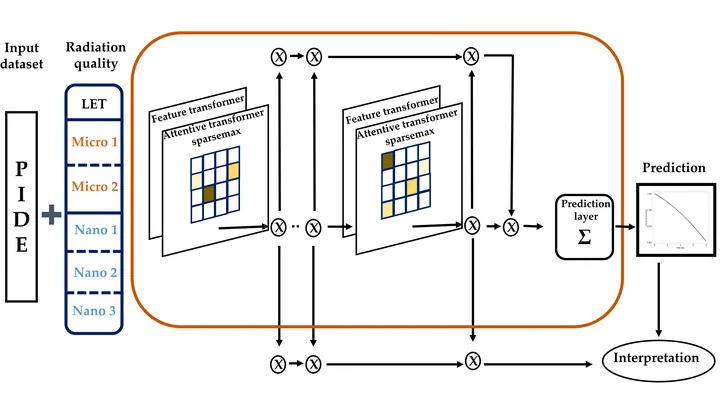
Dense Connections vs. Residual Paths: How DenseNet-121 Outperforms ResNet-50 in Brain Cancer Detection
A brain tissue slice is just 5 microns thick, twenty times thinner than a human hair. On such a slice, a pathologist looks for signs of a tumor: altered nuclear shapes, cell crowding, abnormal blood vessels. It is painstaking work, and two specialists can disagree on the same image.
Diamond Chip with 49 Sites: A Quantum Sensor for DNA
On a two-by-two-millimeter diamond plate, an entire orchestra of forty-nine violins fits. Each string is tuned to its own note, its own DNA fragment. When the right melody enters the hall, the string responds, and the conductor hears a clean sound. That conductor is a quantum sensor hidden within the diamond itself.
Biological Physics2025-10-071 minarXiv:2510.05600express
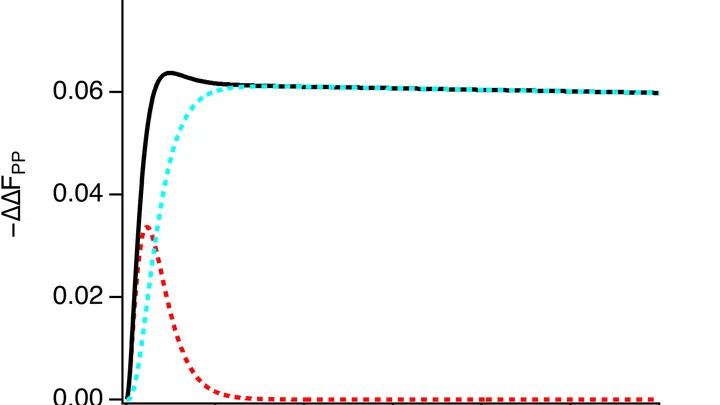
How to Watch the Electron Dance in Living Cells
Inside every living cell, chemical transformations are constantly taking place. Some of them create unstable particles whose electrons behave like paired magnets. Their interaction resembles a dance: each movement of the pair responds to external magnetic fields, as if to a changing rhythm.
Biological Physics2025-10-071 minarXiv:2510.05792express
Cells Communicate with Light
Living cells continuously exchange light signals — a billion times fainter than daylight. It's like a whisper picked up by ultra-sensitive instruments. A healthy cell whispers rhythmically, a cancerous one — haltingly, but with a long memory of previous flashes.
Biological Physics2025-10-111 minarXiv:2510.13840express
How Birds See Earth's Magnetic Field
Birds migrate using the magnetic field. In their eyes, there's a protein called cryptochrome. It captures sunlight, especially blue light, and triggers a reaction. Absorption of light leads to the formation of a particle pair that is acutely sensitive to magnetic fields.
Quantum Physics2025-10-151 minarXiv:2510.13247express
Quantum Mind? Can't Do Without the Classical
Intelligent action begins with a plan. Just as an architect needs blueprints to evaluate options, any agent with will needs to repeatedly copy data about reality.
Quantum Physics2025-10-221 minarXiv:2510.19976express
How a Brainless Slime Mold Outpaces Supercomputers
Physarum polycephalum is a tiny brainless slime mold, resembling spilled lemonade. But this blob, living in humid environments, can solve mazes. Its secret lies in a unique way of processing information: it uses fluid flows and chemical signals, turning its entire body into a kind of liquid processor. Every movement, every reaction becomes a computational step.
Biological Physics2025-11-091 minarXiv:2511.08624express
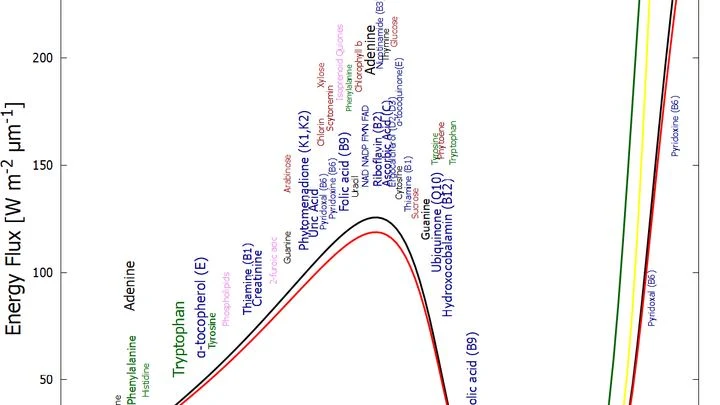
Which Stars Can Give Birth to Life? The Answer's in the Color
Life began with molecules akin to natural sunscreen — based on carbon, they soaked up the mild ultraviolet of the young Sun and turned it into heat. This way of dissipating energy wasn’t just heating: it made molecules self-organize, like chefs kneading structured dough out of a chaos of ingredients. But ultraviolet is a finicky tool.
Biological Physics2025-11-141 minarXiv:2511.13768express
Quantum Secrets Inside Viruses
A virus of carbon life is a tiny container where the hereditary thread is compressed to the limit, like spaghetti in a tightly packed pot.
Quantum Physics2025-11-181 minarXiv:2511.14363express
Quantum Secrets of Plants and Birds
Plants employ an army of perfect couriers to deliver energy. Each photon of sunlight is absorbed, and its energy is instantly, with almost no loss, transferred to reaction centers where nutrient synthesis occurs.
Quantum Physics2025-12-081 minarXiv:2512.07307express
Diamond Sees Through the Cell
Every cell is a miniature tuning fork. A sharp magnetic pulse makes it 'ring', and the decay of that sound depends on what's inside: viscosity, density, composition. A tiny diamond with a structural defect acts like a hypersensitive microphone, picking up magnetic echoes from individual cells.
Biological Physics2025-12-171 minarXiv:2512.15213express
Quantum Spinning Top: How a Molecule Detects Weak Magnetic Fields
Inside a living cell, a tiny carbon spinning top whirls — a molecule billionths of a meter across. An ordinary top falls quickly, but this one behaves differently: it can spin in both directions at once, like a quantum coin perpetually frozen mid-fall. This superposition of motions is key to its strange selectivity.
Getting the Most Out of Every Photon
A fluorescence microscope is like a photographer shooting in the dark: the more frames, the better the view, but each frame costs photons. In a living cell, the supply is limited, otherwise the light would simply kill the sample. So scientists proposed not to increase the number of photons, but to choose more wisely when to catch them.
Biological Physics2026-01-032 minarXiv:2601.01092express
Cells Twist Their Grip Like a Nut on a Bolt
A cell doesn't just lie on a surface: it probes it, pulls it, and pushes it. Until now, instruments could only detect direct forces: how hard a cell presses or stretches its support. But if you grab a cell by the "shoulders" and give it a slight twist, it responds by rotating, and until recently, no one could measure that rotation.
Applied Physics2026-01-032 minarXiv:2601.01267express
Getting Genes into Living Cells Without Damaging Them
Primary human cells, taken straight from the body, are the most honest material for studying diseases and testing drugs. But getting foreign genetic material into them is tricky: cells don't like intruders. Standard methods either damage the cell or work unevenly, especially when the sample is heterogeneous — which it almost always is. The new platform tackles this with a vortex flow.
Biological Physics2026-01-041 minarXiv:2601.01560express
A Switch Protein: How to Catch a Quantum Current
Every breath you take and every muscle twitch runs on a stream of electrons flowing through proteins inside your cells. These proteins aren't static: they constantly change shape, like a spring that compresses and releases. But until now, no one has seen exactly how these movements open or close the path for electrons.
Biological Physics2026-01-091 minarXiv:2601.05438express
The Chameleon Virus: How Proteins Choose Their Size
The same set of parts can assemble into different shapes, just as magnetic beads can form a small cube or a large sphere. That's how hepatitis B virus proteins behave: they build two capsids of different sizes. One is made of 90 protein pairs, the other of 120. Both are stable and appear both in living cells and in the test tube.
Biological Physics2026-01-091 minarXiv:2601.05907express
Waves That Keep Their Formation
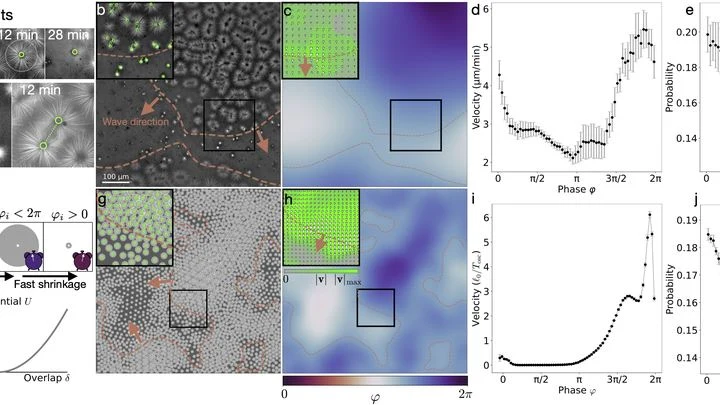
Inside a fertilized frog egg, waves ripple, like ripples on water, but made of proteins that command cell division. These waves travel millimeters, even though the egg itself is less than a millimeter across. Previously, it wasn't understood why they didn't fall out of sync. It turns out the waves clear their own path.
Biological Physics2026-01-142 minarXiv:2601.09660express
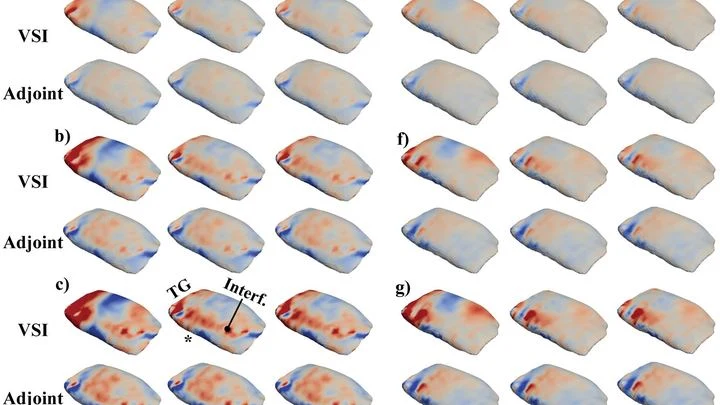
How a Tendon Tears from Within
The shoulder tendon is like a cable that holds your arm and lets it rotate. When that cable gets injured, its internal structure changes, and it starts to stretch differently. In this study, they took a rat's supraspinatus tendon and pulled it along its fibers while recording how every point inside it shifted.
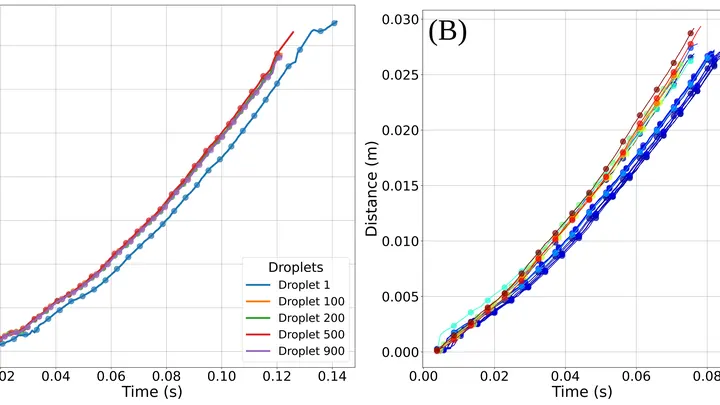
Life from a Test Tube: How a Simple Mixture Assembled Itself into a Cell
Dissolve a few salts and formaldehyde in a glass of water. After a while, the liquid spontaneously separates: droplets with membranes appear, like tiny bubbles. Inside each droplet, chemical transformations occur, and the droplet itself grows, absorbing material from the surrounding solution. These droplets are not just bubbles.
Biological Physics2026-01-162 minarXiv:2601.11275express
Chip Detects Virus at the Atomic Level
A graphene transistor works like a microscopic switch: a molecule lands on its surface, and the current changes. But a bare graphene surface catches nothing. You need a "bait"—antibodies that recognize only viral proteins.
q-bio.BM2026-01-161 minarXiv:2601.11450express
How a client protein reshuffles the contents of cellular droplets
Inside a living cell, there are tiny liquid droplets where proteins gather together, like ingredients in a drop of vinaigrette. Some proteins form the droplet's scaffold, while others, clients, don't create the droplet themselves but happily jump in and change its composition.
Biological Physics2026-01-172 minarXiv:2601.11947express
A Drop of Blood Tells Its Story Through a Single Molecule
A drop of blood is a bustling city in miniature. Thousands of different molecules scurry through it, each leaving its own trace. But peering directly into this city is hard: the streets are tangled, and there are so many inhabitants that counting them all individually is out of the question. Scientists have found a way to listen to the whole city at once, without singling out its residents.
Medical Physics2026-01-181 minarXiv:2601.12437express
Sound Beam Passes Through the Skull and Twists
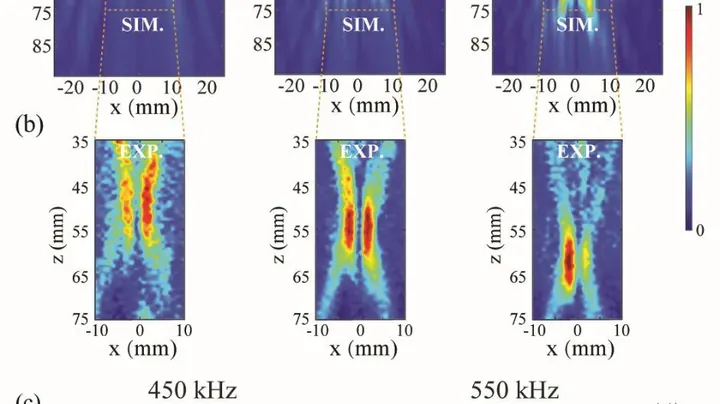
Sound can do more than be heard: it can push. An ultrasound vortex is a sound wave twisted like a whirlpool in a shell: silence at the center, rotating pressure at the edges. Such a whirlpool can grab tiny particles and carry them without a touch.
Statistical Mech2026-01-192 minarXiv:2601.12935express
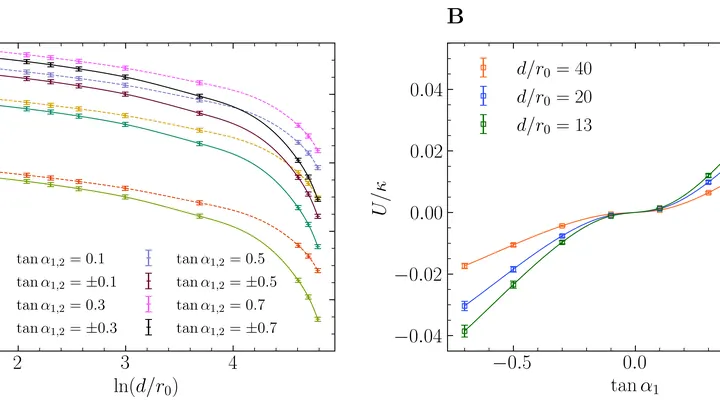
Invisible Glue: How Order Attracts Disorder
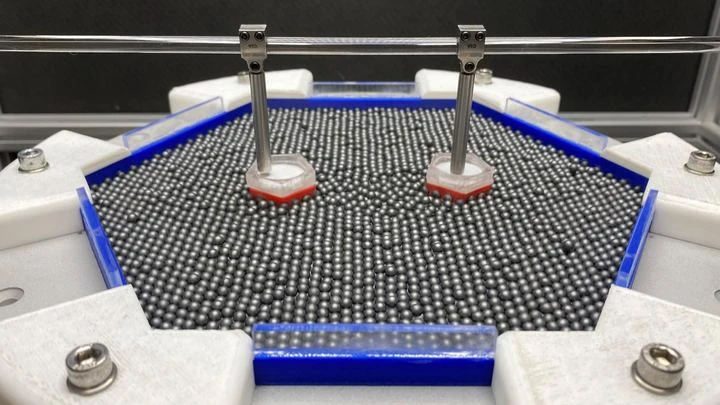
Shake a jar of sand and marbles, and you'll see large objects float or sink depending on their size. But if you shake it cleverly, you can make the marbles gather into pairs and chains, as if glued together. It's this kind of 'invisible glue' that physicists from India and Germany have now caught and measured for the first time.
Biological Physics2026-01-202 minarXiv:2601.13924express
Spider Silk Twists When Wet
A spider web is not just a sticky net but a delicate instrument that responds to the weather. When the air becomes humid, spider silk threads shorten and twist, like a wet towel being wrung from both ends. Previously, it was thought that the thread twists because the proteins inside are arranged in a spiral. But no direct evidence for such an arrangement was found.
q-bio.PE2026-01-201 minarXiv:2601.13947express
How the Weak Win: Fleeing a Neighbor Saves the Species
Two species of bacteria share a single Petri dish. Both eat the same food, and by all rules, one should outcompete the other. But in reality, they often live together for years. The secret lies in knowing when to leave. Bacteria don't stay put. When a stranger appears nearby, they start moving faster.
Biological Physics2026-01-212 minarXiv:2601.15106express
How a cell decides whether to survive radiation
A cell hit by a proton beam is like a city after a pinpoint bombing: some blocks are leveled, others just have broken windows. Whether the city survives depends on which buildings are hit and how the strikes are distributed.
Biological Physics2026-01-212 minarXiv:2601.15477express
Proteins bend the membrane the way a spoon bends the film on milk
The membrane of a living cell is not a rigid shell but a pliable film with thousands of proteins embedded in it, like raisins in dough.
Biological Physics2026-01-221 minarXiv:2601.15587express
Transferring Diamond Sensors to Living Tissues
Tiny diamonds with a defect inside can act as ultra-sensitive magnetic field sensors. But to be useful in medicine, they need to be carefully placed on soft, wet, curved surfaces, like a hydrogel bandage or a hair. It's like applying a temporary tattoo to a wet ball: the usual methods either burn the pattern or leave messy residues.
Medical Physics2026-01-221 minarXiv:2601.15947express
A Camera That Can See Tissues Breathe
Cells breathe. They need oxygen, and they take it from the blood flowing through the tiniest vessels. If blood flow is weak or oxygen is scarce, cells start to suffocate. Doctors need to see this as early as possible. But how do you look inside living tissue without cutting it open? The new device does it in two ways at once.
Biological Physics2026-01-221 minarXiv:2601.16151express
Switch Proteins: How a Cell Reads DNA
A cell is like a kitchen where thousands of recipes (genes) are collected in one thick book (DNA). The chef-protein Klf4 flips through the pages and decides which recipe to cook today. But how does it find the right line among billions of letters? Previously, researchers thought the protein looked for a short 'password'—a few consecutive letters.
Biological Physics2026-01-231 minarXiv:2601.16654express
Nanoflowers Heat Up and Take Their Own Temperature
Tiny particles that look like flowers can do two things at once: heat up and tell you how hot they are. This isn't science fiction: it's the result of working with nanoparticles made of cobalt ferrite, a magnetic material that responds to magnetic fields.
Optics2026-01-231 minarXiv:2601.16904express
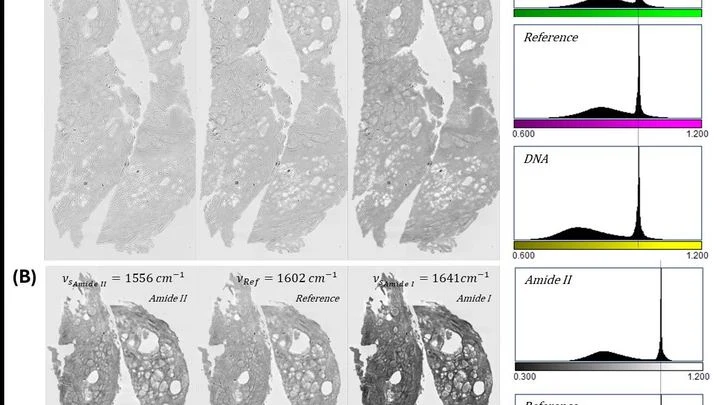
Microscope Sees Cells Like an Artist
A pathologist looks through the eyepiece and sees a pink-purple tissue section — the classic hematoxylin and eosin stain. The dyes bind to nuclei and cytoplasm, and the color tells the doctor about the disease. But preparing the slide itself takes hours: fixation, paraffin embedding, sectioning, staining. This new device skips the dye.
Sleep as Brain Cleaning: Why Memory Gets Stronger at Night
Over the course of a day, the brain accumulates impressions the way a room accumulates stuff. At night, during deep sleep, it doesn't just rest: it tidies up: it sorts through the day's events and decides what to keep and what to toss. Scientists built a computer model of the brain that learns from a few examples during the day and 'replays' them at night, as if dreaming.
Fluid Dynamics2026-01-262 minarXiv:2601.18465express
The Hidden Force on Leaves
A water droplet races across a taro leaf like a bead on a freshly waxed floor. But it doesn't just glide: it picks up electricity. Thirty years ago, scientists explained why lotus leaves stay dry: their surface is covered with microscopic bumps that trap air. Now it turns out that water on leaves has another, hidden power.
Biological Physics2026-01-262 minarXiv:2601.18669express
Swimming Cells Choose Their Viscosity
A swimmer in a pool of syrup moves differently than in clear water: each stroke is harder, but you can push off more strongly. Roughly the same goes for single-celled organisms — tiny rowers that propel themselves through fluid using flagella.
Biological Physics2026-01-271 minarXiv:2601.19962express
A Drug-Delivering Tube: How Nitinol Learns to Release Heparin
Nitinol is a metal with a memory: compressed into a tiny tube, it springs back into shape inside a vessel and keeps it open. But simply inserting a stent isn't enough: it must not clog with clots. To prevent that, a drug is applied, which should be released slowly, like water from a sponge, not all at once.