Oxygen is an invisible gas that fills our lungs with every breath. It is like a magical elixir of life: without it, fire goes out and fish in water stop breathing. Oxygen is born in the green leaves of plants under the sun, as a gift to us from generous nature.
History
Oxygen was first isolated by Scheele (1771) and Priestley (1774), but the decisive role was played by Lavoisier (1777), who refuted the phlogiston theory and showed that air consists of two gases: 'vital' (oxygen) and 'asphyxiating' (nitrogen). In 1781, Cavendish synthesized water from hydrogen and oxygen. In the 20th century, the Nobel Prize was awarded to Otto Warburg (1931) for his work on the respiratory enzyme using oxygen.
How it works
In mitochondria, oxygen serves as the final electron acceptor in the electron transport chain, being reduced to water. This process, coupled with ATP synthesis, obeys the second law of thermodynamics: the energy of chemical bonds in food is converted into the energy of high-energy phosphate bonds in ATP with heat dissipation. Without oxygen, the cell switches to anaerobic glycolysis, which is 18 times less efficient.
Fun fact
Oxygen is the most abundant element on Earth: it makes up almost half the mass of the Earth's crust and two-thirds of your body's mass. And it is oxygen that colors blood red by combining with iron.
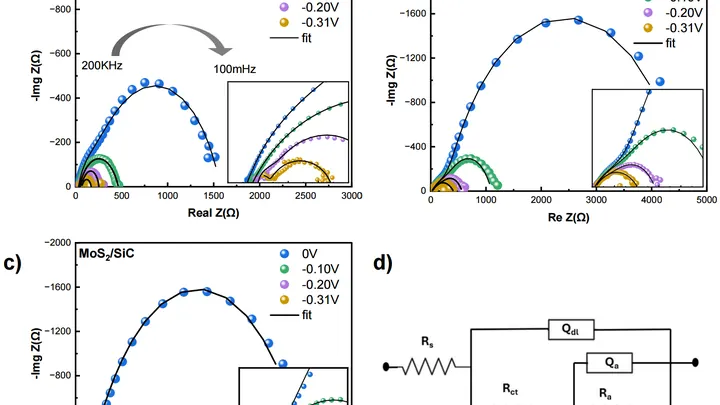
A transparent film of bismuth tungstate sits on a substrate and does not conduct electricity. Three minutes in a cloud of nitrogen plasma, and it turns black, with resistance dropping by a factor of a billion.
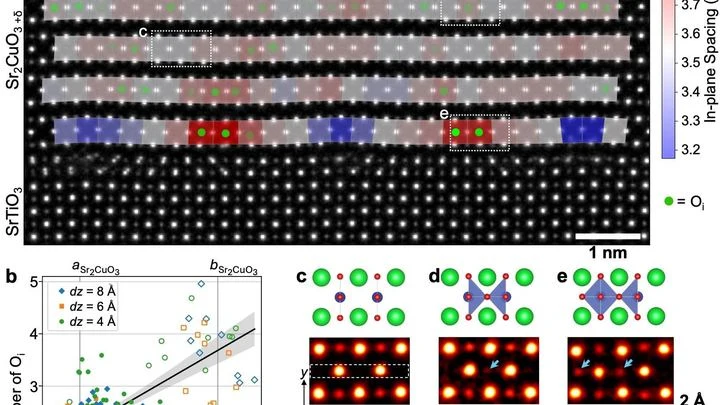
A superconductor is a material that conducts electricity without loss, like water flowing through a perfectly smooth pipe. In copper-based superconductors, tiny oxygen additions act like a volume knob: a bit more and the material starts superconducting; a bit less and it stops. But the oxygen atoms themselves are so small that seeing them directly was impossible.
A superconductor is a material that conducts electricity without loss, like water flowing through a perfectly smooth pipe. In copper-based superconductors, tiny oxygen additions act like a volume knob: a bit more and the material starts superconducting; a bit less and it stops. But the oxygen atoms themselves are so small that seeing them directly was impossible.
Turn off the stove, and water stops boiling almost instantly. In the world of catalysis, researchers expected a similar picture: stop the reaction, and all intermediate particles vanish right away. But fresh observations of platinum nanoparticles tell a different story.
A camera flash that fires in a thousandth of a second doesn't heat the subject — unlike a regular flash that lasts a full second. A similar trick has been found in radiotherapy: when a radiation dose is delivered in milliseconds instead of minutes, healthy tissues suffer less. This is called the FLASH effect.
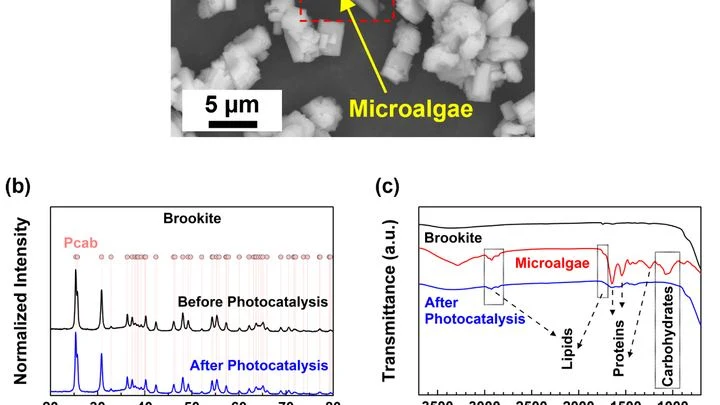
Water in a glass seems simple, but to split it into oxygen and hydrogen with sunlight, it's not enough to just transfer electrons: they also need to 'agree' on the direction of their spin. An oxygen molecule is born with two unpaired electrons spinning in the same direction.
A layered cake of atomic planes of nickel and oxygen: that's how bilayer nickelates are built. Two such planes are separated by a spacer layer. If an oxygen atom sits in that spacer, it acts as a bridge: it links the layers and triggers a state in which electrons move without resistance.
In a crystal of water and caustic cesium, oxygen and cesium atoms sit in place like beads in a rigid lattice. Hydrogen atoms behave differently: they are like passengers constantly changing seats. In this layered material, each oxygen is linked to three neighbors via hydrogen bridges, forming a honeycomb-like pattern.
Chondrules look like frozen raindrops made of stone. They're about the size of a grain of sand, but they record the history of the first few million years of the Solar System. Once, these droplets floated in the scorching gas around the young Sun, then clumped into asteroids and fell to Earth as meteorites.
A water molecule, finding itself near a carbon ring, starts to vibrate, and immediately falls under the sway of an invisible conductor. The ring's electron cloud, like a maestro, dampens some vibrations while amplifying others.
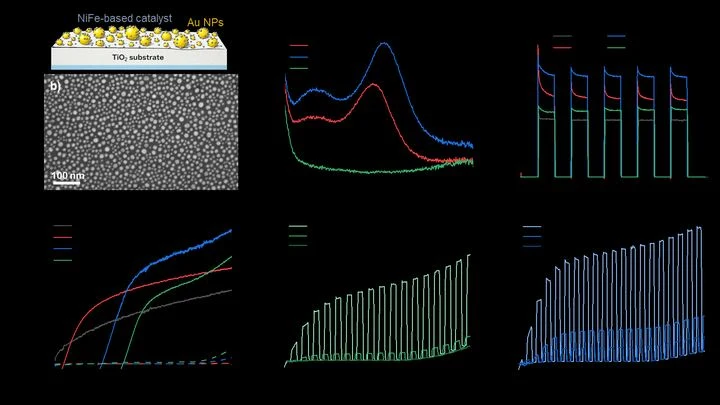
Conventional solar panels convert light into electricity, but here light splits water into hydrogen and oxygen. Hydrogen is a clean fuel, but the process is slow. To speed it up, helper substances that donate electrons are added. Often this is alcohol, but it's a shame to waste it.
At the dawn of Earth, about four billion years ago, the planet was a harsh place: a dim sun, frequent asteroid impacts, and air without oxygen. Under such conditions, the first steps of life seem almost impossible.
Hydrogen is a clean fuel: when it burns, it produces only water. But to extract it from water, you need to break the strong bond between hydrogen and oxygen. This is usually done with platinum, an expensive metal.
Two burned-out stellar cores collide and merge into one. That's how R Coronae Borealis stars are born — rare luminaries where oxygen-18 is hundreds of times more abundant than in the Sun. But exactly how this happens has remained a puzzle.
Lunar dust looks like gray sand, but there's not a breath of air in it. Oxygen is there — tightly bound in the rocks, like sugar in caramel. To get it out, you need to break chemical bonds, and scientists are looking for the simplest way.
In the lab, they took artificial lunar soil made from samples from the Apollo missions and China's Chang'e.
In the air we breathe, invisible chemical events are constantly unfolding. One of them is the birth and instant death of a particle with the formula H₂COO. Known as an 'intermediate,' it appears for a split second when ozone molecules collide with organic compounds, then immediately shatters into simpler fragments.
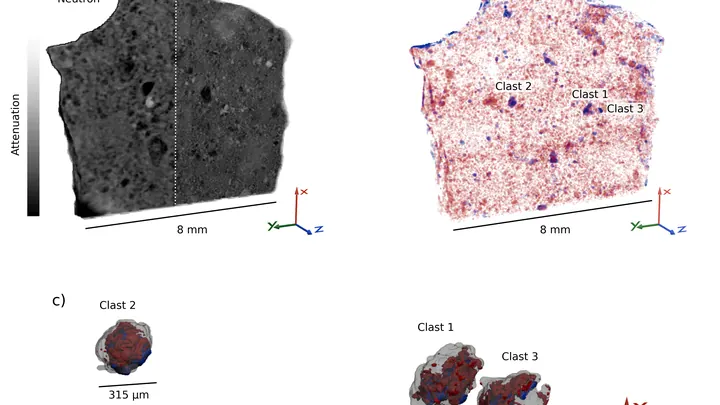
To find out if a Mars rock holds water without smashing it, scientists used neutron and X-ray scanning — similar to medical imaging. Neutrons pick up hydrogen, the foundation of water, allowing them to map moisture inside the sample.
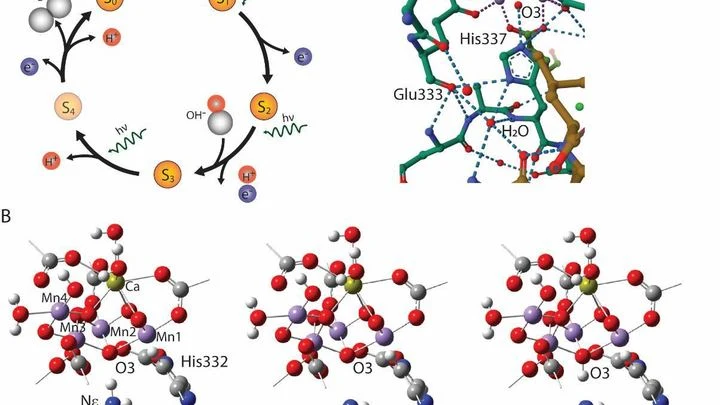
In every leaf, in the light, a factory works that splits water into oxygen and hydrogen. The oxygen goes into the air we breathe, and the plant uses the hydrogen for food. The heart of this factory is a protein complex with four manganese atoms and one calcium atom.
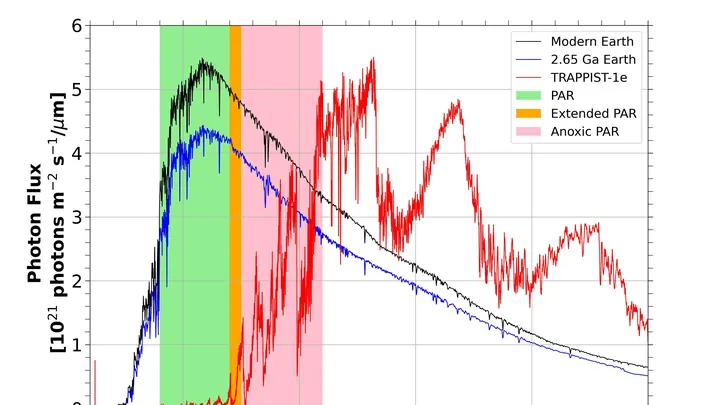
On the exoplanet TRAPPIST-1, oxygenic photosynthesis, the process by which light energy is converted into chemical energy with oxygen as a byproduct, is losing the race for survival. This M-dwarf star emits mostly in the infrared, not in the visible range like the Sun.
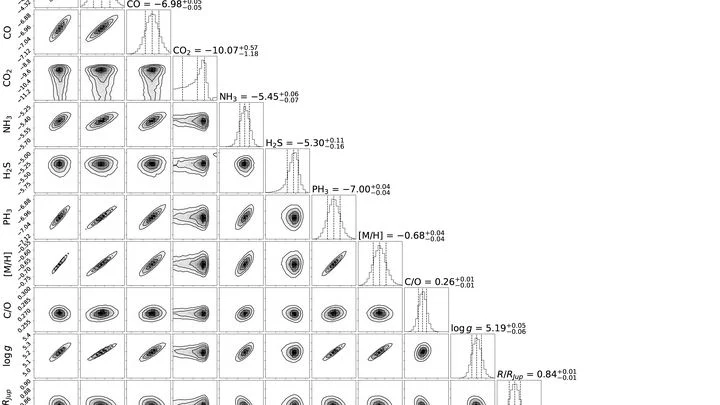
Brown dwarfs are objects that sit between planets and stars: they are more massive than planets but not heavy enough to sustain stable fusion in their cores.
The carbon cycle is like the planet's breathing. Forests and oceans inhale carbon dioxide, while industry and wildfires exhale it back. In 2023, that inhale became gasping and shallow. At the Mauna Loa station, instruments recorded that CO₂ concentrations rose by 3.37 parts per million over the year, 86% faster than the year before.