Ant death: size isn't everything express
An ant the size of a grain of rice lives longer than its neighbor half its size. But when heat strikes, the bigger one isn't necessarily tougher. Researchers in Australia collected 18 species of ants and checked three things: how long workers live, how quickly they deteriorate, and at what temperature they start to die.
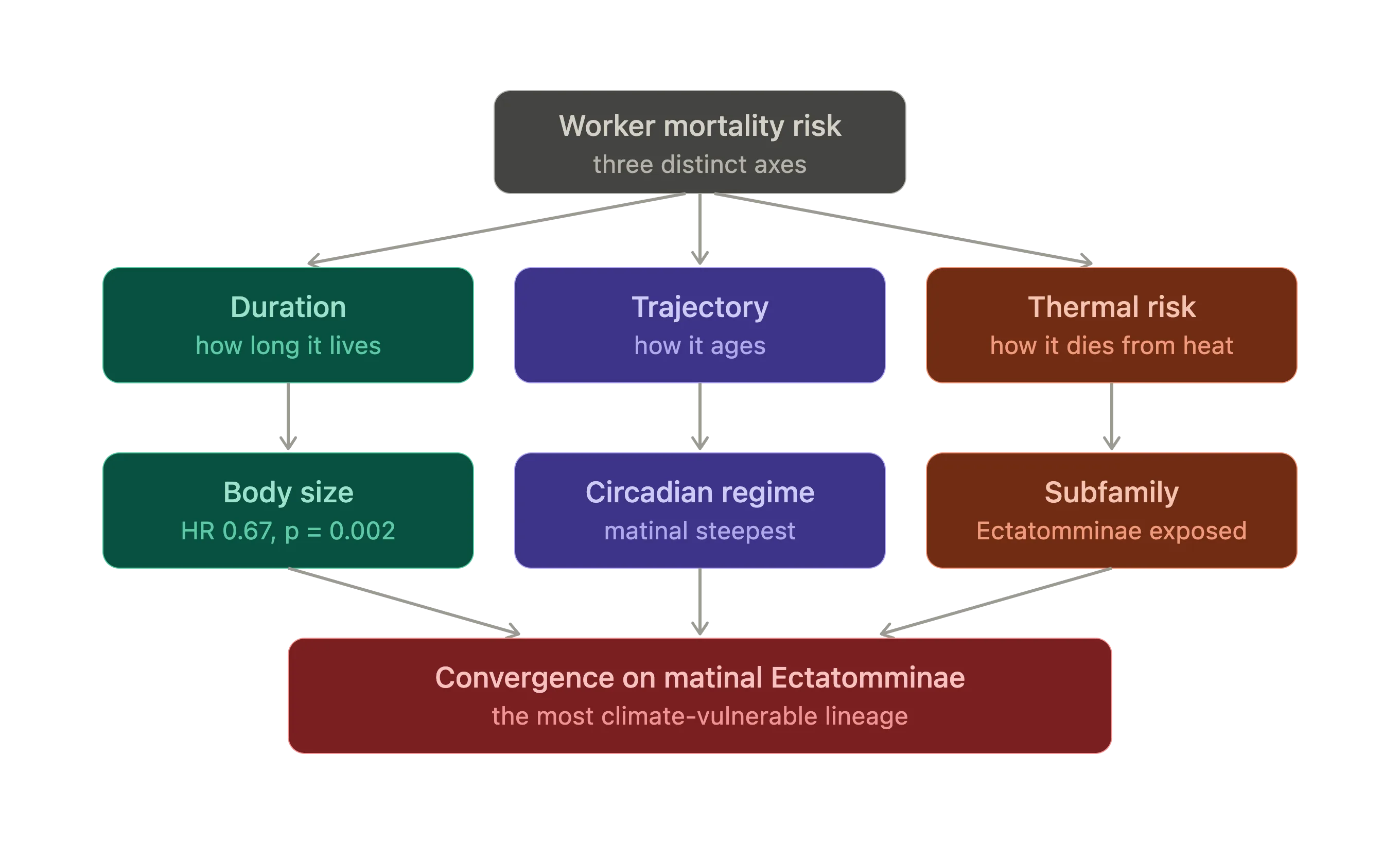
It turned out that body size reliably predicts only one thing — lifespan. Larger ants live longer (their risk of dying at any given moment is a third lower). But the rate of aging is not linked to body mass: it depends on what time of day ants are active. Morning species age more steeply than twilight ones. Heat sensitivity also doesn't depend on size. Above 20 degrees, mortality rises sharply in all species, but in one subfamily, Rhytidoponera, each additional degree adds 5% risk.
To predict how insects will survive climate warming, size alone is not enough. You also need to know activity time and the species' lineage. Otherwise, you might overestimate the resilience of some and underestimate the vulnerability of others.
Morning-active ant species age faster than twilight-active ones — possibly because their activity falls during the hottest and driest part of the day.