q-bio.PE q-bio.PE

83 articles

articles

q-bio.PE2016-07-042 minarXiv:1607.01008
A Pacific Ocean Thermometer Predicts a Cholera Outbreak in Dhaka
In January 2016, water in the central Pacific Ocean warmed to 2.6 degrees above normal. For a resident of Dhaka, that distant event might seem irrelevant, but it was the first link in a chain that led to a prediction: come autumn, the city would likely face a major cholera outbreak. The researchers took a page from weather forecasters, who use pressure over the ocean to predict storms onshore.

q-bio.PE2017-03-133 minarXiv:1703.04238
Echo of a Tropical Fever: How Dengue Returns as Paralysis Seven Months Later
Hong Kong sits at a crossroads: tropical diseases arrive with travelers, while the local climate follows global cycles. In this city, from 2000 to 2016, two afflictions grew in different ways: dengue fever surged in sharp waves, while Guillain–Barré syndrome (acute paralysis, often after infections) crept upward slowly but steadily.
q-bio.PE2021-07-022 minarXiv:2107.05740
Dengue Waves: What Links the Fever to the Ocean and the Foliage
Every year in Costa Rica, dengue fever arrives like the rainy season: people expect it, they prepare for it, but the exact rhythm of outbreaks has remained a mystery. In some cantons, the disease flares up every year; in others, every two or three years.
q-bio.PE2024-07-313 minarXiv:2407.21286
Epidemics Under the Microscope: How Brazil Scans Dengue and Chikungunya Outbreaks
A fisherman casts his net into murky water, and an hour later the catch is thrashing on the deck. That's roughly how Episcanner works: it sifts through 14 years of disease records and pulls out every fever outbreak in every one of Brazil's 5,570 municipalities. From 2010 to 2023, the net caught 18,567 dengue epidemics and 2,199 chikungunya epidemics.
q-bio.PE2026-01-201 minarXiv:2601.13947express
How the Weak Win: Fleeing a Neighbor Saves the Species
Two species of bacteria share a single Petri dish. Both eat the same food, and by all rules, one should outcompete the other. But in reality, they often live together for years. The secret lies in knowing when to leave. Bacteria don't stay put. When a stranger appears nearby, they start moving faster.
Physics and Society2026-01-212 minarXiv:2601.14632express
Contact Tracing: Why Missing One Link Breaks the Whole Chain
A translator who jumps at every rustle in the hall turns a one-hour meeting into two. It's the same in epidemic control: contact tracing teams try to reconstruct the chain of infections, but something always slips through. Someone forgets who they met, someone doesn't answer the phone, someone never even comes to the attention of health workers.
q-bio.PE2026-01-262 minarXiv:2601.18703express
How an Epidemic Flows Through a City
An epidemic is like a forest fire: the flames race toward where there are more dry branches. Similarly, a virus spreads faster where people live in closer quarters. But old mathematical models described infection as an ink blot spreading evenly across paper.
Biological Physics2026-01-311 minarXiv:2602.00832express
Why Elephants Are Taller Than They Are Wide
A stag beetle the size of a fingernail stands on the ground with its legs spread wider than its own height. An elephant as tall as a room, on the other hand, towers above the ground like a tower. Why is that? Both animals walk on the same ground, but they see it differently. For a beetle, each pebble is a boulder, while for an elephant, it's a grain of sand.
q-bio.PE2026-02-082 minarXiv:2602.08101express
A Virus Hits Like a Punch: Why Outbreaks Don't Follow the Average
An epidemic is not a steady stream but a series of hits. One carrier may infect no one, while another infects fifty people at once. Such rare but powerful events are called 'dragon kings': they stand out from the overall pattern and determine how severe a disease wave will be. In the new study, the virus is compared to a billiard ball.
Exoplanets2026-02-191 minarXiv:2602.18510express
Meteorite craters — a bowl for the first life
4 billion years ago, the young Earth was mercilessly bombarded by meteorites, leaving behind impact craters. Rains filled them with water, forming shallow ponds where lipid bubbles accumulated. These bubbles, like soap bubbles but with a double-layered lipid membrane (just like modern cells), formed spontaneously when water mixed with fat-like substances.
q-bio.PE2026-02-212 minarXiv:2602.18942express
The Hidden Fragility of Ecosystems
An ecosystem is like a swing that someone is subtly pushing. Previously, it was thought that the main concern was that the swing wouldn't swing too wildly. But the authors of this work showed that the greater danger is when the equilibrium point itself slides toward a place where the swing can no longer return.
Machine Learning2026-02-211 minarXiv:2602.18982express
How Evolution Teaches Antibodies
An antibody is a protein that catches viruses and bacteria. When an enemy enters the body, immune cells start trying out different antibody variants, as if testing different keys against a lock. Beneficial changes are kept, harmful ones are discarded. Over a few weeks, this process yields an antibody that fits its target perfectly.
q-bio.PE2026-02-281 minarXiv:2603.00457express
How Deceiver Ants Strengthen Their Shared Home
In an anthill, some ants carry food and build, while others just eat and reproduce. This isn't just laziness: it's two distinct types of ants. Workers are smaller, while freeloaders are larger. If freeloaders become too numerous, the colony falls apart, like a communal kitchen where nobody washes the dishes.
q-bio.PE2026-03-021 minarXiv:2603.02403express
Why a species thrives where it doesn't belong
In two neighboring ponds, the same microorganisms swim. Food appears now in one, now in the other — randomly, with no rule. After a month, there are a hundred times more of them in the first pond than in the second. No one chose where to live. Just luck. This is how disequilibrium works. While the environment keeps changing, abundances don't have time to even out.
Geophysics2026-03-141 minarXiv:2603.16933express
Reef rings born from currents
Ring-shaped reefs, atolls, are usually explained like this: corals grow along the edge of a volcanic island while the island slowly sinks. What's left is a hollow ring that can stretch for kilometers. But satellite images show similar rings around very small reefs where there are no volcanoes and no subsidence.
q-bio.PE2026-03-192 minarXiv:2603.18801express
Virus evolution versus quarantine
An epidemic is like a fire in a dry forest: a spark flares up, the flames leap from tree to tree, and within a week the whole area is burning. A hundred years ago, scientists devised a simple mathematical model for such a fire: they divided people into those who had not yet fallen ill, those who were ill, and those who had already recovered.
Eye Movements Reveal Autism in One in Three
Eyes follow a dot that smoothly traces a complex curve on the screen. For most people, the gaze stays close to it, but for some, it seems to slip or lag behind. Previously, such peculiarities drowned in average numbers: if you add everyone up and divide, the difference almost disappears. Instead of looking at averages, the scientists decided to examine each person individually.
Biological Physics2026-03-271 minarXiv:2603.26226express
The Ant Trap: When the Shortest Path Becomes a Roadblock
In urban planning, Braess's paradox is well known: adding a new road to a transport network can worsen traffic rather than ease it. For a long time, it was explained by the selfish behavior of drivers, each seeking personal gain. However, ant colonies, acting as a single coordinated superorganism without personal interests, exhibit the same trap.
math.OC2026-04-051 minarXiv:2604.04305express
Epidemics as a Game: How Personal Calculations Reshape the Wave of Infections
An epidemic is not just a virus: it's millions of personal decisions. One person keeps riding the subway; another locks themselves at home. Classical models describe the average behavior of a crowd but don't ask why each individual acts that way.
q-bio.PE2026-04-101 minarXiv:2604.11818express
Epidemics Are Distinguished by Time, Not Place
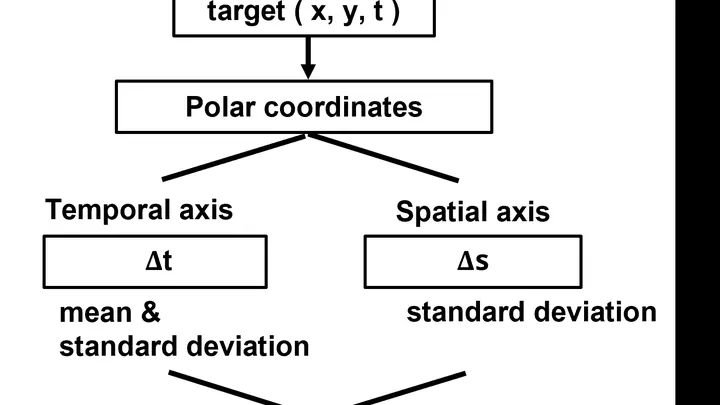
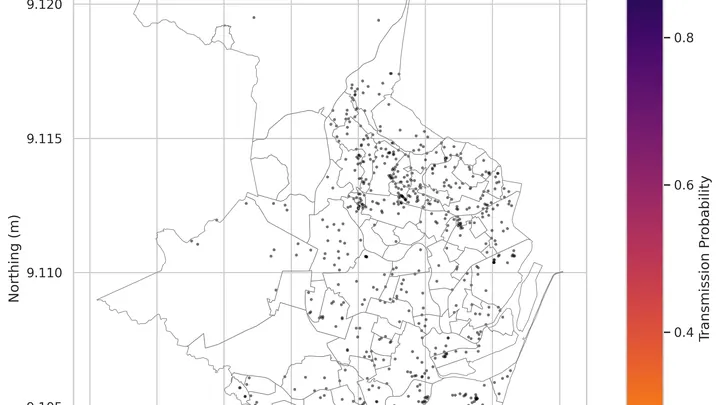
In the Brazilian city of Recife, three viruses (dengue, Zika, and chikungunya) are spread by mosquitoes. Scientists collected data on thousands of cases and built a model that assesses how infections in different parts of the city influence each other. The model looks at two things: how close cases are in space and how much time passes between them.
q-bio.PE2026-04-111 minarXiv:2604.09966express
The Landscape Ratchet: How Fragmentation Boosts Biodiversity
A landscape cut by roads or rivers into isolated patches resembles a shared apartment after partitions are installed: residents no longer bump into each other in the common hallway. Species that once competed for the same food or space now live apart. Competition weakens, and those that would have lost to pushier neighbors in a continuous landscape now survive.
q-bio.PE2026-04-121 minarXiv:2604.10571express
Evolution by the Same Rules
Engineers improving neural networks act like breeders: they try a variant, check the result, and keep the best. They collected 935 such trials from 161 papers and measured how often a code tweak turns out beneficial, harmful, or neutral. The picture is familiar to any biologist: 68% of changes degrade performance, 19% do nothing, and only 13% yield a gain.
q-bio.PE2026-04-172 minarXiv:2604.16065express
Microbes at the Edge of a Breakdown
A pot of water sits on the stove. The temperature drops: plus one degree, zero, minus one — the water stays liquid. But at some point, a light breath is enough to make the whole mass instantly freeze into ice. Physicists call such jumps first-order phase transitions.
q-bio.PE2026-04-181 minarXiv:2604.17036express
The Landscape Evolution Wanders Through
Imagine a mountain range where height represents an organism's fitness. Every point on the slope is a particular set of genes. Evolution climbs upward, but the terrain of this phylogenetic network landscape is cut by ridges and valleys.
q-bio.QM2026-04-231 minarXiv:2604.21988express
How a Shell Builds Itself
Every shell is a stone diary of growth. The mollusk doesn't build it from a blueprint like an architect; it simply adds material along the edge, following the same rule over and over. It's as if a snail glued a new strip to its house each day, nudging it slightly sideways and making it a bit bigger. It's this repetition, not complex control, that creates the species' characteristic shape.
q-bio.PE2026-04-231 minarXiv:2604.22122express
How a Desert Remembers Its History
Drylands are like skin cracking from dehydration. When rainfall decreases, plants don't vanish overnight: they rearrange, leaving bare patches of soil between them. These patterns are visible even from space. Scientists compared satellite images of eight arid regions, from the Sahel in Africa to Australian deserts.
q-bio.PE2026-04-281 minarXiv:2604.26060express
Why Banana Disease Won't Give Up
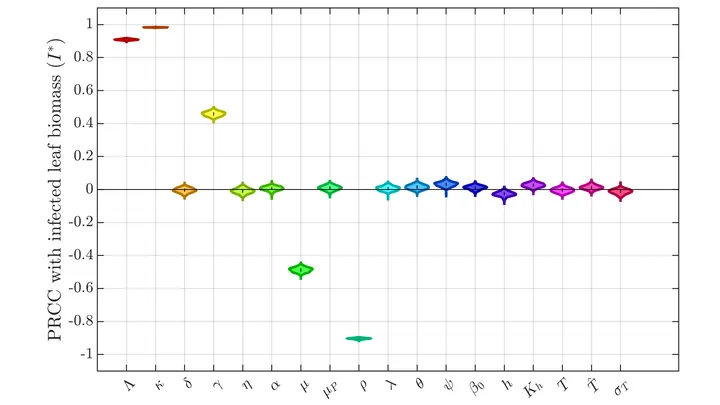
A banana plantation is covered in rusty streaks. This is black sigatoka — a fungus whose spores travel through the air like invisible pollen. It strikes the leaves, sapping the plant's strength. The farmer reduces the infection, but the disease suddenly returns, like a weed that was playing dead. The fungus has two ways to reproduce.
q-bio.PE2026-05-052 minarXiv:2605.04339express
The Patchwork Quilt of Evolution
A patchy landscape isn't just a picture from a geography textbook. For microbes, cells, or animals, the world is a mosaic of patches: warmer here, more food there, and behind that rock — almost poison. When a mutant with a new trait appears in such a mosaic, its fate depends on which patch it lands on. This new work ties two factors together.
q-bio.PE2026-05-062 minarXiv:2605.04498express
The Great Filter Is Not a Chain but a Tangled Ball
A vast hall with a thousand doors, and only one leads to the stars. The rest are locked, and the keys aren't just hidden: they're wrapped in other keys and tangled into a knot. That's the Great Filter in a new reading: not a chain of failures but a tangled hierarchy where each step depends on the previous one nonlinearly.
q-bio.MN2026-05-162 minarXiv:2605.16781express
Aging as Losing the Wheel
In a car, the steering, brakes, and accelerator gradually fail. At first, you can still swerve around a pothole, but each year the maneuver takes more effort. At some point, even a perfect road becomes impassable — the car no longer obeys the driver. That's exactly how the authors describe aging: not as the accumulation of rust or wear and tear, but as the loss of "controllability" of the body.
q-bio.PE2026-05-182 minarXiv:2605.17975express
A City as an Organism: The Math of Dengue Fever
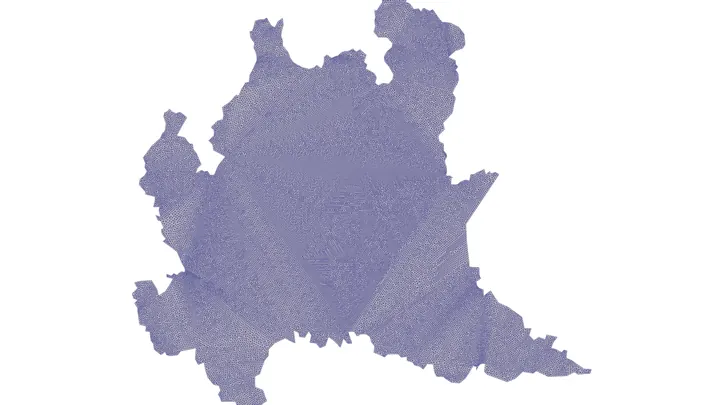
A city is not just a jumble of buildings and streets. For the dengue virus, carried by mosquitoes, a city is a patchwork of neighborhoods, each with its own conditions for outbreaks. In one district, mosquitoes are almost absent; in the next, they swarm as if someone left hundreds of water containers open.
q-bio.QM2026-06-112 minarXiv:2606.13475express
How a Neural Network Eavesdropped on the Noise of Life
Population growth from a distance looks like a train picking up speed: it crawls at first, then gains momentum. But look closely at the data, and the picture blurs. One measurement shows a dozen individuals, another a hundred. Classical models wipe away this scatter like annoying smudges on a lens. They assume the noise is uniform and simply ignore it.
q-bio.PE2026-06-191 minarXiv:2606.21351express
How Antibodies Learn: A Map of Beneficial Mutations
The immune system is like a tireless editor, revising antibody drafts to make them stickier to viruses and bacteria. This process is called antibody maturation: random typos (mutations) arise in the genes, and natural selection keeps those that improve target capture.
q-bio.PE2026-06-212 minarXiv:2606.22582express
Why We Help Strangers
A person reaches out to a stranger across town. That stranger will never return the favor: they'll never meet. So why help? Biologists call this indirect reciprocity: kindness comes back not from the person you helped, but from someone else, down the line. In a new study, two variants of this idea were pitted against each other.
Dynamical Systems2026-07-042 minarXiv:2607.03979express
Who Spreads, Who Suffers: The Hidden Life of an Epidemic
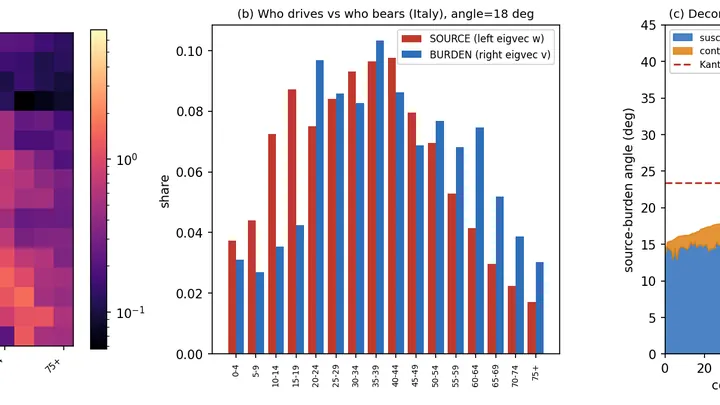
The orchestra plays without a conductor. We know the overall volume: that's the basic reproduction number R0, the spectral radius of the epidemic. But the score itself, the contact matrix between people of different ages, holds the melody: who spreads the infection and who takes the main blow.
q-bio.PE2026-07-051 minarXiv:2607.04204express
Extinction in every world, but life in switching
A runner loses on both a smooth track and sticky sand. Seems hopeless. But if the surface underfoot starts changing every few seconds (track, then sand) the runner suddenly stops falling behind. He doesn't get faster; the environment just doesn't get a chance to 'crush' his weakness. That's exactly what the authors found when studying a simple predator–prey model.
q-bio.PE2026-07-052 minarXiv:2607.04456express
How Life Learns to Survive
Molecules float in a pot of broth. Some copy themselves, others help their neighbors, and still others just get in the way. This isn't soup: it's a model of early life: a replicator system. Usually, we assume the rules of the game are fixed once and for all: whoever reproduces fastest wins. But the authors of this study proposed something different — the rules can change too, just very slowly.
Soil Subway: Bacteria's Dance with the Environment in the Tight Squeeze of Pores
Imagine a packed subway car at rush hour. Passengers don't just stand there: they breathe, release moisture, squeeze toward exits, and sometimes get stuck in doors, blocking movement. Now imagine these passengers can remodel the car's walls, add handrails, or turn the floor into gel.
q-bio.PE2026-07-131 minarXiv:2607.11011express
How a Tumor Builds Its Family Tree
Every tumor writes its own cosmology. Its cells are galaxies, and mutations are stellar flares marking the branches of a genealogical tree. The key to its history is the rhythm of accumulating genetic typos.
math.OC2026-07-131 minarXiv:2607.11306express
Mathematics finds the perfect plan to fight a pandemic
Mathematicians confirmed: the ideal response to a pandemic is the 'hammer and dance' strategy. First, a sharp lockdown smashes the wave of infections like a hammer blow. When hospitals empty, the dance begins — a cautious, step-by-step return to normal life.