The Liver at Low Frequencies express
A bowl of jelly trembles but holds its shape when given a gentle shake. Thick syrup, in response to the same motion, sloshes and spreads. A healthy liver is like jelly, but an inflamed one at low frequencies becomes more like syrup.
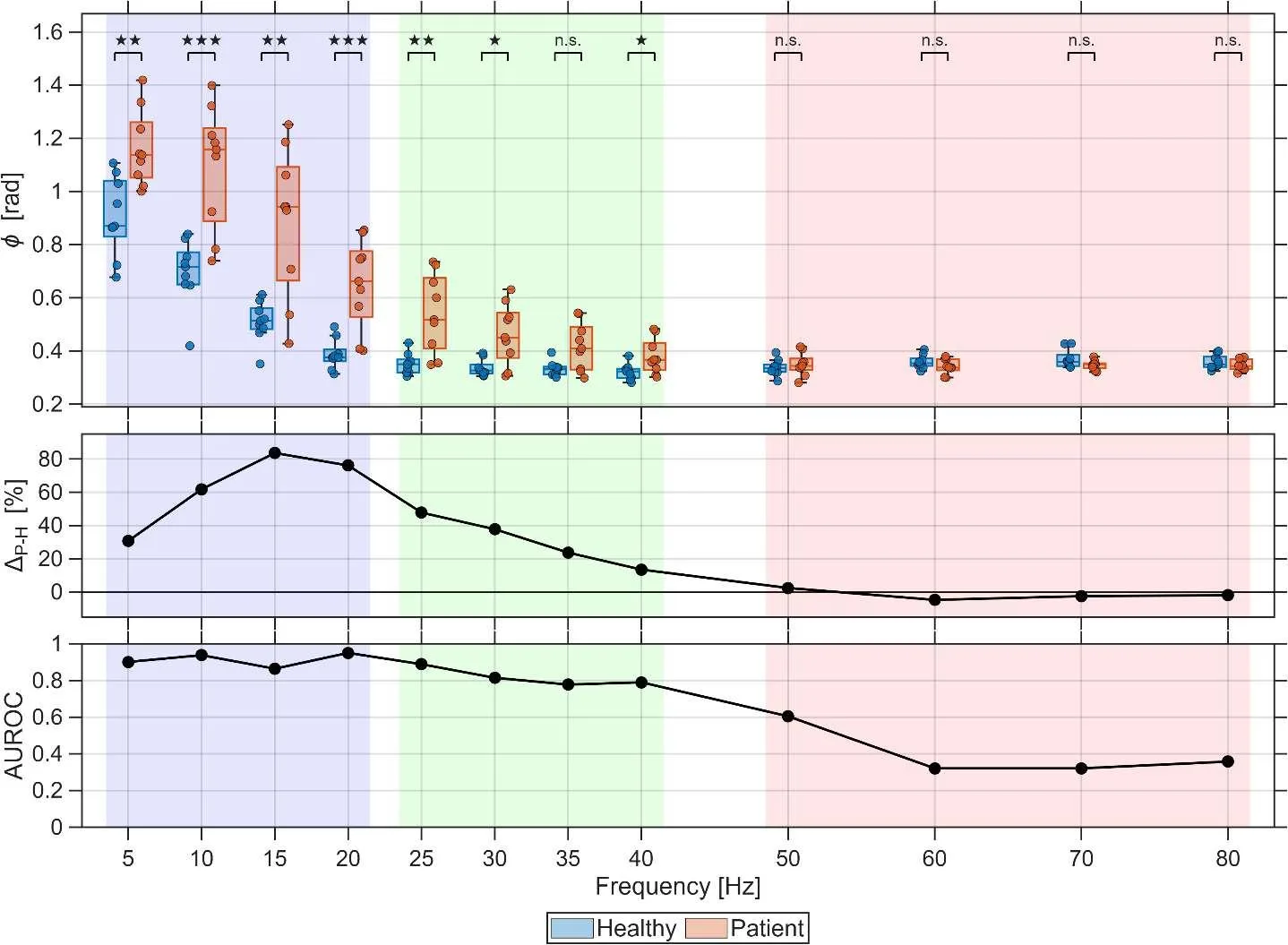
Researchers built a device that shakes the liver at twelve different frequencies — from five to eighty oscillations per second. Each oscillation is like a soft push from a palm. The device tracks how the wave travels through the organ, and from its speed and attenuation determines how elastic or viscous the tissue is.
It turns out that with inflammation, at frequencies below 20 hertz, the liver loses its elasticity and begins to dissipate energy like a liquid. In patients, energy loss increased by 63%, while wave speed increased by only 8%. This means that what changes is not so much the organ's stiffness, but its ability to dampen oscillations.
The method has already been tested on nine healthy volunteers and nine patients with inflammatory liver diseases. The difference is clearly visible. Now doctors can look into the liver without a puncture, just gently shake it and listen to how it responds.
The liver is the only internal organ that can regenerate almost to its original size even after losing two-thirds of its tissue.