Medical Physics physics.med-ph

139 articles

Radiation therapy, radiation dosimetry, biomedical imaging, reconstruction and processing, biomedical system modeling, new imaging or therapy modalities.

articles

Quantum Tuning Fork: Noise Speeds Up the Search for Single Emitters
Detecting a single quantum emitter is like tuning a piano on a factory floor full of screaming machines: the pure tone drowns in noise. But the tuner doesn’t try to outshout the racket — he picks up a tuning fork and listens for beatings. That’s how even a barely audible echo becomes clear.

Dense Connections vs. Residual Paths: How DenseNet-121 Outperforms ResNet-50 in Brain Cancer Detection
A brain tissue slice is just 5 microns thick, twenty times thinner than a human hair. On such a slice, a pathologist looks for signs of a tumor: altered nuclear shapes, cell crowding, abnormal blood vessels. It is painstaking work, and two specialists can disagree on the same image.
Nuclear Experiment2025-11-041 minarXiv:2511.02814express
Fusion Energy Will Help Treat Cancer
Deep inside stars, light nuclei fuse, giving birth to helium and streams of neutrons. On Earth, we recreate this process by combining deuterium and tritium — special isotopes of hydrogen.
Quantum Physics2025-12-081 minarXiv:2512.07307express
Diamond Sees Through the Cell
Every cell is a miniature tuning fork. A sharp magnetic pulse makes it 'ring', and the decay of that sound depends on what's inside: viscosity, density, composition. A tiny diamond with a structural defect acts like a hypersensitive microphone, picking up magnetic echoes from individual cells.
cs.CE2026-01-011 minarXiv:2601.00505express
How a Drug's Charge Alters Its Path Under the Skin
After an injection under the skin, a drug doesn't just spread out like ink in water. Antibody molecules carry an electric charge, and that charge makes them interact with surrounding tissues — much like a magnet attracts or repels iron filings.
Medical Physics2026-01-021 minarXiv:2601.00685express
Brain Radiation Therapy: One Click Instead of Manual Setup
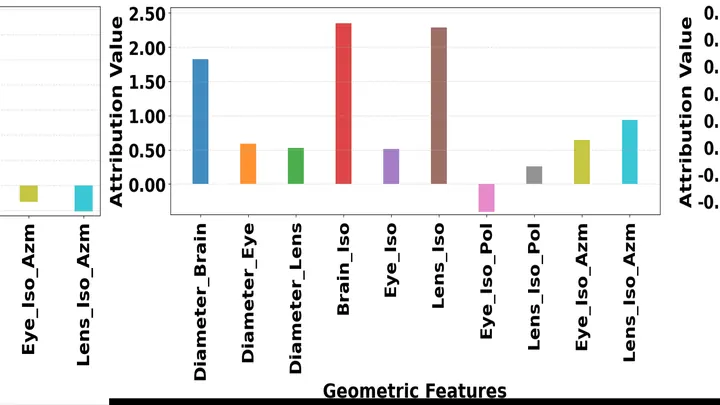
When a tumor affects the entire brain, doctors irradiate the whole organ. It's a reliable method, but setting up the radiation is painstaking: you need to adjust parameters so the tumor gets the right dose while the eyes and lenses suffer as little as possible. A specialist typically spends about 15 minutes manually tweaking settings in the software.
Optics2026-01-042 minarXiv:2601.01667express
Light from Within: How to See 12 Centimeters Deep into the Body
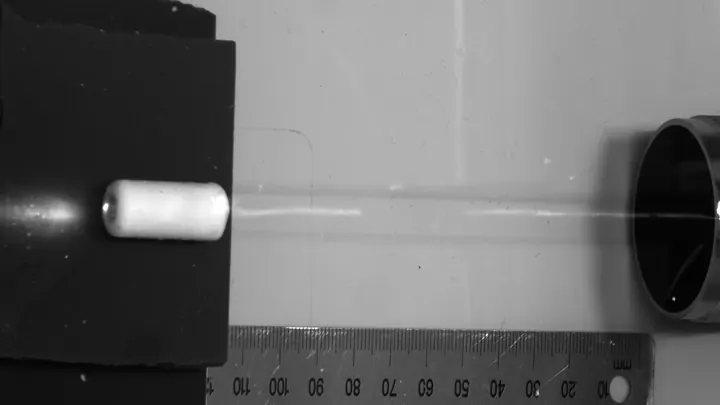
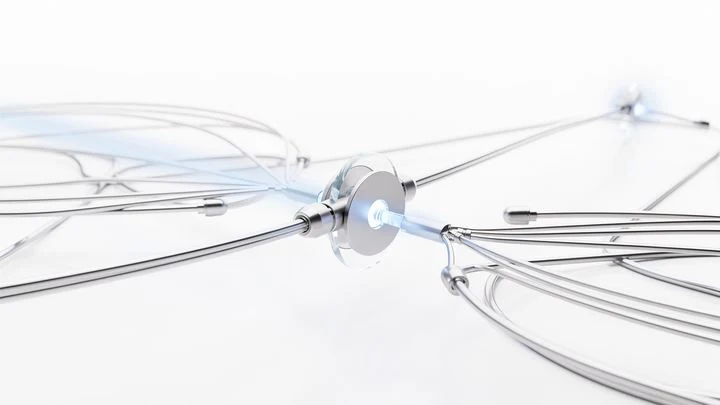
Light is a great tool for studying tissues, but it fades fast deep inside the body. Within a few millimeters, photons scatter so much that you can't make out anything. Scientists came up with a workaround: instead of shining light from outside, deliver a tiny light source right inside. The challenge is how to power that source without wires.
Applied Physics2026-01-091 minarXiv:2601.05448express
Light Instead of Microphones: A New Way to See Inside the Body
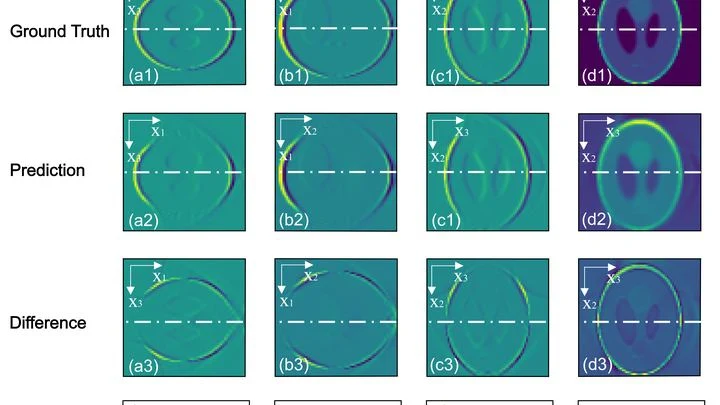
A laser hits tissue, and the tissue responds with a barely audible click — a sound wave. Sensors pick it up, and from that, an image of what's inside is built. That's how photoacoustic imaging works: light reaches deep, and sound carries the picture out. In the new scheme, there are no sensors. Instead, several thin light beams are sent through the area where the wave has passed.
Medical Physics2026-01-111 minarXiv:2601.07881express
How Tilting the Tube Saves the Brain During Heart Surgery
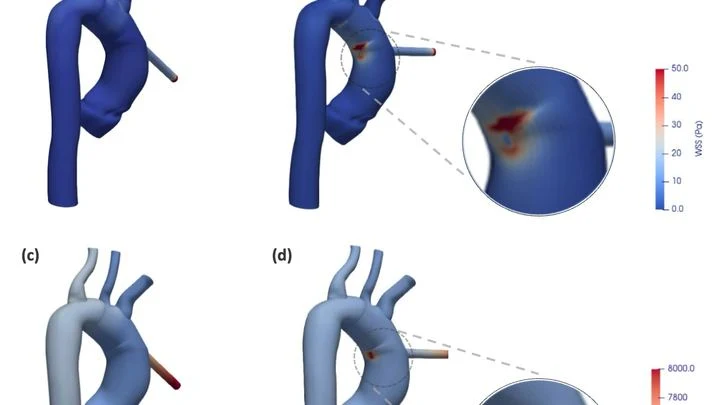
A surgeon inserts a tube into the aorta to reroute blood around the heart. The jet from the tube hits the vessel wall like a garden hose blasting a flowerbed, dislodging particles that can then travel to the brain. Scientists built computer models of aortas from four individuals: a child, a teenager, an adult, and an elderly person.
Medical Physics2026-01-141 minarXiv:2601.09235express
Digital Twins Teach the CT Scanner
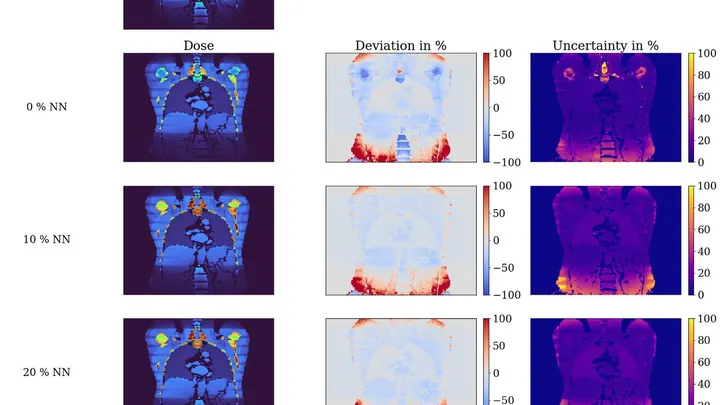
Computed tomography is like an X-ray that takes hundreds of images from different angles and stitches them into a 3D picture of the body. But each image delivers a small dose of radiation, and doctors need to know how much each organ receives. Currently, this is often estimated roughly using average tables rather than for the specific patient.
Medical Physics2026-01-162 minarXiv:2601.11731express
Post-Mastectomy Radiation: How to Keep Scar Tissue from Squeezing the Implant
After a mastectomy, a woman often gets an implant, and then the chest is irradiated to kill any remaining cancer cells. Proton therapy is great because it hits the target precisely and spares the heart and lungs. But in some patients, a dense scar capsule forms around the implant: it squeezes the implant, making the breast hard and painful. This is called capsular contracture.
Medical Physics2026-01-181 minarXiv:2601.12437express
Sound Beam Passes Through the Skull and Twists
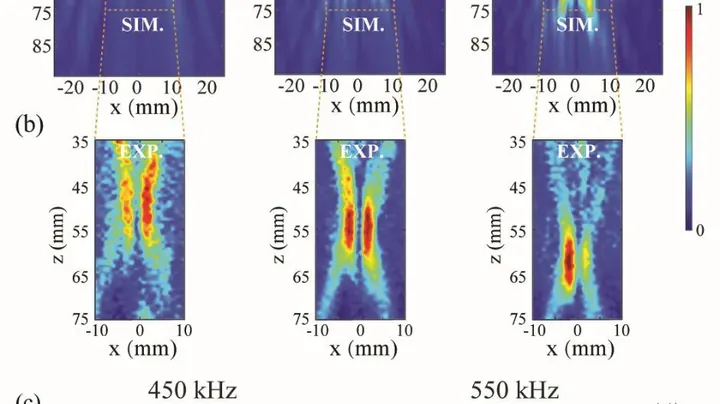
Sound can do more than be heard: it can push. An ultrasound vortex is a sound wave twisted like a whirlpool in a shell: silence at the center, rotating pressure at the edges. Such a whirlpool can grab tiny particles and carry them without a touch.
Medical Physics2026-01-211 minarXiv:2601.14654express
A Crystal Keeps an Eye on the Proton Beam
Treating cancer with a proton beam is a bit like archery: you need to hit the bull's-eye without hitting anything else. Protons release their energy at the end of their path, so healthy tissues are largely spared. But to make the shot safe, every treatment plan is checked in advance — measuring the dose the tumor will get and what the surrounding organs will receive.
Medical Physics2026-01-211 minarXiv:2601.14970express
How to Average a Signal Without Extra Twists
Every time an MRI scanner measures water movement in tissues, it sends a magnetic pulse in a specific direction. One pulse gives one data point. To understand how water moves in all directions at once, you need many such pulses with different rotations. Previously, rotations were chosen almost at random, just to cover all directions evenly.
Medical Physics2026-01-221 minarXiv:2601.15947express
A Camera That Can See Tissues Breathe
Cells breathe. They need oxygen, and they take it from the blood flowing through the tiniest vessels. If blood flow is weak or oxygen is scarce, cells start to suffocate. Doctors need to see this as early as possible. But how do you look inside living tissue without cutting it open? The new device does it in two ways at once.
Medical Physics2026-01-231 minarXiv:2601.17165express
Testing X-rays with sound
A doctor looks at a breast image to find a suspicious lump. If the picture is beautiful and smooth, but the lump has vanished from it, such an image is of little use. This is exactly the problem faced by researchers who developed a new way to test software for photoacoustic tomography.
Plastic That Sees Radiation
A dense piece of plastic the size of a coin flashes when an invisible particle hits it. That's how scintillators work — materials that turn radiation into faint light. They're usually made from fragile crystals or expensive polymers. But now there's a simpler option: plain polyurethane, the stuff used to mold furniture foam and shoe soles.
Medical Physics2026-01-261 minarXiv:2601.18219express
Diagnosis Without Lenses: Breast Cancer Seen Through Shadows
In a dark room, on a table, sit a laser pointer, a piece of glass with tissue, and an ordinary phone camera. Light passes through the sample, and the image shows not cells but a pattern of bright and dark stripes, like the shadow of leaves on a wall.
Medical Physics2026-01-261 minarXiv:2601.18843express
Biological Physics2026-01-271 minarXiv:2601.19962express
A Drug-Delivering Tube: How Nitinol Learns to Release Heparin
Nitinol is a metal with a memory: compressed into a tiny tube, it springs back into shape inside a vessel and keeps it open. But simply inserting a stent isn't enough: it must not clog with clots. To prevent that, a drug is applied, which should be released slowly, like water from a sponge, not all at once.
Fluid Dynamics2026-01-272 minarXiv:2601.19994express
Predicting Blood Damage in Pumps
In a heart-lung machine, blood flows through narrow tubing and past rapidly spinning pump blades. Sometimes red blood cells can't take it: their membranes rupture, and hemoglobin spills into the plasma. For a patient, this is like pouring sand into a car's fuel system — small damages accumulate and wreck the whole mechanism.
Medical Physics2026-01-292 minarXiv:2602.07003express
Seeing Inside a Cell
In winter, puddles freeze, and ice cracks the asphalt. Inside a living cell, freezing does something similar: ice crystals tear its membrane. To prevent this, the cell is soaked in a special solution, like antifreeze for a car. But precision is key: too little solution and ice still forms; too much and the solution itself poisons the cell.
Medical Physics2026-02-031 minarXiv:2602.03744express
Spectromicroscopy: Seeing the Unseen in Just 4% of Measurements
A chemical map of a sample is like a mosaic: each point has its own color, its own chemical composition. To assemble such a mosaic, a spectromicroscope scans the sample point by point, recording a spectrum at each location — a "fingerprint" of how the material absorbs or emits light.
Medical Physics2026-02-042 minarXiv:2602.04461express
Light instead of radiation: seeing an organ without a needle
Radioactive tracers are like a courier with a beacon: you inject it into the body, and it highlights the target organ on the scan. But this courier comes with strict rules: you can't send it often, it quickly 'gets tired,' and it costs a lot. Doctors have long dreamed of a way to see an organ without radiation.
Medical Physics2026-02-042 minarXiv:2602.05077express
The Spiral That Speeds Up Brain MRI
Imagine a photographer shooting a tall building, but instead of a single frame, they take a series of shots while moving the camera in a spiral from top to bottom. This approach captures more detail in less time, but the images can come out blurry. A similar challenge faces MRI machines when they need to quickly image the brain.
Medical Physics2026-02-052 minarXiv:2602.06212express
Rays That Heal and Harm
When a person receives radiation for a tumor in the head or neck, the rays pass through healthy tissue as well. Sometimes the jawbone starts to die afterward — a severe complication called osteoradionecrosis. The question isn't whether it happens, but how much the radiation dose itself increases the risk.
Nuclear Experiment2026-02-072 minarXiv:2602.07637express
A Golden Target for Cancer Therapy
Hidden in the nucleus of a gold atom lies a potential future cancer treatment. When a gold target is struck by a gamma ray with an energy of about 30 megaelectronvolts, one of the nuclei loses a proton and a neutron, transforming into a rare platinum isotope — platinum-195m.
Medical Physics2026-02-082 minarXiv:2602.07760express
Alpha Particles Under Control: A Vacuum Platform for Precision Radiobiology
An alpha particle is a small but heavy fragment of an atomic nucleus. It doesn't travel far, but it hits hard: it leaves a dense trail of damage, like a bullet piercing a target. That's why alpha radiation is used in medicine to precisely destroy cancer cells.
Medical Physics2026-02-092 minarXiv:2602.08836express
Light That Checks Your Eyes
Light can draw patterns right inside your eye — no screen or glasses needed. When a specially shaped beam enters the pupil, it creates dark rays in your field of view, like the spokes of a spinning wheel. You see these rays because they are born in the retinal cells, not outside.
Medical Physics2026-02-091 minarXiv:2602.08918express
The Living Lens: How MRI Sees Muscles in Motion
A photographer snaps a runner: to avoid a blurry shot, a short shutter speed is needed. An MRI scanner is like that photographer, but its 'shutter speed' is long — by the time it captures, the muscle has already changed. That's why dynamic MRI (a series of volumetric frames in motion) is a tough challenge: data are scarce, and motion doesn't wait.
Medical Physics2026-02-091 minarXiv:2602.12298express
Funnel-Shaped Pixels: How Gamma Rays Are Caught More Precisely
In the dark, a tiny spark flashes. A gamma ray born inside a patient's body strikes a crystal and knocks out a shower of light. The detector's job is to figure out exactly where that happened. The more precise the answer, the sharper the image on the tomograph screen. The new detector resembles a honeycomb, but not a flat one — the cells narrow toward the bottom.
Medical Physics2026-02-092 minarXiv:2602.18477express
Focusing Microwaves Instead of a Scalpel
In Parkinson's disease, thin wires are implanted into the brain to calm tremors. The surgery is serious, and the wires stay in place for years.
Medical Physics2026-02-101 minarXiv:2602.10011express
Why Blood Pressure Won't Drop: Loops in the Vessels
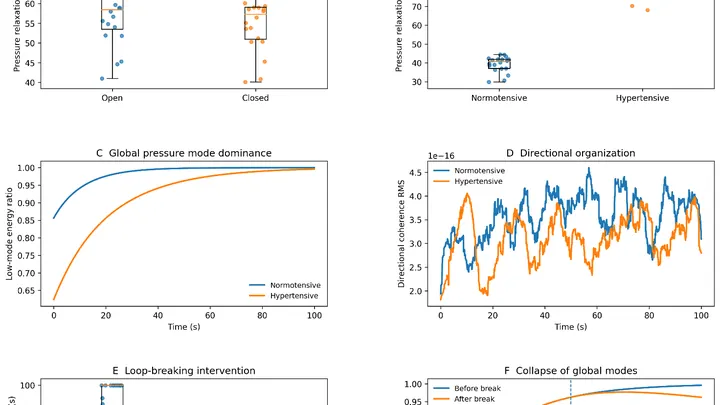
Water in a circular hose, pumped around by a pump, won't stop even if you pinch one section: the flow finds a detour and keeps going around. That's roughly how some parts of our circulatory system are arranged — not as single pipes but as closed loops. Scientists built a computer model of blood flow and compared two scenarios: an open vessel and a closed loop.
Image Processing2026-02-121 minarXiv:2602.11873express
How to Assemble an Aorta from Six Scans
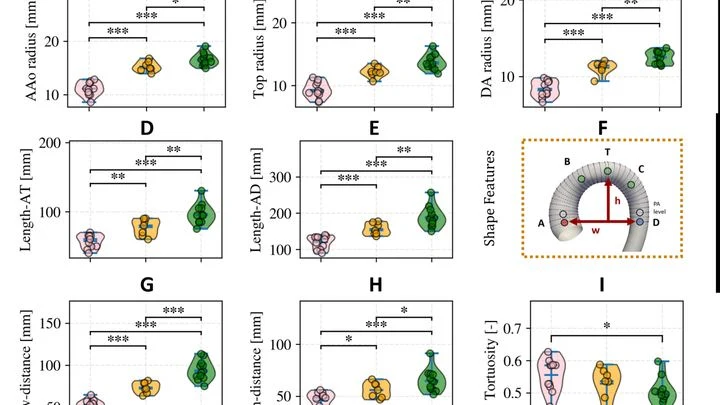
The body's main artery, the aorta, is not just a tube. With each heartbeat, it stretches and contracts like a rubber hose under water pressure. Seeing this motion in volume is hard: standard MRI gives only flat slices, and full 3D imaging over time requires expensive equipment and long periods lying in the scanner. A group of researchers found a way out.
Medical Physics2026-02-131 minarXiv:2602.12917express
Ultrasound Keeps an Eye on the Spine
Your back hurts, and the doctor asks you to bend forward and backward to see how your vertebrae move. Usually, this means a series of X-rays: they show motion, but only in a plane, like a shadow on a wall. And volumetric methods like CT scans can't keep up with movement. Engineers proposed a different approach: a robot sweeps an ultrasound probe over your back while you bend.
Medical Physics2026-02-162 minarXiv:2602.14803express
How the Sound of Light Speeds Up Body Imaging
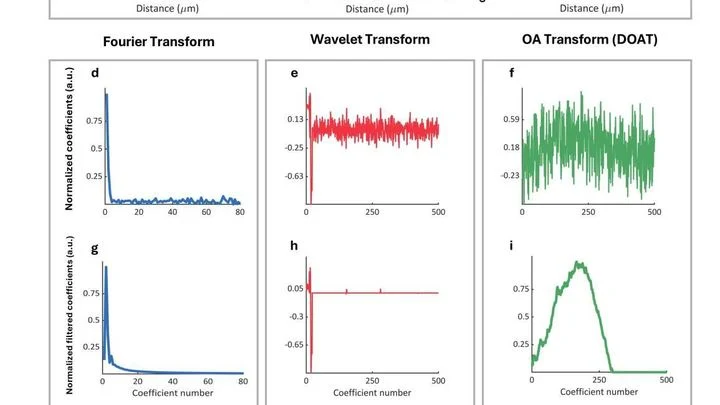
A laser beam hits the skin, and tissues respond with a barely audible ultrasonic echo. From that echo, doctors can see blood vessels and tumors without making a single incision. But before the picture appears on the screen, the signal has to be cleaned of noise, just as a cook skims the foam off a broth to make the soup clear.
Medical Physics2026-02-191 minarXiv:2602.17553express
The Brain's Pulse Delivers Drugs
Fluid flows in the narrow gaps between brain cells. It doesn't stay still: each heartbeat pushes it forward, and breathing adds its own waves. This was seen in images ten years ago, but only now have researchers calculated how this pulsing accelerates molecules. If you drop ink into a stream, it drifts with the current. But if the stream speeds up and slows down, the ink spreads wider.
Medical Physics2026-02-221 minarXiv:2602.19264express
A Carpet of Heartbeats
The heart beats, and on a paper ECG strip, each beat looks like a sharp spike with two humps: a quick rise, then a smaller wave, then a descent. A doctor looks at such a strip and sees the rhythm, but the shape of each spike, how exactly the muscle contracted, is hard to discern, especially if the recording lasts a full day. This new method turns that strip into a colorful carpet.
Medical Physics2026-02-241 minarXiv:2602.21354express
The Brain Under a Magnifying Glass: A Tomograph That Catches Every Detail
A camera that captures not your face but your brain itself — from the inside, layer by layer. Conventional tomographs often produce blurry images: fine details merge like letters on a fogged-up window. Engineers set out to build a device that sees clearly even what is smaller than a millimeter.
Medical Physics2026-02-242 minarXiv:2602.21437express
Why Smart Methods Don't Reach Hospitals
Every breath in and out shifts internal organs by several centimeters. For an MRI scanner imaging the abdomen, this is like photographing a runner with a long exposure — the image comes out blurred. Clinicians have long known how to deal with this: they ask patients to hold their breath or take a series of fast snapshots between breaths. These methods are simple but effective.