How to Trap Two Different Atoms with a Single Laser ✛
Two different cars drive along the same road, and the same brake slows both down to a walking pace. That is roughly how physicists stopped potassium and cesium atoms: a laser beam pushes each atom against its motion and saps its energy until the atoms are almost motionless.
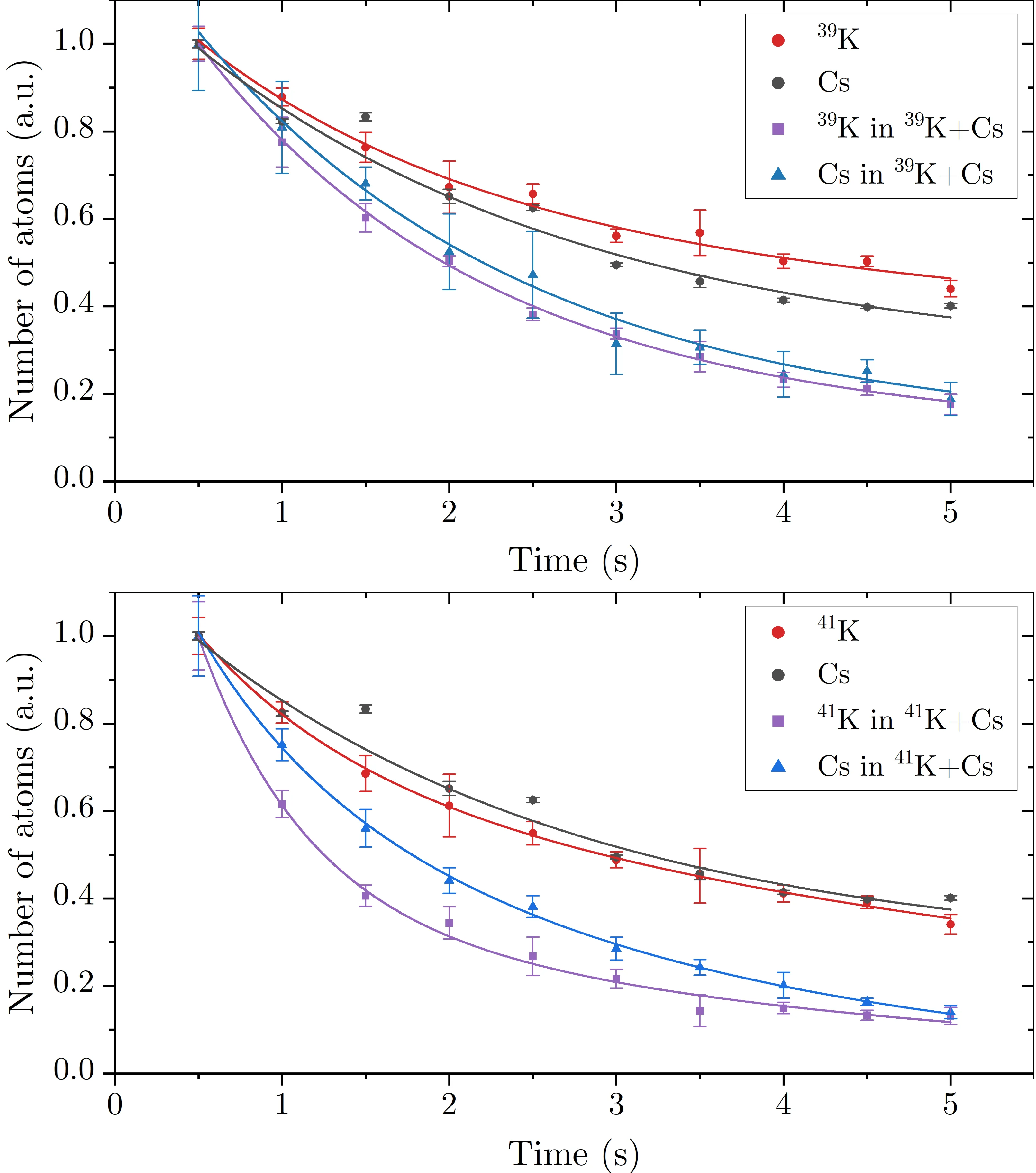
Previously, no one had been able to trap a mixture of potassium-41 and cesium: the atoms were lost too quickly. Now scientists have done it for the first time, and in the process found nine new ways to control collisions between potassium-39 atoms and cesium. These methods work like tuning knobs: turn the magnetic field, and the atoms collide more strongly or more weakly. In the future, such mixtures could help assemble molecules for quantum computers.
The mixture's temperature of about 10 microkelvin is only a hundred times above absolute zero. At such a temperature, atoms move at speeds on the order of a few centimeters per second, like a leisurely pedestrian.