Las partículas cuánticas pueden fluir hacia atrás exprés
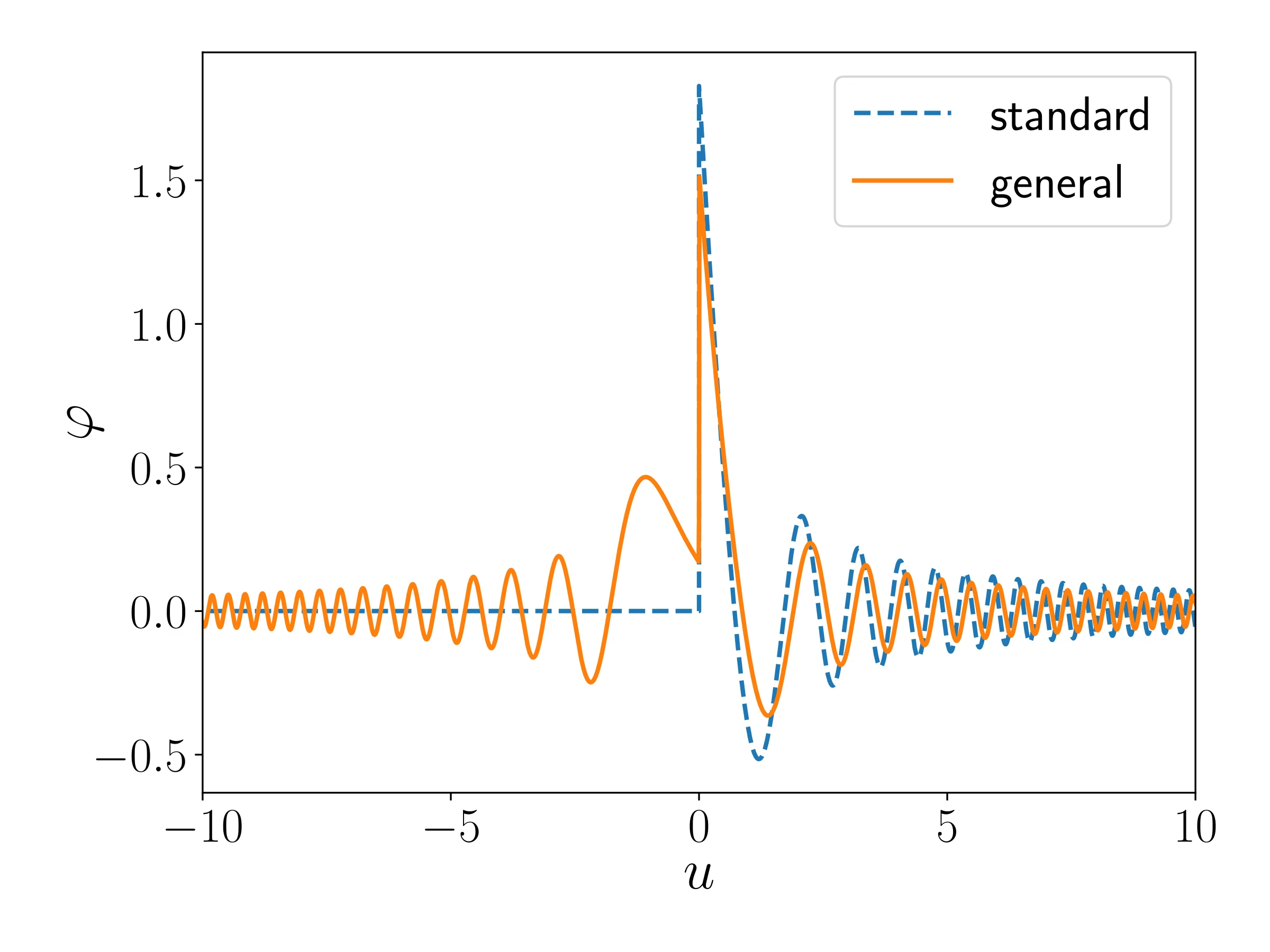
Una partícula del micromundo partícula cuántica puede moverse en dirección contraria, incluso si en general viaja hacia adelante. Esto se parece a un río donde corrientes individuales de repente giran contra la corriente, creando desorden. Antes se pensaba que ese flujo inverso no superaba el 4%, como si en el río solo una pequeña parte del agua fuera hacia atrás.
Ahora los científicos han comprendido: en condiciones reales, cuando la partícula no está perfectamente dirigida, la proporción de movimiento de retorno crece hasta casi el 13%. La diferencia es tres veces mayor que la estimación anterior. Este descubrimiento facilita los experimentos: no hace falta crear partículas impecables, bastan las comunes. Durante casi cien años los físicos sabían de la existencia del flujo inverso, pero no habían logrado verlo directamente. Quizás ahora este extraño efecto se vuelva observable.
Resumen original
tal como lo escribieron los autores, en inglés arXiv:2511.10155
Quantum backflow is a counterintuitive phenomenon in which the probability density of a quantum particle propagates opposite to its momentum. Experimental observation of backflow has remained elusive due to two main challenges: (i) the effect is intrinsically small, with less than 4% of the probability able to flow backward, and (ii) it requires wave packets with a well-defined momentum direction, which are difficult both to prepare and to verify under realistic, noisy conditions. Here, we overcome these challenges by introducing a general formulation of quantum backflow applicable to arbitrary momentum distributions. The framework recovers the standard backflow limit for unidirectional states and identifies general backflow as probability flow exceeding that predicted by the particle's momentum distribution alone. We show that this excess can reach nearly 13%, surpassing the standard backflow bound by more than a factor of three. Furthermore, we extend the framework to the closely related phenomenon of quantum reentry, provide explicit examples of quantum states exhibiting large general backflow and reentry, and discuss the foundational implications of these nonclassical effects. Our results open a pathway toward the experimental observation of quantum backflow in realistic settings.
El flujo inverso es uno de los efectos más esquivos de la mecánica cuántica. A pesar de que se deduce de las ecuaciones, durante casi cien años nunca se ha observado directamente.