Los polos magnéticos del Sol: primeras imágenes desde más allá del ecuador exprés
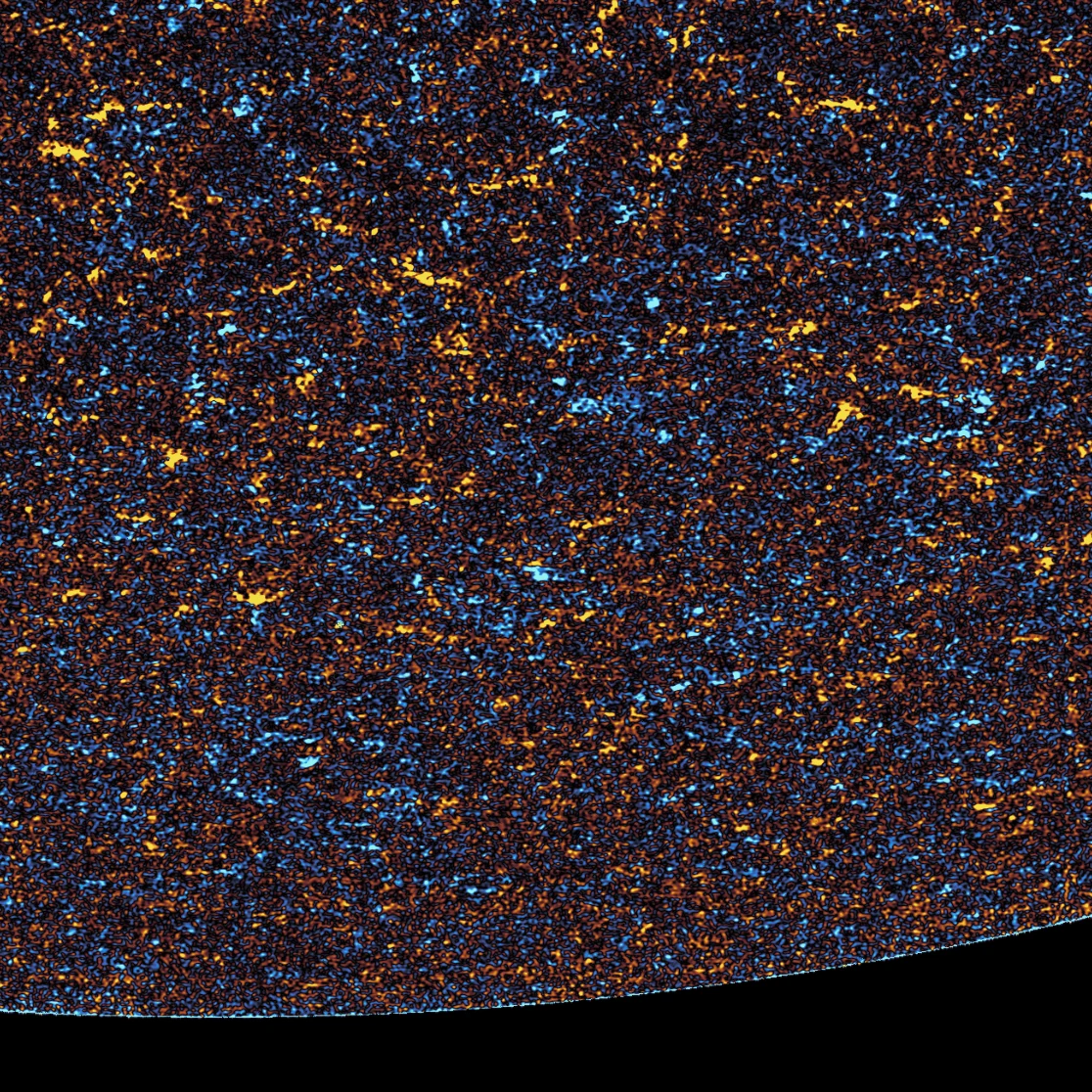
El Sol no es solo una esfera, sino una mansión magnética. Sus invisibles hilos de fuerza, como un cableado eléctrico, atraviesan el espacio y controlan el clima espacial. Pero hasta ahora solo habíamos visto ese cableado desde el rellano de la escalera: desde el plano de la órbita terrestre. El papel del ático y el sótano, los polos magnéticos, seguía siendo un misterio.
En 2025, la sonda Solar Orbiter, como un electricista con su multímetro, se coló en los pisos invisibles. Su instrumento descompuso la luz en bandas de colores para revelar los patrones magnéticos. Y entonces, sorpresa: el polo norte y el polo sur resultaron tener arquitecturas distintas. Los flujos magnéticos en ellos no solo son diferentes, sino que cambian de forma asíncrona: cuando uno gana fuerza, el otro se debilita, y esta danza se acelera mes a mes.
Este hallazgo en el ático es la clave del ritmo de 11 años en el que se invierten los polos solares. Al entender cómo parpadea el cableado arriba y abajo, podremos calcular con mayor precisión cuándo una tormenta magnética golpeará las redes eléctricas terrestres.
Resumen original
tal como lo escribieron los autores, en inglés arXiv:2512.03611
Direct remote-sensing observations of the solar poles have been hindered by the restricted view obtained from the ecliptic plane. For the first time ever, Solar Orbiter with its remote-sensing instruments observed the poles of the Sun from out of the ecliptic in the Spring of 2025. Here we report the first measurements of the magnetic field of the solar poles taken when Solar Orbiter was at heliographic latitudes ranging between 14.9$$^\circ$$ and 16.7$$^\circ$$. The data-sets were collected by the High Resolution Telescope of the Polarimetric and Helioseismic Imager (SO/PHI-HRT) on board Solar Orbiter. Two sets of observations, approximately one month apart, for the south and north pole are considered in this work. The magnetic flux and flux density measured during these campaigns are reported as a function of the heliographic latitude observed by SO/PHI-HRT. The net fluxes show a different latitudinal distribution for the two polar caps. We also discuss the observed dependence of the measured fluxes on the viewing angle. These first results highlight the importance of high-resolution direct measurements of the polar field, paving the way to the high-latitude observations planned for SO/PHI-HRT in the coming years.
Cada 11 años, los polos magnéticos del Sol intercambian sus lugares, como una casa donde el ático y el sótano intercambian roles. La última vez ocurrió en 2013.