Una supernova exhaló monóxido de carbono exprés
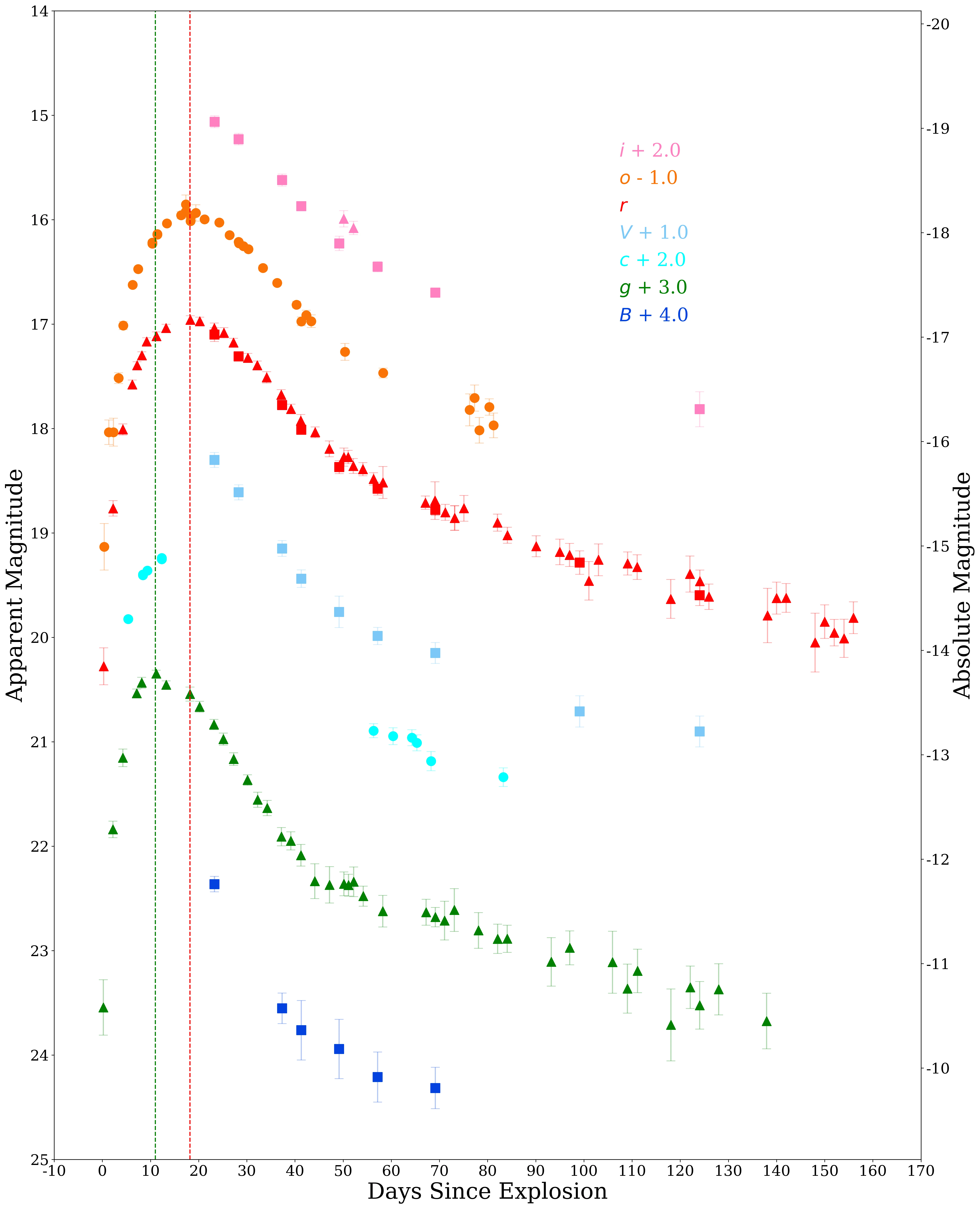
Cuando una estrella masiva agota su combustible, arroja su envoltura de hidrógeno y explota, como un último y desesperado aliento. Los astrónomos observaron una supernova de este tipo (tipo Ib). 62 días después de la explosión, en los escombros en enfriamiento, captaron un débil brillo infrarrojo: resultó ser la huella del monóxido de carbono (CO). El material se precipitaba a una velocidad monstruosa de 6.000 kilómetros por segundo, en un instante habría cubierto la distancia de la Tierra a la Luna veinte veces. A ese ritmo, su firma espectroscópica se difuminó en una amplia joroba. A su alrededor, polvo cósmico incandescente a 637 °C brillaba, y las líneas de helio confirmaron la clase de la explosión.
El aliento de las estrellas moribundas es de lo que está hecho el mundo.
Resumen original
tal como lo escribieron los autores, en inglés arXiv:2603.23877
We present optical and near-infrared (NIR) observations of the Type Ib supernova (SN) 2024rbc. Emission from the first CO overtone, resting on a dust continuum at $$2.3-2.4$$ $$\mu$$m, was observed at 62 days post-explosion. The CO band heads are not resolved, and the emission appears broad, lacking sharp spectral features. This is the first observation of CO in the ejecta of a Type Ib SN reported in literature. The spectra of SN 2024rbc exhibit strong He I lines and numerous neutral and ionized metal lines. Comparing the spectral evolution of SN 2024rbc to other Type Ib, Ic, and IIb SNe indicates it is a Type Ib SN. We compare the velocities of key optical lines to examine the evolution of the ejecta. Additionally, fitting SN light curve models of helium star progenitors computed with the STELLA code to photometric observations indicates a $$^{56}$$Ni mass of $$0.07$$ $$M_\odot$$ and an ejecta mass of $$1.7$$ $$M_\odot$$. Fitting a LTE model to the CO overtone implies a CO mass of 5.2 $$\times$$ 10$$^{-4}$$ $$M_{\odot}$$, a CO temperature of $$4040$$ K, and a CO velocity width of $$5905$$ km s$$^{-1}$$. We also fitted a modified blackbody model to the dust continuum, deriving a dust temperature of $$910$$ K and a dust mass of $$1.3$$ $$\times$$ $$10^{-3}$$ $$M_{\odot}$$. The CO provides direct evidence for the onset of dust formation, and the observed dust continuum likely originates from newly formed dust in the ejecta. However, robust dust mass estimates require MIR observations.
Hay tanto monóxido de carbono en SN 2024rbc que su masa supera en miles de millones de veces el peso de toda la atmósfera terrestre. Pero comparada con la masa de la estrella, es una impureza insignificante.
La frase «todos estamos hechos de polvo de estrellas» no es solo una metáfora. En la película «Interestelar», esta idea resuena de manera especialmente intensa.