Les ondes-mixeurs du vent solaire : comment la couronne se réchauffe express
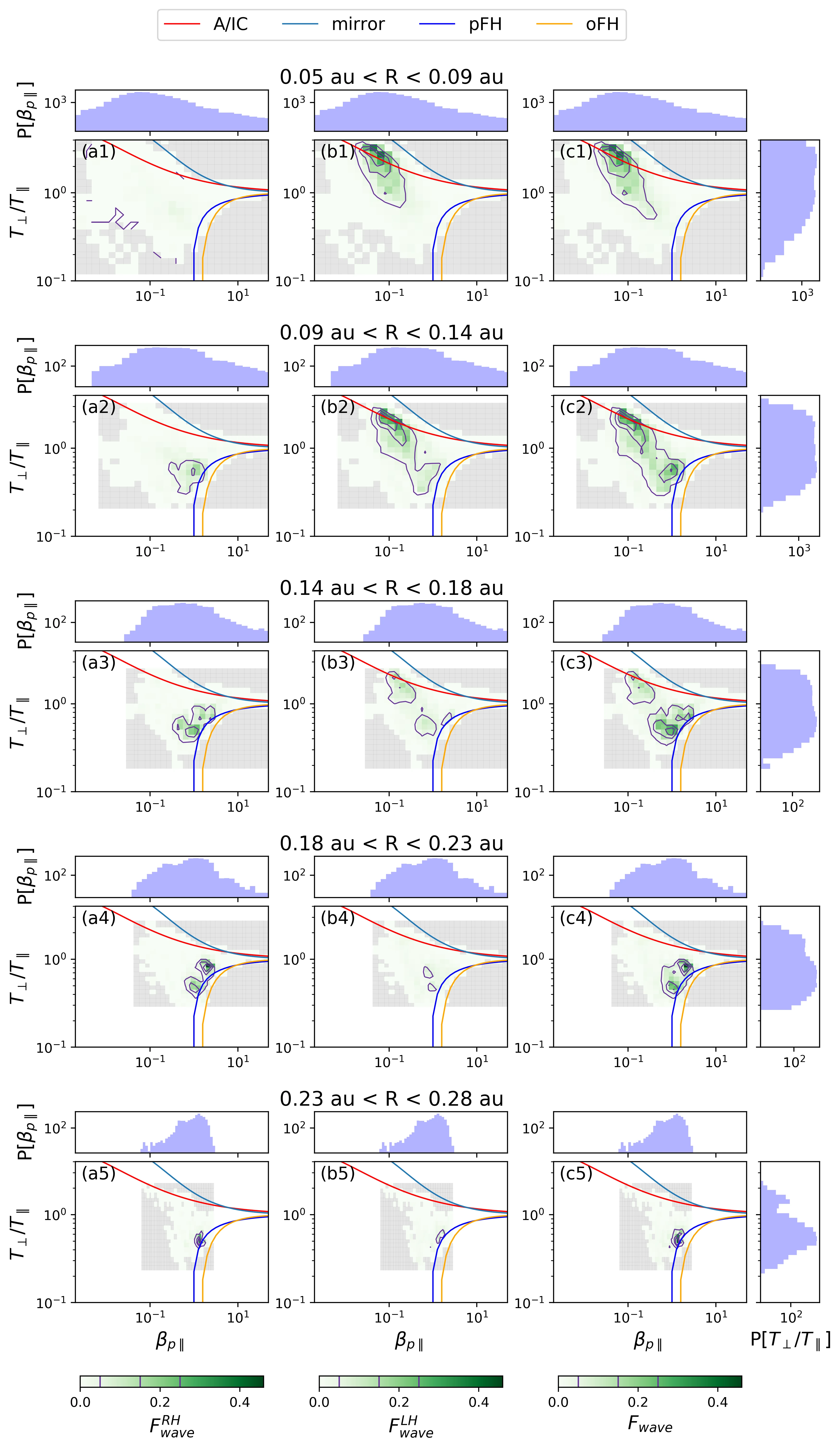
Le vent solaire n'est pas un ruisseau paisible, mais une soupe bouillonnante de particules chargées. La sonde Parker, en plongeant vers le Soleil, a capté deux types d'ondes qui remuent le tout. Les ondes gauches, comme un fouet dans la main d'un cuisinier, battent la matière lorsque la température varie le long et en travers du mouvement. Elles sévissent près d'un tiers du temps près de l'étoile, augmentant la proportion des particules les plus rapides — comme un mixeur qui fait remonter la mousse à la surface.
Les ondes droites
L'analyse fine de la lumière (spectroscopie) et l'apprentissage automatique ont permis de saisir le moment où les jets thermiques engendrent les ondes droites. Paradoxalement, c'est cette ondulation invisible, et non les éjections grandioses, qui est responsable du chauffage de l'immense couronne — sa température est des centaines de fois supérieure à celle de la surface du Soleil. Le rythme de ces ondes détermine la météo spatiale près de la Terre.
Résumé original
tel que rédigé par les auteurs, en anglais arXiv:2512.11182
Parker Solar Probe (PSP) observes abundant circularly polarized ion-scale waves throughout the inner heliosphere. These waves are a signature of the interplay between plasma microinstabilities and turbulent dissipation. We perform a mission-wide statistical survey of ion-scale waves observed by PSP, investigating if the waves correspond to specific free energy sources in the measured proton velocity distributions. We find that left-handed waves (LHWs) are frequently observed, with the fraction of time they are observed increasing closer to the Sun, reaching $$\sim$$30\%. Right-handed waves (RHWs) are less frequently observed, with the associated time fraction decreasing closer to the Sun. The observed LHWs are generally consistent with parallel propagating ion cyclotron wave (ICW) storms that occur continuously for extended periods of time. Turbulent energy spectra are consistently steeper when LHW storms are observed; these wave storms mediate the spatial transport of the free energy associated with temperature anisotropy. The observed RHWs are generally consistent with oblique and parallel fast magnetosonic waves (FMWs), and their observation is well correlated with enhanced proton parallel heat flux, which quantifies the presence of secondary proton populations. Using observations and the SAVIC machine learning instability identification algorithm, we identify a threshold on the proton heat flux beyond which FMWs are likely to be driven unstable by the proton beams. We are thus able to associate trends in the observed ion-scale waves with known sources of free energy for Encounters 3 through 24 of the PSP's prime science phase.
Le vent solaire emporte une masse équivalente au mont Everest environ chaque minute.