Как размытие звёзд выдаёт тёмную энергию экспресс
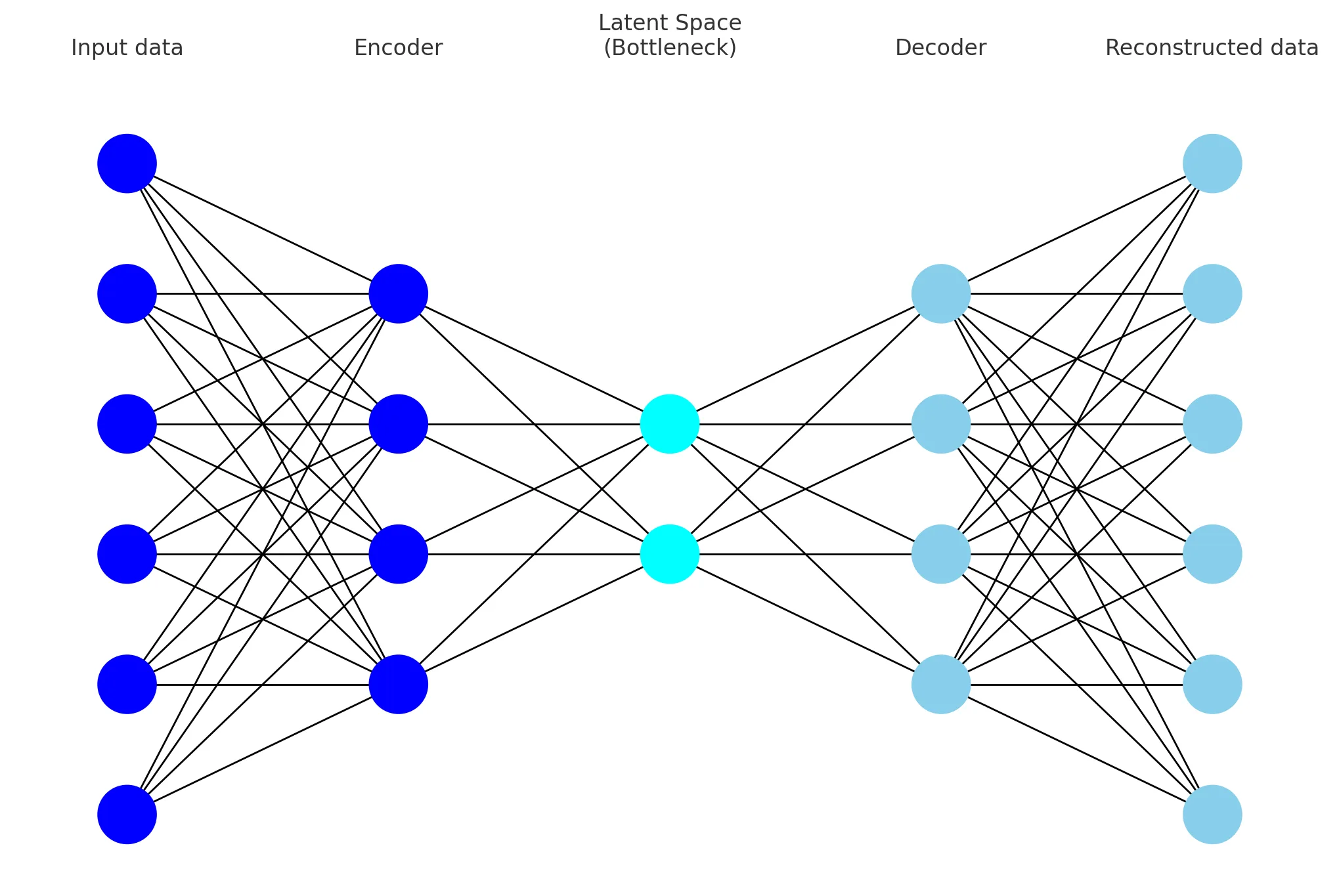
Свет далёкой звезды, пройдя сквозь воздух и линзы телескопа, теряет резкость — будто смотришь на фонарь сквозь мокрое стекло. Астрономы называют это размытие «отпечатком пальца» телескопа: у каждого инструмента он свой, и его нужно знать до мелочей.
Раньше этот «отпечаток» снимали по кусочкам: каждый светочувствительный чип камеры обрабатывали отдельно, и общая картина теряла связность. Теперь нейросеть учится на тысячах снимков звёзд с телескопа «Субару» и сама достраивает размытие по всему полю зрения — как реставратор, который восстанавливает фреску по сохранившимся фрагментам.
Это важно для главного: по едва заметным искажениям форм далёких галактик учёные вычисляют, как быстро расширяется Вселенная. Чем точнее размытие, тем меньше ошибок в этих вычислениях. Новый метод готовят к работе на будущем обзоре неба, где каждую ночь будут снимать миллионы звёзд.
Оригинальная аннотация
как её написали авторы, на английском arXiv:2602.15780
We present the development of a data-driven, AI-based model of the Point Spread Function (PSF) that achieves higher accuracy than the current state-of-the-art approach, "PSF in the Full Field-of-View'' (PIFF). PIFF is widely used in leading weak-lensing surveys, including the Dark Energy Survey (DES), the Hyper Suprime-Cam (HSC) Survey, and the Vera C. Rubin Observatory Legacy Survey of Space and Time (LSST). The PSF characterizes how a point source, such as a star, is imaged after its light traverses the atmosphere and telescope optics, effectively representing the "blurred fingerprint'' of the entire imaging system. Accurate PSF modeling is essential for weak gravitational lensing analyses, as biases in its estimation propagate directly into cosmic shear measurements -- one of the primary cosmological probes of the expansion history of the Universe and the growth of large-scale structure for dark energy studies. To address the limitations of PIFF, which constructs PSF models independently for each CCD and therefore loses spatial coherence across the focal plane, we introduce a deep-learning-based framework for PSF reconstruction. In this approach, an autoencoder is trained on stellar images obtained with the Hyper Suprime-Cam (HSC) of the Subaru Telescope and combined with a Gaussian process to interpolate the PSF across the telescope's full field of view. This hybrid model captures systematic variations across the focal plane and achieves a reconstruction error of $$3.4 \times 10^{-6}$$ compared to PIFF's $$3.7 \times 10^{-6}$$, laying the foundation for integration into the LSST Science Pipelines.
Атмосфера Земли размывает свет звёзд так же, как вода — камешки на дне ручья: чем глубже смотришь, тем сильнее дрожит изображение.
В сериале «Пространство» астронавты корректируют снимки телескопов прямо на ходу — без точной модели размытия их карты далёких миров были бы бесполезны.