Как тромб становится прочным: загадка плотности экспресс
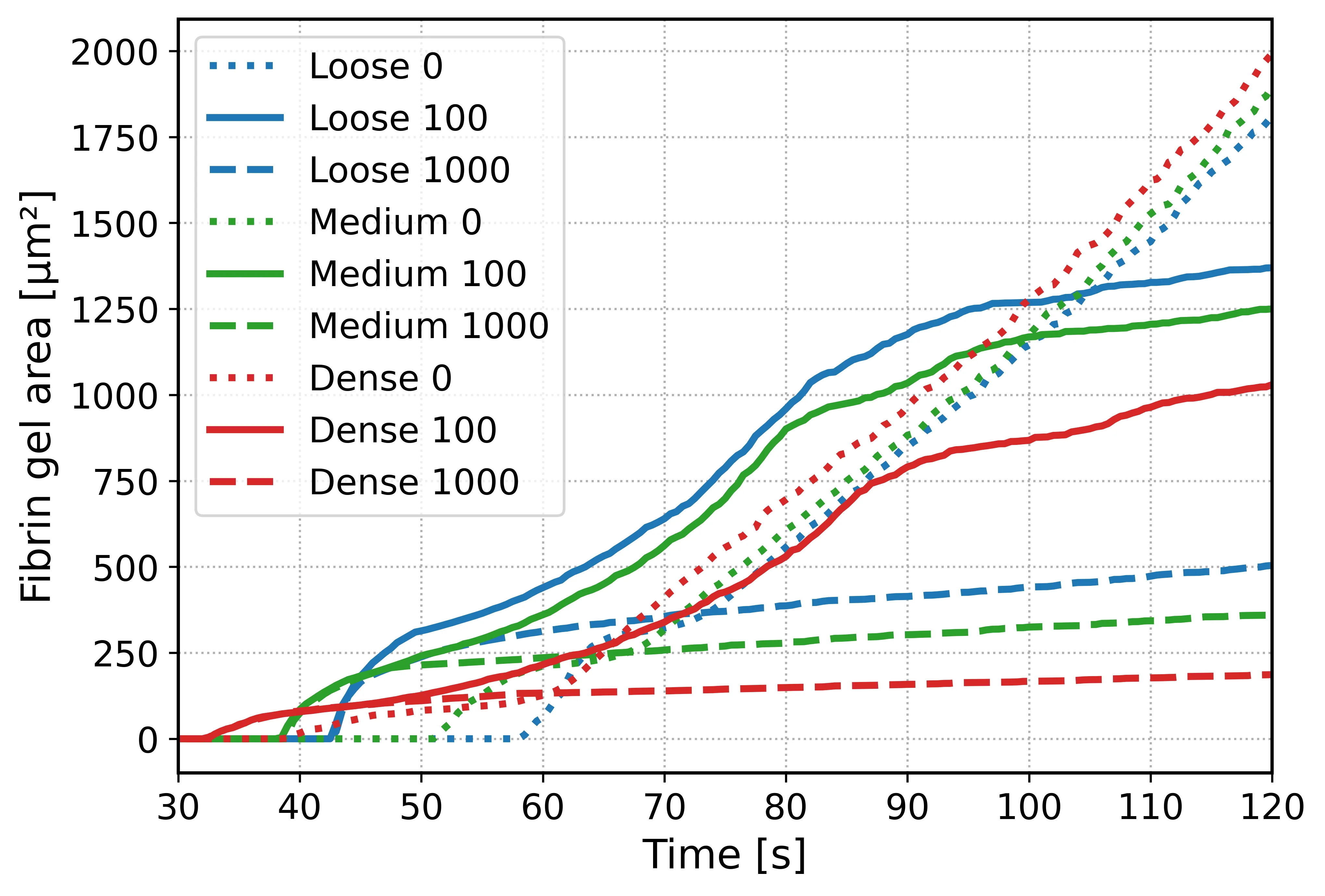
Тромб — это не просто комок клеток. Когда повреждается стенка сосуда, тромбоциты слипаются в пробку, но она ещё хрупкая. Прочной её делает фибрин — белок, который образует сеть нитей, как арматура в бетоне. Модель показала: плотность пробки решает, где эта сеть появится.
В плотной пробке тромбоциты сидят тесно, и вещества, запускающие свёртывание, скапливаются между ними. Фибрин начинает расти по краям, где кровь ещё может протекать. В рыхлой пробке кровь просачивается вглубь, принося строительный материал — фибриноген. Поэтому нити фибрина прорастают по всей пробке, хотя старт задерживается.
Получается развилка: быстро закупорить сосуд или сделать сгусток прочным сразу. Плотная пробка выигрывает минуты, но проигрывает в надёжности. Рыхлая — медленнее, зато основательнее. Это объясняет, почему одни тромбы рассасываются сами, а другие приводят к инфаркту.
Оригинальная аннотация
как её написали авторы, на английском arXiv:2604.07844
During the formation of a thrombus, the architecture of the growing platelet aggregate is heterogeneous, with areas of dense and loosely packed platelets. The surface of activated platelets facilitate biochemical coagulation reactions that ultimately result in the formation of a fibrin network which stabilizes the thrombus. How platelet-plug microstructure and flow jointly govern the onset and development of fibrin is incompletely understood. We developed a novel 2D computational framework that integrates (1) a pre-adhered, discrete platelet aggregate, (2) a reduced coagulation model that generates thrombin, and (3) a fibrin polymerization model. Three platelet-plug configurations were constructed with prescribed interplatelet gaps and simulations were performed with various wall shear rates. We quantified spatiotemporal clotting metrics, including coagulation factor concentrations, fibrin evolution, and gelation onset. Across geometries, gelation initiation accelerated with increasing plug density. For more dense geometries, gelation emerged first near the plug periphery. As the platelet density increased, intraplug transport was increasingly restricted and the thrombin concentrations in between platelets increased. In contrast, the loose plug supported fibrinogen replenishment deeper into the plug core. Despite slower coagulation initiation due to reduced platelet surface area, monomer generation persisted in the interior, causing gelation to begin at the vessel wall. These results suggest a mechanistic tradeoff: rapid sealing of the injured vessel wall by early platelet contraction, i.e. plug densification, may impede the intraplug fibrin formation needed for durable stabilization. The proposed model provides a basis for studies of platelet-coagulation interactions under flow, including therapeutic developments relevant to prevention of cardiovascular disease.
Фибрин — это белок, который образует нити толщиной всего 3 нанометра. Если вытянуть все нити из одного тромба в линию, получится несколько метров.