Плотный слой Марса раскрывает судьбу каменных планет экспресс
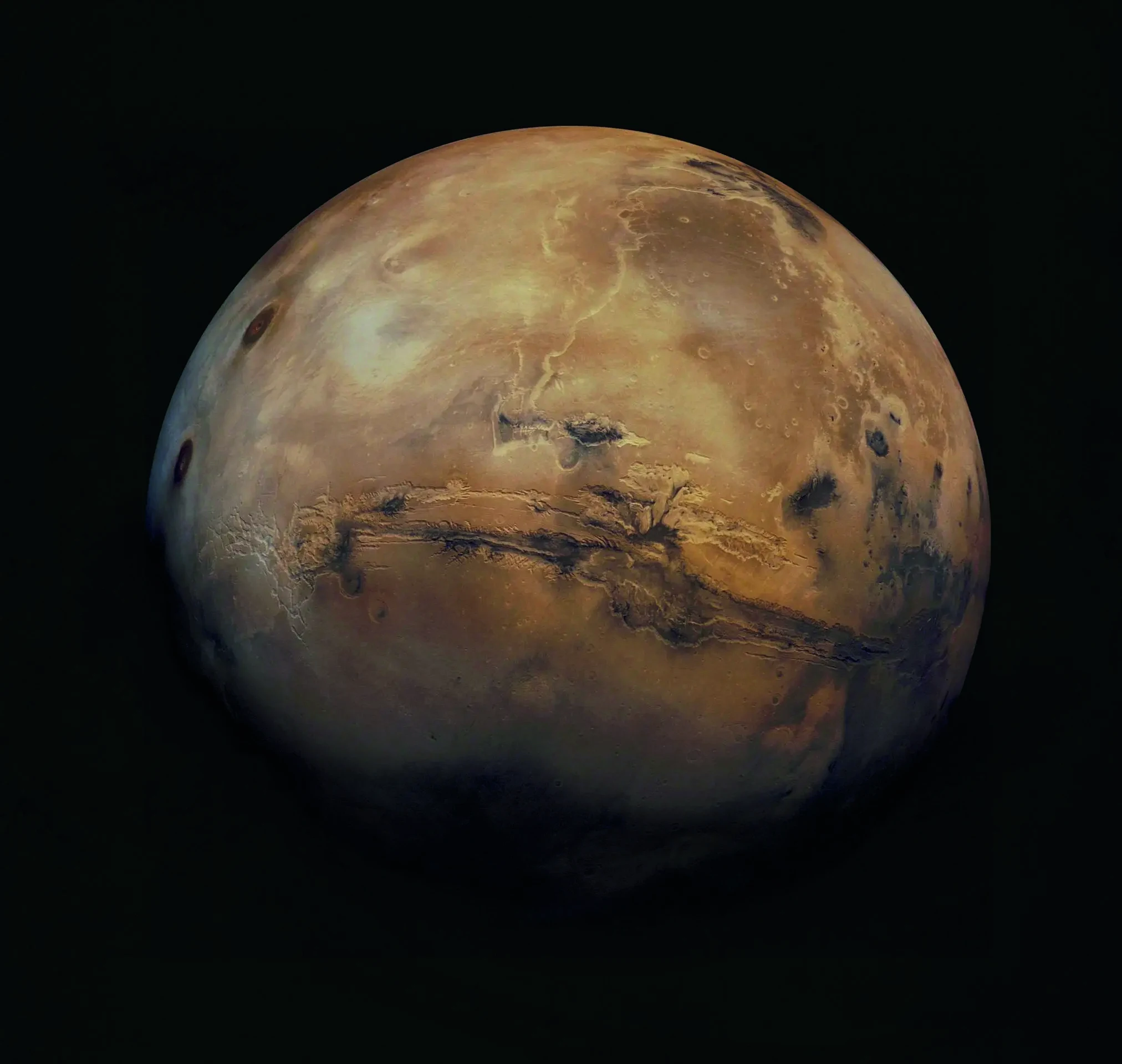
Если не мешать слоистый коктейль, тяжёлый сироп уходит вниз. Молодая планета — такой же бурлящий океан из раскалённого камня. При остывании в нём кристаллизуются минералы: одни, как железо, тяжелеют и тонут, другие плавают. Казалось бы, у ядра должен копиться плотный слой.
Но снизу, из твердеющих недр, поднимаются расплавы: лёгкие капли, словно масло в воде, всплывают и перемешивают океан. Чем больше планета и чем жарче «помешивание», тем труднее железу осесть.
Марсианский океан оказался мельче, тепловое движение слабее, и железо спокойно стекло на дно. Этот слой недавно засекли по отголоскам марсотрясений — он, как губка, гасит волны дрожи.
Открытие объясняет строение множества каменных экзопланет. По сути, мы прочитали рецепт, по которому природа готовит внутренности миров: одни перемешивает, другим даёт расслоиться.
Оригинальная аннотация
как её написали авторы, на английском arXiv:2605.04840
Magma ocean crystallisation sets up the early structure and long-term evolution of terrestrial planets. Recent seismic evidence signals the presence of a silicate layer at the base of Mars' mantle. Magma-ocean crystallisation and subsequent overturn has been invoked as a hypothesis for this layer's origin. However, while a magma ocean existed in both Earth and Mars, there is no seismic evidence for a basal layer in present-day Earth. In this study, we apply a parameterized-convection model to study whether the effect of partial melting in the growing mantle on overlying magma ocean composition can explain this discrepancy. Melts from the mantle buffer the crystallising magma ocean, limiting progressive differentiation, iron enrichment and the density anomaly of the overturned layer. This buffering is more efficient for larger planets with more vigorous mantle convection and for planets that are originally less enriched in iron. Consequently, a shallow magma ocean is more iron enriched and denser on Mars than on Earth, providing an explanation for the Mars-Earth difference in present-day structure of the mantle. We also predict a dichotomy in terrestrial-exoplanet interior structures, with a population with small, stratified mantles and another with large, mostly-homogeneous mantles.
Будь земные недра столь же спокойными, как на Марсе, у нас тоже сформировался бы скрытый плотный слой — а это полностью изменило бы облик планеты: иначе двигались континенты, иначе извергались вулканы.