اكتشاف نجوم أحفورية في مجرة قزمة سريع
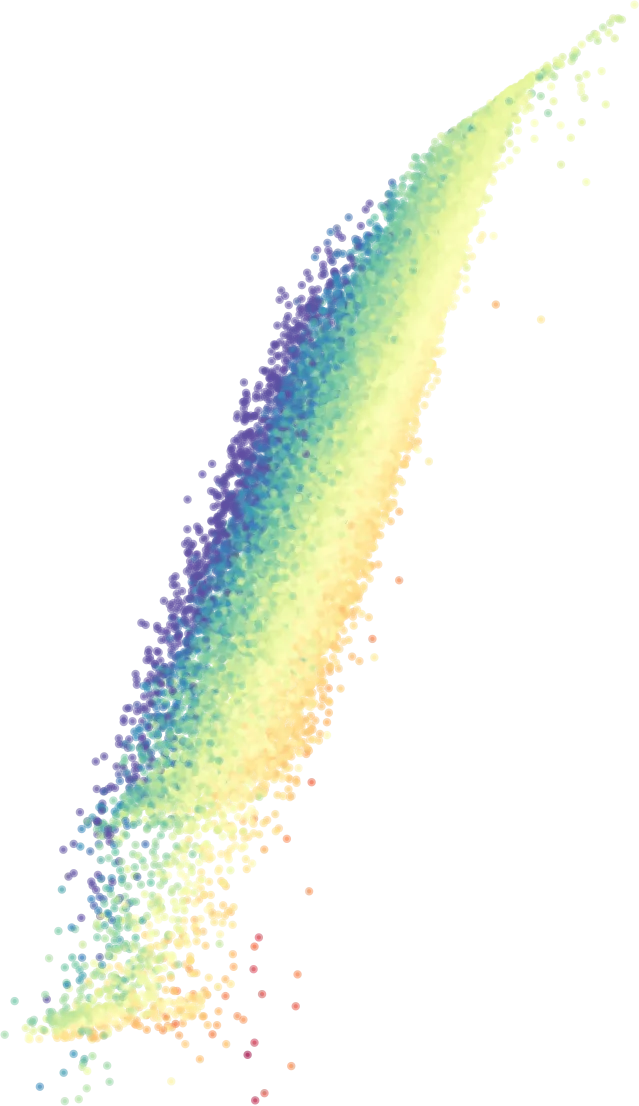
في مجرة سحابة ماجلان الكبرى، التي تدور حول مجرتنا درب التبانة، التقط علماء الفلك خمسة نجوم تبدو وكأنها أحافير من ماضٍ بعيد جداً. لا تحتوي تقريباً على معادن — فقط من جزء من مائة إلى جزء من ألف من الكمية الموجودة في الشمس، لكنها غنية بالكربون بعشرات المرات. تُسمى هذه النجوم بالنجوم المعززة بالكربون منخفضة المعادن، أو اختصاراً نجوم CEMP.
هذه النجوم تشبه صوراً قديمة للأيام الأولى للكون. عندما وُلدت، لم تكن العناصر الثقيلة قد انتشرت بعد، والتي نثرتها لاحقاً انفجارات المستعرات العظمى والنجوم المحتضرة. لذلك، يكشف تركيبها عما حدث في البداية. سابقاً، لم يتم العثور على مثل هذه النجوم في سحابة ماجلان الكبرى، على الرغم من أن الكثير منها معروف في مجرتنا. اشتبه علماء الفلك في أن طريقة الاختيار هي السبب: فقد كانت الأجهزة تستبعد هذه النجوم تحديداً لأنها تبدو مختلفة عما كان متوقعاً.
تم اختيار الاكتشافات الجديدة بناءً على بيانات من تلسكوب SDSS-V، وتبين أنها الأكثر فقراً بالمعادن بين جميع النجوم المعروفة في هذه المجرة. من المرجح أن الكربون فيها جاء من نجم مرافق مجاور: فقد تقدم في العمر، وانتفخ، وألقى طبقاته الخارجية الغنية بالكربون على رفيقه. الأمر يشبه أن يشارك نجم آخر بـ«رماده». الآن ينتظر العلماء التحليل الكامل لجميع البيانات لفهم ما إذا كان الأمر كذلك بالفعل، ومدى شيوع هذه النجوم خارج درب التبانة.
الاكتشاف مهم لأنه من خلال مقارنة هذه النجوم في مجرات مختلفة، يمكننا التحقق مما إذا كان التطور الكيميائي المبكر قد سار بنفس الطريقة في الكون. إذا كانت ترددات وخصائص نجوم CEMP مختلفة، فهذا يعني أن البيئة أثرت على كيفية ولادة الأجيال الأولى من النجوم.
الملخص الأصلي
كما كتبه المؤلفون، بالإنجليزية arXiv:2601.10514
A substantial fraction of metal-poor stars in the local Milky Way halo exhibit large overabundances of carbon. These stars, dubbed Carbon-Enhanced Metal-Poor (CEMP) stars, provide crucial constraints on the nature of the early universe including the earliest nucleosynthetic events. Whether these stars exist at similar rates in nearby galaxies is a major open question with implications for the environmental dependence of early chemical evolution. Here, we present the discovery of the first five CEMP stars in the Milky Way's largest dwarf companion, the LMC, using SDSS-V spectra from the BOSS instrument. We measure metallicities ranging from [Fe/H] = -2.1 to -3.2 and evolutionary state corrected carbon enhancements of [C/Fe] = +1.2 to +2.4, placing these stars among the most metal-poor and carbon-rich ever identified in the LMC. Their absolute carbon abundances and metallicities classify them as Group I CEMP stars, suggesting binary mass-transfer origins, though neutron-capture abundance measurements are required to confirm whether this classification scheme applies beyond the Milky Way. Although these stars were selected as the most promising CEMP candidates from the SDSS-V sample, likely biasing this initial sample toward higher absolute carbon abundances, their discovery suggests that previous null detections of CEMP stars in the LMC were caused by metallicity-sensitive photometric targeting biases against high [C/H] stars. A forthcoming analysis of the full spectroscopic sample will push to lower carbon abundances, providing a more complete census and enabling critical tests of whether environmental differences shape the formation channels and frequencies of CEMP stars in this system.
يطلق علماء الفلك على جميع العناصر الأثقل من الهيليوم اسم «معادن»، حتى الكربون والأكسجين. لذلك، فإن النجم الذي يحتوي على «القليل من المعادن» قد يكون غنياً بالكربون.
في رواية «سولاريس» لستانيسلاف ليم، يتكون محيط الكوكب من مادة غير عادية ربما تشكلت في الكون المبكر، حيث كان التركيب الكيميائي مختلفاً تماماً.