النجوم العملاقة تغيّر تركيبها في الأزواج سريع
في مشاتل النجوم، تولد النجوم الضخمة ليس منفردة بل في أزواج. يدور نجمان حول مركز مشترك، والأثقل منهما ينتفخ أولاً ويبدأ بفقدان طبقاته الخارجية. جزء من هذه المادة لا يهرب إلى الفضاء بل ينتقل إلى النجم المجاور — مثل الماء من كأس ممتلئ إلى كأس موضوعة تحته. ونتيجة لذلك، يغتني النجم المستقبِل بالهيليوم الذي تراكم في باطن النجم المانح.
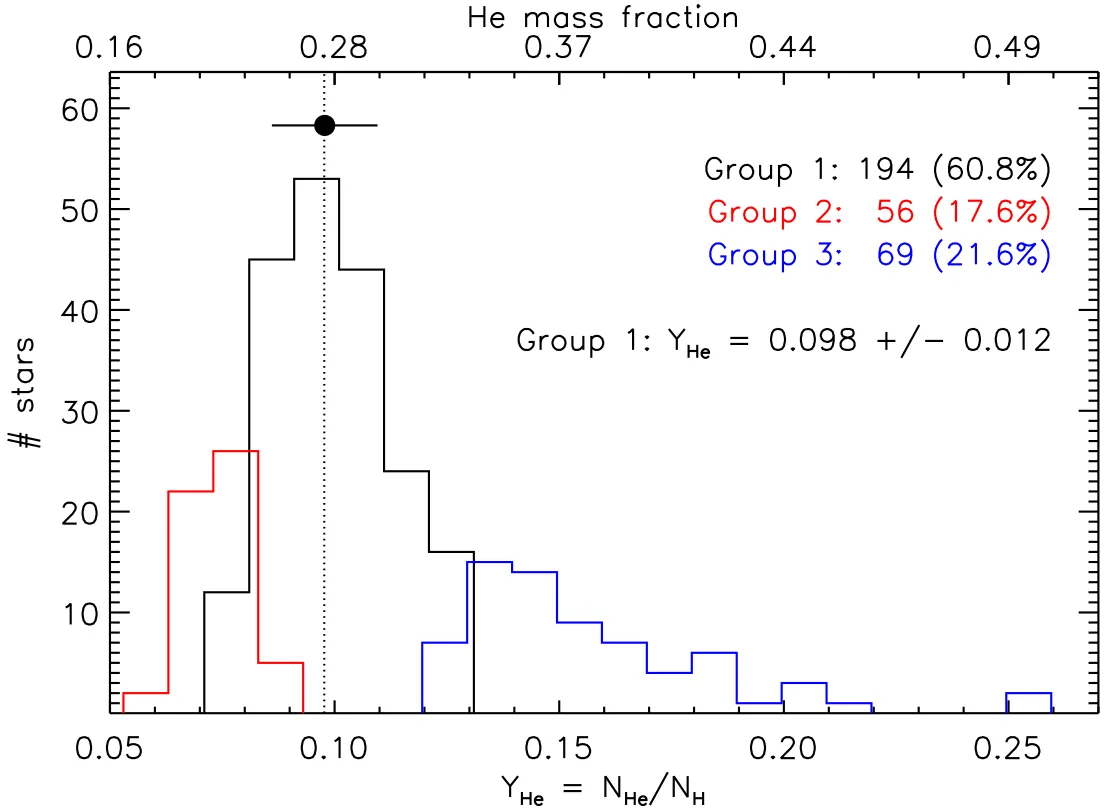
قام علماء الفلك من مشروع IACOB باختبار هذه الصورة على عينة كبيرة: 318 نجمًا ضخمًا من الفئة الطيفية O في مجرتنا. لدى 22% منها، كان الهيليوم في الغلاف الجوي أعلى بشكل ملحوظ من المعيار الكوني (حوالي 0.098 بالنسبة إلى الهيدروجين). علاوة على ذلك، لدى معظم هذه النجوم علامات على وجود جار: إما نجم مرافق مرئي قريب، أو أن النجم يتحرك عبر المجرة بسرعة عالية بشكل غير عادي — أثر لتفاعل سابق.
هذا مهم لفهم مصير النجوم الأكثر حرارة وقصرًا في العمر. تنفجر النجوم الضخمة كمستعرات عظمى، تاركةً وراءها نجومًا نيوترونية أو ثقوبًا سوداء. إذا كان جزء كبير منها قد مر بمرحلة تبادل الكتلة، فإن الانفجارات نفسها وبقاياها ستكون مختلفة. النجم الذي يبدو منفردًا قد يكون نتاج تاريخ زوجي عاصف.
الملخص الأصلي
كما كتبه المؤلفون، بالإنجليزية arXiv:2601.20698
The presence of massive O-type stars with surfaces enriched by CNO-cycle products has been known since the early 1980s. For many years, internal rotational mixing was assumed to be the dominant mechanism responsible for this chemical contamination. However, accumulating evidence now suggests that binary interaction -- particularly mass-transfer episodes -- may play an equally important, if not dominant, role. We aim to carry out a large-scale investigation of surface helium (He) abundances in Galactic O-type stars, based on the results from the analysis of high-quality spectroscopic data from the IACOB project. We perform a homogeneous spectroscopic analysis of 318 Galactic O-type stars with the IACOB-BROAD and FASTWIND/IACOB-GBAT tools, deriving rotational velocities, atmospheric parameters, and He abundances. We also account for the influence of binarity, runaway status, and parameter degeneracies (e.g., microturbulence, wind properties, diagnostic lines, and companion contamination) on the abundance determinations. We present homogeneously determined surface He abundances (YHe=N(He)/N(H)) for the so far largest, statistically significant sample of Galactic O-type stars. About 78% of the stars show He abundances consistent with the previously proposed cosmic abundance standard of YHe=0.098$$\pm$$0.002. The remaining 22% display clear He enrichment (YHe>0.13). We also provide observational evidence indicating that most of these He-enriched stars are likely the products of binary interaction. Our study highlights how large spectroscopic surveys are gradually opening robust observational avenues to identify the products of massive binary interaction. It also emphasizes the need for caution when interpreting the spectroscopic properties of apparently single O-type stars. A significant fraction may in fact be the outcome of binary evolution rather than isolated stellar birth.
لدى 22% من النجوم الضخمة، تزيد نسبة الهيليوم في الغلاف الجوي عن 13% من حيث عدد الذرات — كما لو أن كوب الماء يحتوي على ملعقة ونصف من السكر بدلاً من ملعقة واحدة.