خريطة كيميائية لعنقود نجمي سريع
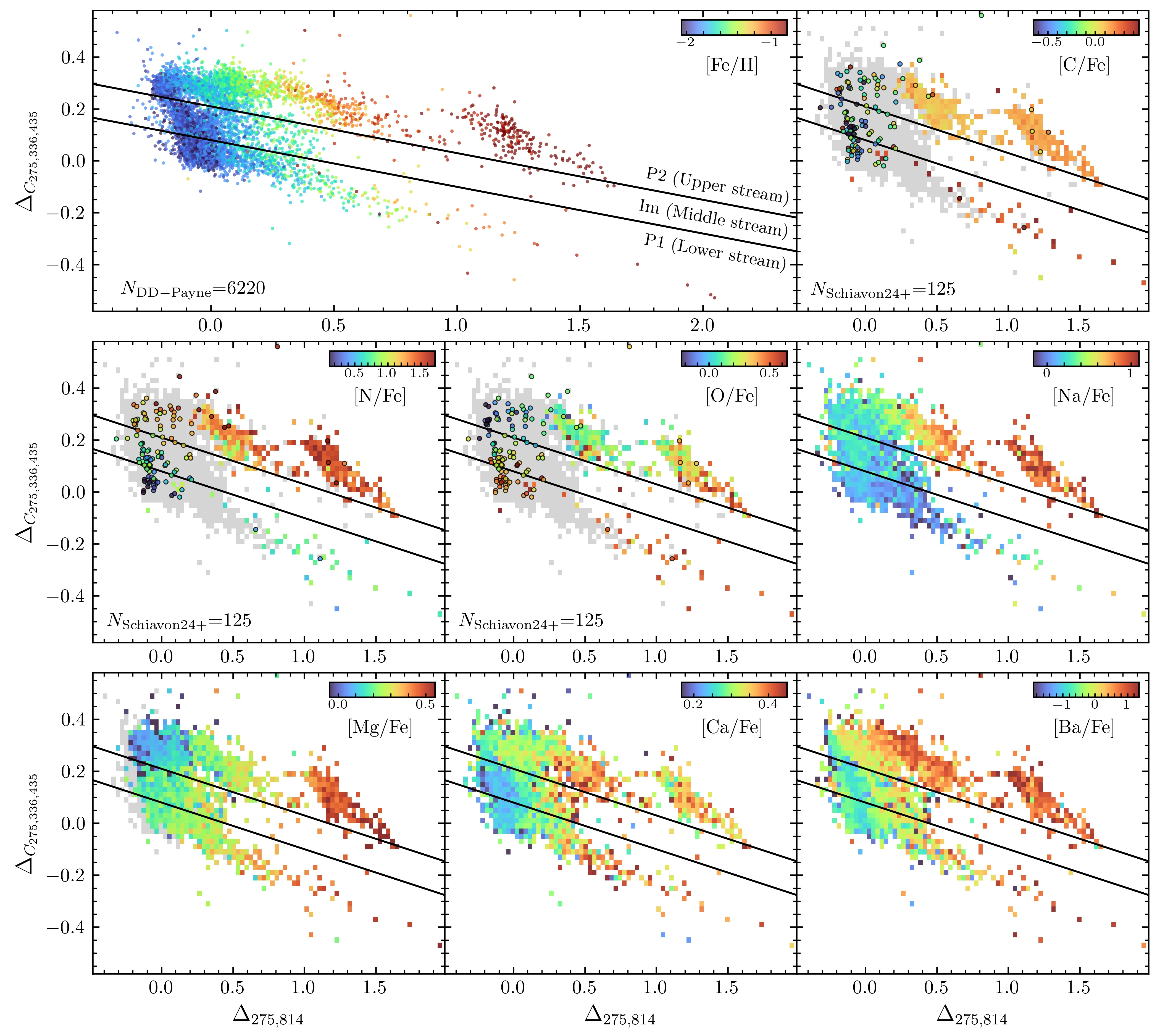
في مركز أوميغا قنطورس — أكبر عنقود كروي في مجرتنا — تتزاحم آلاف النجوم بكثافة شديدة لدرجة أن ضوءها يندمج من الأرض في بقعة متوهجة واحدة. إن فصل هذا السرب إلى نجوم فردية ومعرفة تركيب كل منها مهمة تشبه تفكيك عش نمل مكتظ. سلّح علماء الفلك أنفسهم بمطياف MUSE الذي يلتقط آلاف الأطياف في وقت واحد، وشبكة عصبية تُدعى DD-Payne تدرّبت على تمييز خطوط العناصر المختلفة في تلك الأطياف.
في النهاية، تمكنوا من قياس محتوى الكربون والنيتروجين والأكسجين والمغنيسيوم والصوديوم والكالسيوم والباريوم لدى 7302 نجمًا عملاقًا أحمر ضمن نصف نصف القطر الضوئي للعنقود. الأمر أشبه بأن يأخذ كيميائي عينات من كل ساكن في مدينة كبيرة ويفرز النتائج حسب عمر الأحياء. اتضح أن النجوم في أوميغا قنطورس ليست متشابهة: بعضها وُلد أبكر وهو أفقر في العناصر الثقيلة، وبعضها وُلد لاحقًا وهو أغنى بها. الفرق ملحوظ بشكل خاص في النيتروجين: فهو أكثر وفرة في النجوم الأصغر سنًا، بينما العلاقة بالعمر أضعف بالنسبة للكالسيوم والباريوم.
هذه الخريطة الكيميائية التفصيلية تتيح اختبار سيناريوهات نشأة العنقود. على سبيل المثال، إذا كانت أوميغا قنطورس فعلًا نواة مجرة قزمة، فإن نجوم الأجيال المختلفة كان يجب أن تتشكل من غاز أُثرى تدريجيًا بالعناصر الثقيلة الناتجة عن انفجارات المستعرات العظمى. الاتجاهات المرصودة بين التركيب والعمر تتفق مع هذه الصورة: كلما كانت النجوم أصغر سنًا، زاد محتواها من الباريوم والكالسيوم — وهما عنصران يولدوان في أعماق النجوم القديمة ويُقذفان إلى الفضاء عند موتها.
يُظهر العمل أنه حتى في ضيق قلب نجمي يمكن تمييز تاريخ كل جيل. لم يعد السرب بقعة بلا ملامح، بل تحول إلى سجل تاريخي، حيث كل نجم هو سطر يخبرنا عن الغاز الذي وُلد منه.
الملخص الأصلي
كما كتبه المؤلفون، بالإنجليزية arXiv:2603.01041
We present chemical abundance measurements for 7,302 red giant branch stars within the half-light radius (~5') of $$\omega$$ Centauri ($$\omega$$ Cen), derived from MUSE spectra using the neural network model DD-Payne. DD-Payne effectively identifies spectral features of C, N, and O for [Fe/H]>-1.0 dex; Mg for [Fe/H]>-1.5 dex; and Na, Ca, and Ba for all metallicities. By combining these measurements with previous high-resolution studies, we create the most comprehensive picture of $$\omega$$ Cen's rich chemical evolutionary history. For the first time, we map elemental variations across the entire chromosome diagram, which is widely used to identify multiple populations. We analyze the median chemical abundance trends as functions of age and metallicity for different subpopulations. The DD-Payne measurements of [C/Fe], [N/Fe], and [O/Fe] extend literature trends to higher metallicities and show continuous abundance-metallicity relations, with [(C+N+O)/Fe] increasing steadily with [Fe/H]. [Ca/Fe] and the s-process element [Ba/Fe] also increase with metallicity across all populations. For [Ba/Fe], the chemically enhanced (P2) populations are more enriched than primordial (P1) and the intermediate (Im) populations. Furthermore, [N/Fe] correlates strongly with stellar age while [Ca/Fe] and [Ba/Fe] exhibits a weaker age dependence. Using these abundance-metallicity-age relations, we evaluate different formation scenarios of $$\omega$$ Cen proposed in the literature. Our study demonstrates that combining MUSE with machine learning enables large-sample stellar abundance measurements in crowded cluster cores, overcoming the limitations of fiber-fed spectroscopy for studying multiple stellar populations and their evolutionary histories.
في أوميغا قنطورس، النجوم معبأة بكثافة أكبر بعشرات الآلاف من المرات مما هي عليه في محيط الشمس: لو وُجد كوكب هناك، لكانت السماء ليلًا تتوهج كما في الشفق من آلاف الشموس القريبة.
في رواية إسحاق أسيموف «الآلهة أنفسهم» تُوصف حضارة تعيش في عنقود نجمي كثيف حيث تمتلئ السماء بالنجوم — وهو ما يشبه المنظر من كوكب داخل أوميغا قنطورس.