كيف يكتسب سبيكة من سبعة معادن ذاكرة سريع
السبيكة المكونة من سبعة معادن تشبه فريقًا يسحب فيه كل لاعب البطانية نحو نفسه. ذرات الحديد والكوبالت والنيكل والألومنيوم والتيتانيوم والتنتالوم والفاناديوم قد تصطف في نمط منتظم، أو قد تتوزع في مواقع عشوائية. يعتمد على ذلك ما إذا كانت المادة صلبة كالفولاذ أم خفيفة كالألومنيوم. يريد العلماء معرفة مسبقًا أي نمط ستختاره الذرات لصناعة سبائك بخصائص مرغوبة.
الحسابات الحاسوبية التقليدية بطيئة جدًا لتتبع إعادة ترتيب الذرات على مدى زمن طويل. لذلك استخدم المؤلفون التعلم الآلي: تتعلم الخوارزمية من الأمثلة ثم تتنبأ بسلوك الذرات بسرعة أكبر. قارنوا عدة أنواع من هذه الخوارزميات على بيانات 10 آلاف تكوين ذري. تبيّن أن بعض الخوارزميات أكثر دقة، وبعضها أسرع، وبعضها أفضل في التقاط تأثير الذرات على بعضها البعض عن بُعد.
كما اختبر الباحثون مدى أهمية مراعاة أن الذرات تزيح قليلًا عن مواضعها وأن الشبكة البلورية تتنفس. تبيّن أن عدم السماح للذرات بالاسترخاء بعد الترتيب يجعل التنبؤات أسوأ. الآن لدى علماء المواد دليل إرشادي لاختيار الخوارزمية المناسبة لمحاكاة السبائك عالية الإنتروبيا. هذا يقربنا من صناعة مواد تصلح للاستخدام في المحركات النفاثة أو المفاعلات النووية، حيث تتحلل السبائك التقليدية بسرعة.
الملخص الأصلي
كما كتبه المؤلفون، بالإنجليزية arXiv:2603.21207
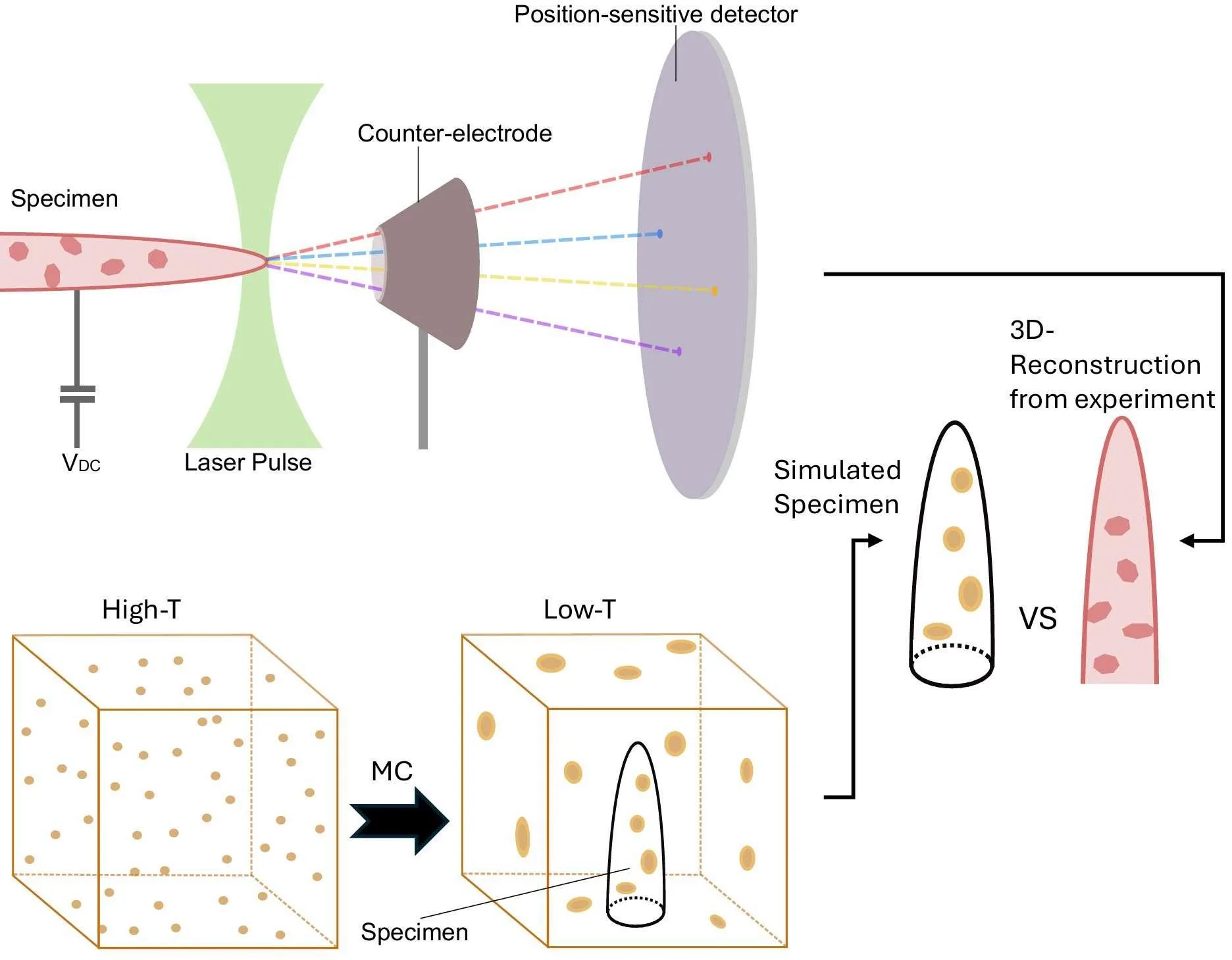
Tailoring the performance of next-generation high entropy materials requires a deep understanding of the competition between entropy-driven random solid solution and enthalpy-driven chemical ordering. Investigating such order and disorder complexity demands atomistic simulations that achieve high accuracy, efficiency, and generalizability across vast spatial, temporal, and especially chemical scales. While machine learning (ML) interatomic potentials have transformed molecular dynamics, they remain limited in capturing diffusion-driven chemical evolution over long timescales. The recently introduced SMC-X method brings exciting opportunities. Realizing its full potential requires a comprehensive study, which is the focus of this work. To assess model performance, we systematically benchmark invariant and equivariant architectures using a density functional theory dataset of more than 10,000 configurations spanning seven elements: Fe, Co, Ni, Al, Ti, Ta, and V. To understand the roles of pairwise and higher-order interactions, we decouple their contributions across chemical space using an explainable machine learning approach. We also examine the impact of lattice relaxation by comparing models trained on datasets with and without structural relaxation. Our results clarify how to choose ML surrogate models for Monte Carlo simulations, bridge the gap between theory and experiment, and lay a foundation for establishing ML-accelerated Monte Carlo as a computational microscope for chemical complexity.
تُسمى السبائك عالية الإنتروبيا أحيانًا "سبائك الكوكتيل": تخلط خمسة معادن أو أكثر بنسب شبه متساوية، فينتج مادة بخصائص غير متوقعة — مثل أن تكون قوية ومرنة في آن واحد.