الطبقات المشحونة في رياح النجوم النابضة سريع
طبقة رقيقة من الزيت على سطح الماء تتمزق إلى قطرات منفصلة عند أدنى اهتزاز. شيء مشابه يحدث في رياح النجم النابض — وهو تدفق من الجسيمات يقذفه نجم نيوتروني سريع الدوران. في هذا التدفق توجد أيضًا طبقات من البلازما، ويمكن أن تتفكك إلى كتل — جزر مغناطيسية. ولكن، على عكس الزيت، تحمل هذه الطبقات شحنة كهربائية.
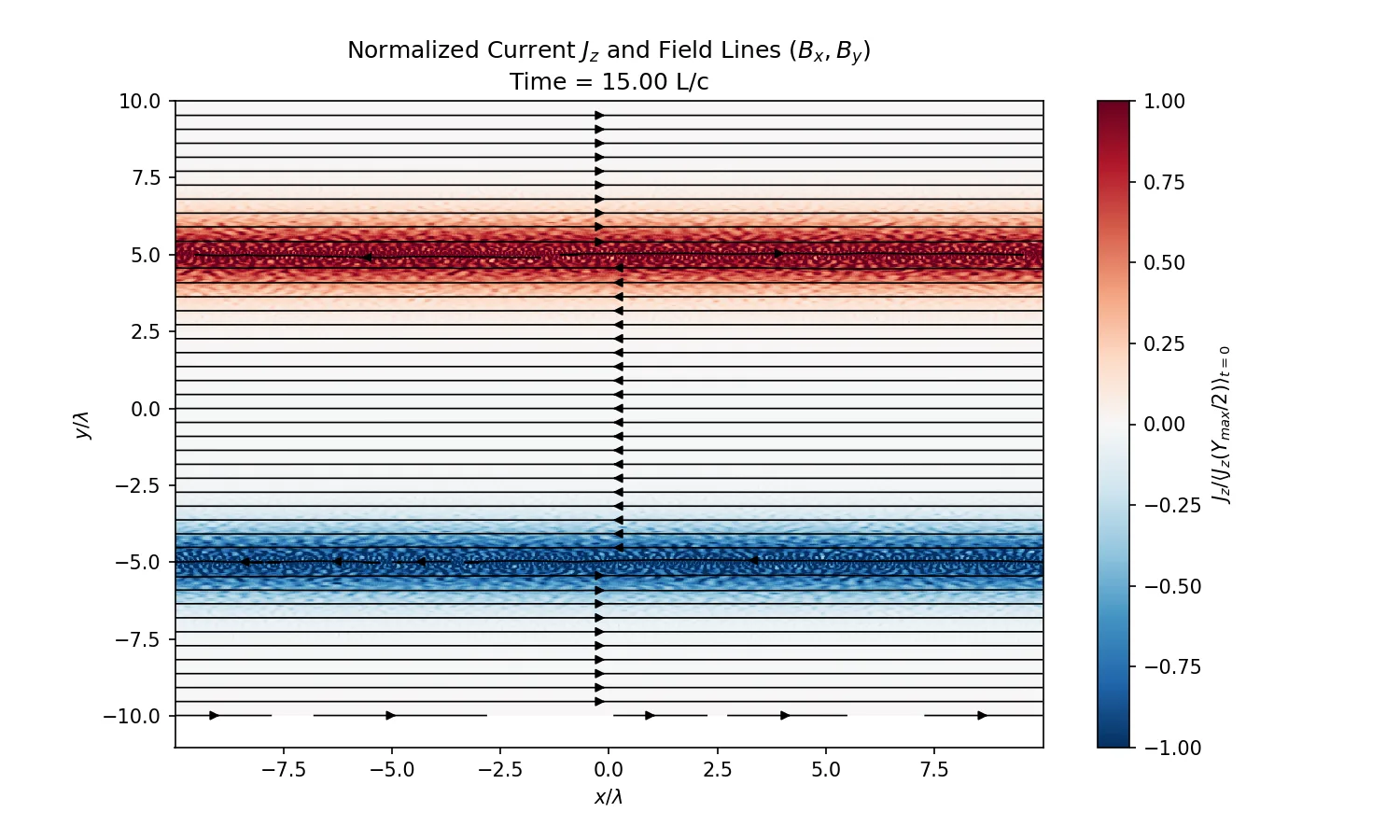
في الدراسة الجديدة، استخدم العلماء محاكاة حاسوبية لمعرفة كيف تؤثر الشحنة على التمزق. أولاً، تفقد الطبقة المشحونة انتظامها: تولد في البلازما اهتزازات سريعة — موجات بيرنشتاين (تشبه التموجات التي تجري على وتر مشدود). تعمل هذه الموجات على خلط الشحنة، ويصبح توزيعها مرقطًا. ومع ذلك، فإن هذا لا يؤثر تقريبًا على نمو الجزر المغناطيسية نفسها — فهي تشحن قليلاً فقط.
سيناريو آخر — الطبقات الدوارة. إذا لم تكن الطبقة مجرد ممتدة بل ملتوية، مثل قمع في مصرف، فإن الشحنة تلعب دورًا أكثر وضوحًا. في ظل ظروف معينة، يتسارع التمزق: تتولد الجزر المغناطيسية بشكل أسرع مما في الحالة غير المشحونة. هذا يشبه ورقة مقطوعة يسهل تمزيقها إذا تم تجعيدها مسبقًا. تساعد النتائج في فهم كيفية تحول طاقة الرياح النابضة إلى إشعاع وجسيمات عالية الطاقة.
الملخص الأصلي
كما كتبه المؤلفون، بالإنجليزية arXiv:2605.06085
Astrophysical current layers, e.g., in pulsar winds, can be electrically charged, while the plasma is charge-symmetric, $$e^\pm$$. Using PIC simulations, we investigate dynamics and plasmoid formation (tearing instability) in charged Harris-type and rotational current layers. Electrically charged current layers, initially in global force-balance, are electrostatically unstable: the resulting dynamics is an intricate interplay between electrostatic Bernstein waves (BWs) and the current tearing mode. Besides overall density and magnetic field, plasma temperature is an important factor. In the charged Harris sheet set-up, the quickly generated BW are trapped within the layers (internally reflected at the upper hybrid resonance). BWs quickly redistribute the charge modifying the initial stage of tearing, but without strongly affecting overall plasmoid growth; resulting plasmoids are mildly charged. In rotational current layers: (i) even initially overall uncharged configurations develop large fluctuations of charge density; (ii) overall dynamics depends on the initial overall temperature; (iii) for certain combination of parameters tearing rate is greatly increased in the charged case.
سميت موجات بيرنشتاين على اسم الفيزيائي آيرا بيرنشتاين الذي وصفها في عام 1958. وهي لا تغادر البلازما، بل تبقى محبوسة داخلها، مثل الصوت في آلة موسيقية.