الحرارة تتحول إلى كهرباء حتى في الزجاج العادي سريع
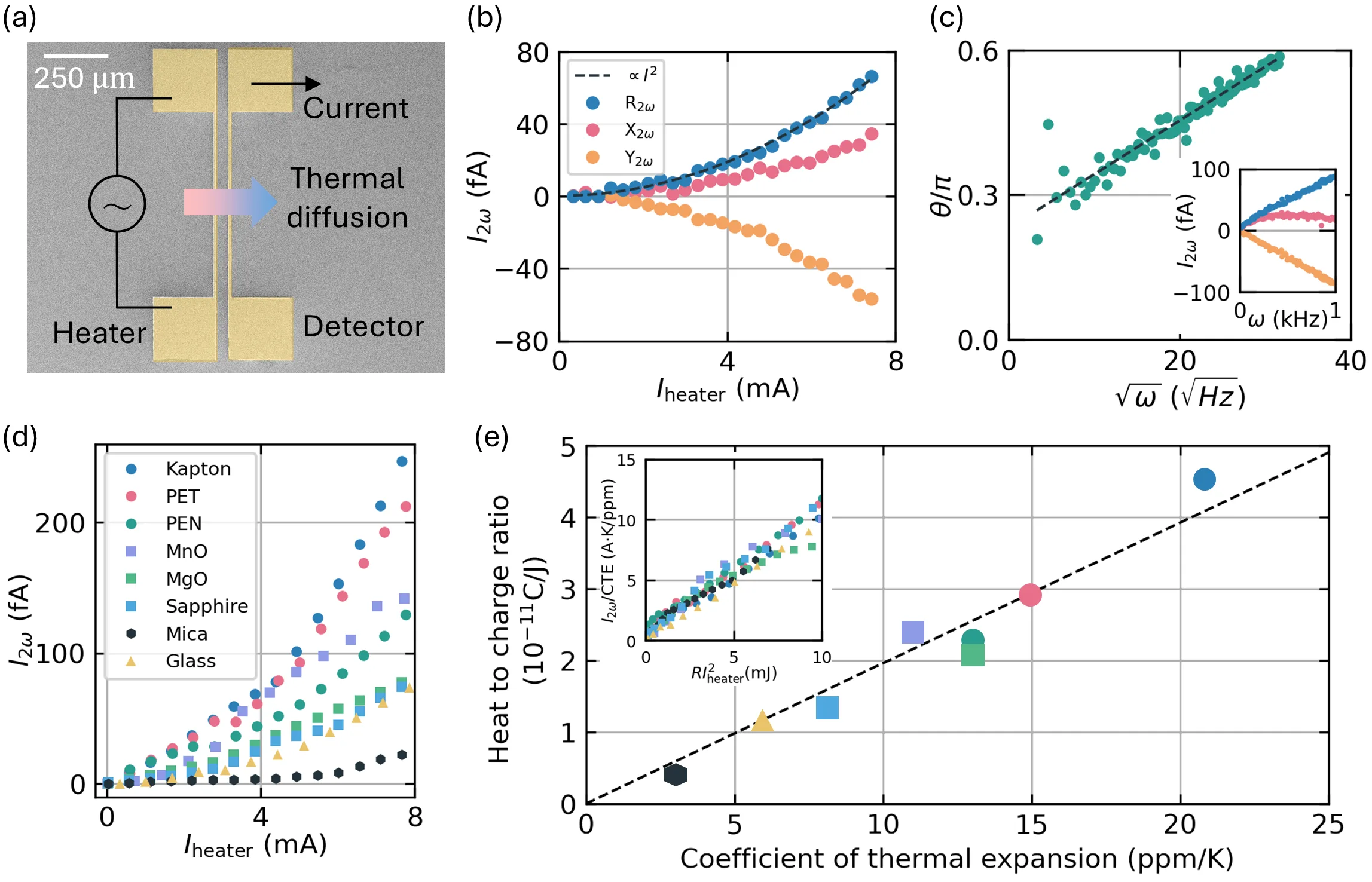
إذا سخّنت مسمارًا في النار، فسوف يستطيل — وهذا يعرفه الجميع. لكن إذا سخّنت طرفه فقط وتركت الآخر باردًا، فلن يصبح المسمار أطول فحسب: بل سينحني، لأن المعدن الساخن يتمدد أكثر من المعدن البارد. هذا الانحناء نفسه، لكن على المستوى الذري، هو ما حوّله الفيزيائيون إلى كهرباء.
في العوازل — الزجاج والبلاستيك والسيراميك — لا توجد إلكترونات حرة تقريبًا، لذا فإن التأثير الكهروحراري (thermoelectric effect) المعتاد لا يعمل هناك. جعل مؤلفو الدراسة الحرارة تولّد جهدًا بطريقة مختلفة: تسبب فرق درجات الحرارة في تمدد حراري غير متساوٍ، فانحنت الشبكة الذرية، وأي انحناء في العازل يولّد مجالًا كهربائيًا ضعيفًا. تُسمى هذه الظاهرة بالكهرباء الانحنائية (من اللاتينية بمعنى «يثني»). وُلدت سلسلة: حرارة ← انحناء الشبكة ← شحنة كهربائية.
أقوى استجابة أظهرتها العينات الرقيقة — لأنه من الأسهل ثني صفيحة رقيقة من ثني صفيحة سميكة. لكن المفاجأة الحقيقية كانت بالقرب من التحولات الطورية: عندما كان الزجاج يلين أو يفقد المادة المغناطيسية خصائصها المغناطيسية، كان التمدد الحراري يتعزز بشكل حاد. وفي الوقت نفسه، قفزت الإشارة الكهربائية بأكثر من عشرة أضعاف.
هذه الآلية لا تعتمد على تماثل البلورة، لذا فهي تعمل في أي عازل. وهذا يعني أنه يمكن تحويل الحرارة المهدرة من معالج أو أنبوب عادم إلى كهرباء مباشرة داخل هيكل الجهاز — دون معادن أو هياكل شبه موصلة معقدة.
الملخص الأصلي
كما كتبه المؤلفون، بالإنجليزية arXiv:2605.17224
Heat-to-charge conversion has traditionally been realized via the Seebeck effect in conductors and pyroelectricity in polar insulators. Here, we demonstrate that temperature gradients generate electrical polarization, namely thermopolarization, in a wide range of insulators through a thermomechanical pathway. We identify a mechanism where thermal expansion under a temperature gradient produces strain gradients that induce polarization via the flexoelectric effect. Using a device with an on-chip heater, we detect the heat-induced polarization in crystalline, polymeric, and amorphous systems, including MgO, Al$$_2$$O$$_3$$, MnO, mica, PET, PEN, polyimide, and soda-lime glass. The magnitude of the response exhibits a robust scaling with the coefficient of thermal expansion, which is reproduced by finite-element simulations. Furthermore, we identify two routes to enhance the response: reducing the sample thickness and exploiting structural instabilities such as glass and antiferromagnetic phase transitions, where more than an order-of-magnitude enhancement is observed. These results establish a symmetry-independent route for heat-to-charge conversion in insulators and provide a device-compatible platform for electrically probing lattice responses, with potential for enhancement in nanoscale systems such as two-dimensional materials.
الزجاج العادي للنوافذ، إذا سُخِّن أحد أطرافه بدرجتين فقط أكثر من الطرف الآخر، يولّد جهدًا كهربائيًا — صغيرًا جدًا، لكنه قابل للقياس تمامًا. في السابق، كان يُعتقد أن الزجاج غير قادر على ذلك.