كيفية إنتاج فوتون واحد مثالي سريع
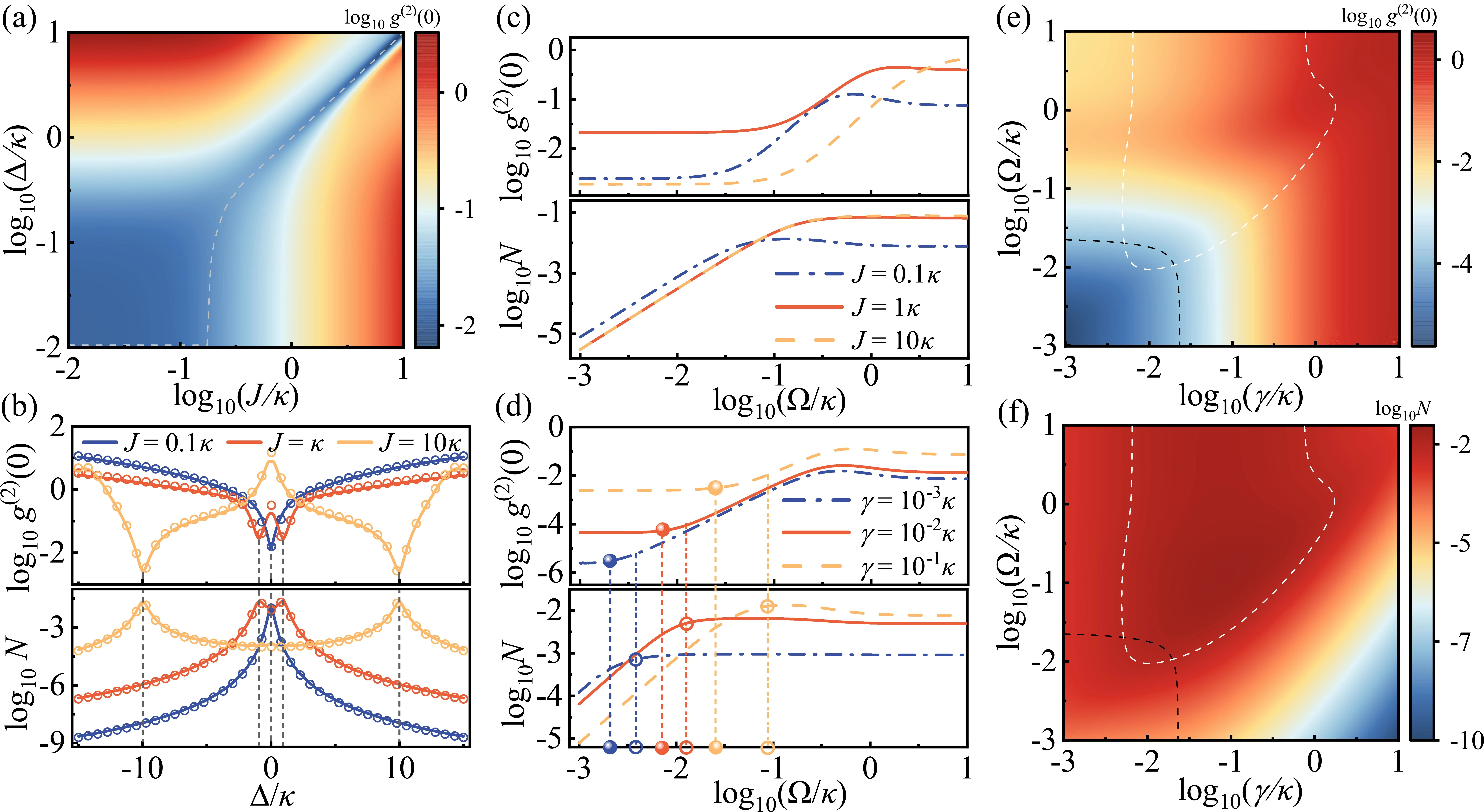
يمكن تشبيه مصدر الفوتونات الاعتيادي بمدخل مبنى يحرسه بواب واحد. يحاول أن يسمح بمرور الزوار فرداً فرداً، لكن أحياناً تتسلل ثنائيات. يسمي الفيزيائيون هذه معضلة النقاء: يجب أن تأتي الفوتونات منفردة بدقة، وإلا تتعطل الحسابات الكمومية. كانت الطرق القديمة تمنع الأزواج بشدة، لكن السطوع ينخفض آنذاك - كما لو أن البواب يدقق طويلاً على كل شخص فتتكدس طوابير. يضيف الأسلوب الجديد بوابين اثنين يعملان بتناغم. إذا لاحظ الأول مخالفاً، يصده الآخران فوراً - فلا تمر ثنائية أبداً. يعمل هذا التحكم الثلاثي بسرعة وموثوقية حتى في الأجواء المزدحمة حيث قد يخطئ الحارس المنفرد.
لا تتطلب الطريقة إعدادات معقدة، وتبشر بمصادر فوتونات مثالية للحواسيب الكمومية والقياسات الدقيقة كـ التحليل الطيفي و قياس الضوء.
الملخص الأصلي
كما كتبه المؤلفون، بالإنجليزية arXiv:2605.21942
Photon blockade is vital for single-photon generation, but current schemes with conventional and unconventional photon blockade face critical limitations like the purity-brightness trade-off, hindering the generation of high-performance single-photons. To overcome these limitations, we introduce a fundamentally new photon blockade mechanism by utilizing three-body interactions between a single photonic mode and two qubits. This kind of interaction intrinsically cuts off the excitation path to the two-photon state, resulting in a perfect photon blockade effect. The mechanism operates across a broad parameter range, free from the constraints of strong coupling or weak driving. Remarkably, it breaks the purity-brightness trade-off, enabling the simultaneous achievement of extreme purity and high brightness, both significantly outperforming previous mechanisms. Furthermore, this approach demonstrates robustness against thermal noise and avoids unwanted oscillations in the time-delayed correlation function. This work provides a path for generating high-purity, high-brightness, and robust single-photon sources, a key resource for quantum technologies.
لكي تدرك العين الضوء، تحتاج إلى عشرة فوتونات على الأقل في آن واحد - يبقى الفوتون الواحد خفياً تماماً.