الجاذبية تشبك الضوء والجسم الدوار سريع
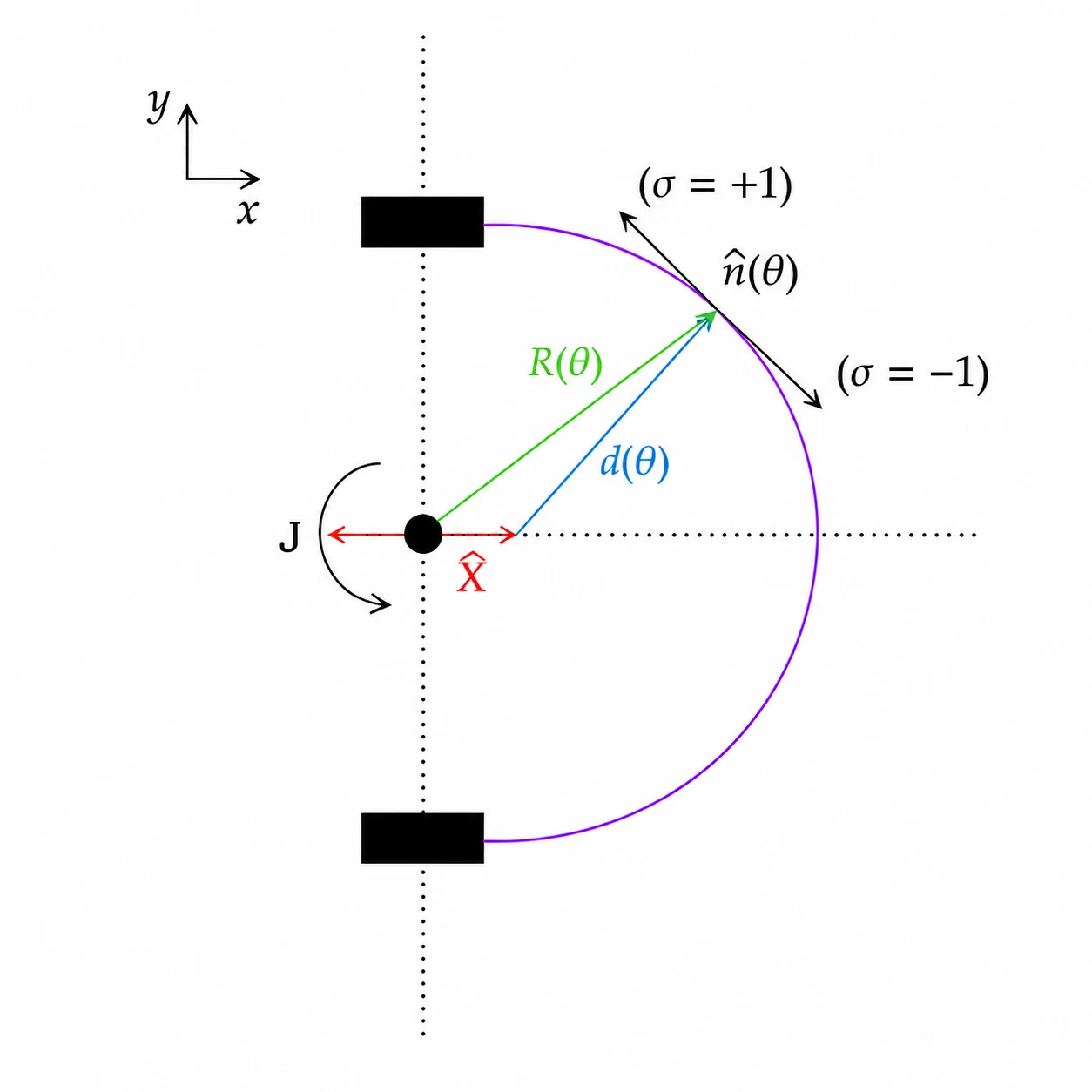
يمكن تخيل الزمكان كنسيج مشدود بإحكام. الجسم الضخم يحدث فيه انبعاجًا، مما يوجه الضوء. أما الدوران فيلوي النسيج بشكل حلزوني. هذا القمع الجذبي قادر على تشابك الفوتون العابر مع مصدر الدوران نفسه — مثلاً، مرآة صغيرة. ينشأ تشابك كمومي: خيط غير مرئي يربط مصيريهما. حتى أضعف قوى الجاذبية تربط جسيم الضوء بجسم ملموس بإحكام. قوة هذا الترابط تعتمد مباشرة على اتجاه الدوران — مع عقارب الساعة أو عكسها.
بقياس الإنتروبيا — مقياس درجة التشابك — لكلتا الحالتين، سيتمكن العلماء من اختبار تخمينات آينشتاين وويلر حول الطبيعة الكمومية لـالزمكان المنحني. هذه التجارب ستُظهر ما إذا كانت الجاذبية منسوجة بالفعل من كمّات مراوغة — الجرافيتونات، التي تولد الموجات الثقالية.
الملخص الأصلي
كما كتبه المؤلفون، بالإنجليزية arXiv:2606.09991
One of the key tests of the quantum nature of gravity is to test whether the virtual mediator of gravity between matter and photon gives rise to the quantum light-bending phenomenon. The off-shell degrees of freedom, involving the spin-2 and spin-0 components of graviton, reproduce the classical deviation of light rays, as well as have been predicted to generate entanglement between matter and photon. This paper explores the generation of entanglement due to the quantum gravitational interaction in an optomechanical setup with a quantum rotor and photon. The virtual exchange of a graviton provides entanglement between the photon degrees of freedom and the spatial position of the quantum rotor, with the rotational state affecting its magnitude. We analyze the case of a high spinning rotor, in an approximately classical state of angular momentum, and quantify its effect on the gravitationally induced entanglement between the photon and the position of the quantum rotor. We show that the difference in the linear entanglement entropies, of prograde-and-retrograde motion of the photon with respect to the quantum rotor, provide tangible observable consequences.
الجرافيتون الواحد ضعيف جدًا لدرجة أن تسجيله يتطلب بناء كاشف بحجم كوكب المشتري.