Climate as an Orchestra: How to Hear the Response to Sharp Sounds ✛
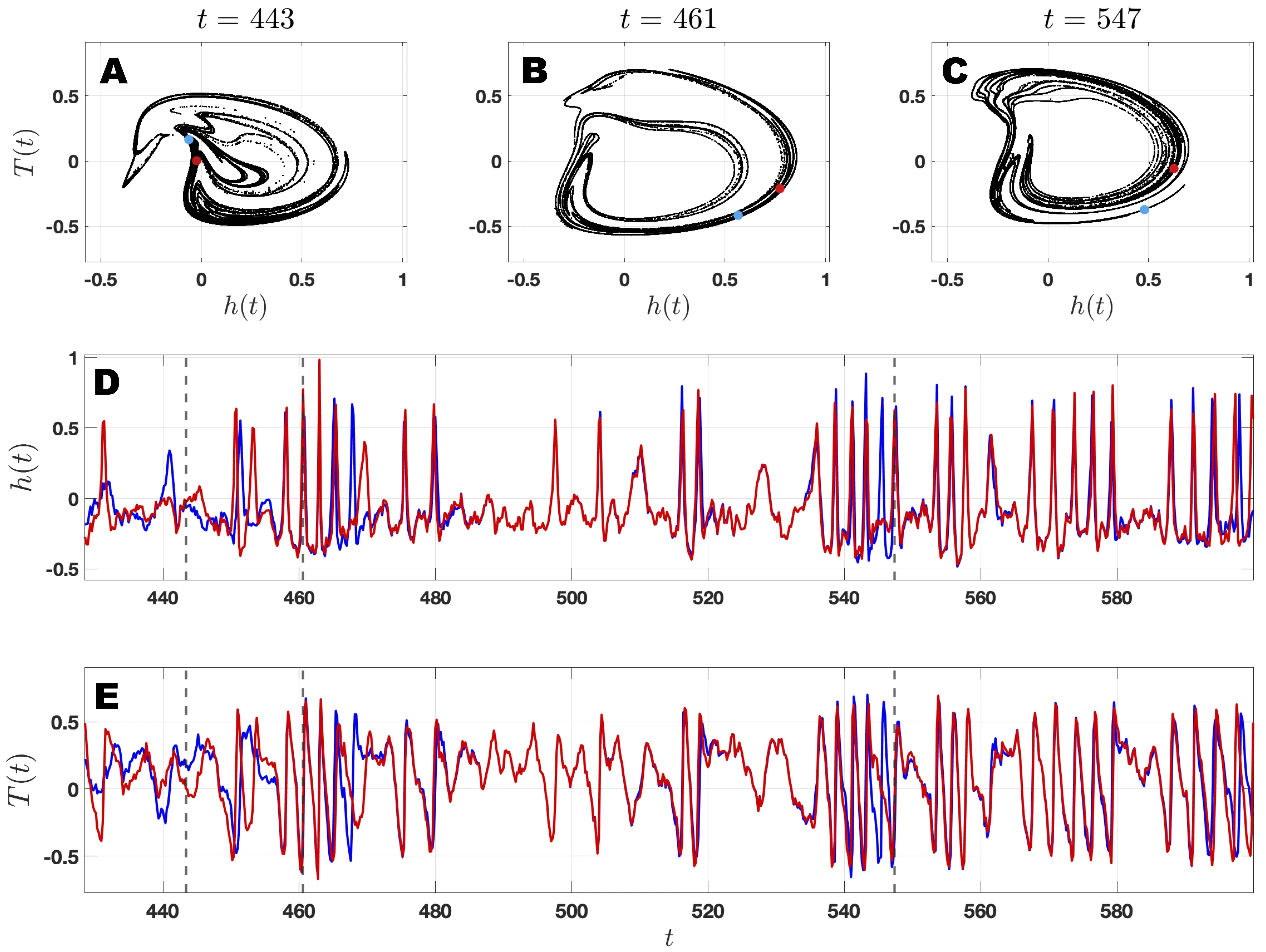
Climate is like an orchestra. It has its own natural rhythms, like the parts of violins and winds. Sometimes sharp sounds break into the music: a sudden gust of wind or a heavy downpour. Previously, scientists could only predict how the system would respond to gradual changes, while sharp sounds remained a mystery.
Now, formulas have emerged that help understand the response to any sharp jolt. The idea is simple: decompose the response into the same rhythms that are playing in the calm state. Then the reaction to a disturbance becomes a familiar melody, not a cacophony.
Testing on another climate model showed that the calculations match reality, although this requires more computation. But now we can assess how the climate will respond to extreme events and better prepare for them.
Ulam's method, used to estimate modes, was originally proposed by Stanislaw Ulam in the 1960s to study ergodic properties of dynamical systems, and now it helps analyze climate models with jumps.