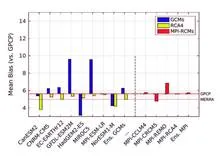
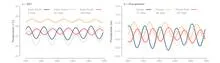
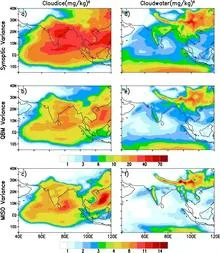
A coupled general circulation model (CGCM) is a computer simulation that represents the atmosphere and ocean as interacting fluid systems, along with land and ice components, to study climate. Unlike simpler models, it solves the fundamental equations of fluid motion and thermodynamics on a global grid, allowing it to simulate large-scale circulation patterns, ocean currents, and their mutual influences. These models are the primary tools for projecting future climate change and understanding past climate variability.
History
The first coupled atmosphere-ocean general circulation models emerged in the late 1960s and 1970s, with pioneering work by Syukuro Manabe and Kirk Bryan at NOAA's Geophysical Fluid Dynamics Laboratory. These early models were coarse and simplified, but they laid the foundation for modern climate projections.
How it works
The model divides the atmosphere and ocean into three-dimensional grids and computes how temperature, pressure, wind, and currents evolve over time steps. The atmosphere and ocean exchange heat, moisture, and momentum at their interface—for example, winds drive ocean currents, while ocean temperatures influence atmospheric pressure and precipitation. The model runs for simulated decades or centuries, producing a virtual climate that can be compared to observations and used for experiments.
In practice
CGCMs underpin the Intergovernmental Panel on Climate Change (IPCC) reports, providing projections of temperature rise, sea-level change, and extreme weather under different greenhouse gas emission scenarios.
Fun fact
Modern CGCMs run on supercomputers that can perform quadrillions of calculations per second, yet they still approximate clouds and small-scale turbulence rather than simulating them directly.
The temperature at the center of a galaxy cluster reaches a hundred million degrees. These largest gravitationally bound systems are natural laboratories where nature hides 85% of its mass in invisible dark matter.
A subway train races through a tunnel, yet passengers in the last car barely sway. Blood flow in the lungs works much the same way: the heart pumps blood in powerful spurts, but by the time it reaches the veins, the pulsation has almost vanished.
Water from a faucet boils quickly, but in the last moment before the boiling point, everything seems to freeze — bubbles hesitate, the temperature stalls. So it is in quantum systems: when a material approaches a critical point, its internal clock stretches to infinity.
Electric trains in the mountains are like voracious dragons: when they accelerate, they suddenly suck energy from the grid, fed by sun and wind, causing voltage spikes.
This voracity threatens chaos for the weak mountain power system.
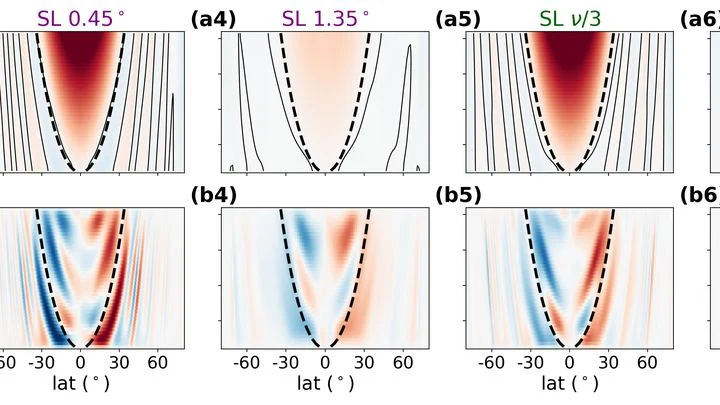
In the deep oceans of icy moons, water is not still. Warm plumes rise from the rocky seafloor, but the planet's rotation twists them into long, slanted rolls stretched along the rotation axis. Previously, this process could not be included in global models: it was too complex.
You can think of a political system as a vast galaxy — a gravitationally bound system of stars, gas, and dust. In this analogy, parties are the stars, radiating the light of public activity, while their supporters are dark matter, the invisible substance that emits no electromagnetic radiation but whose mass holds the whole structure…
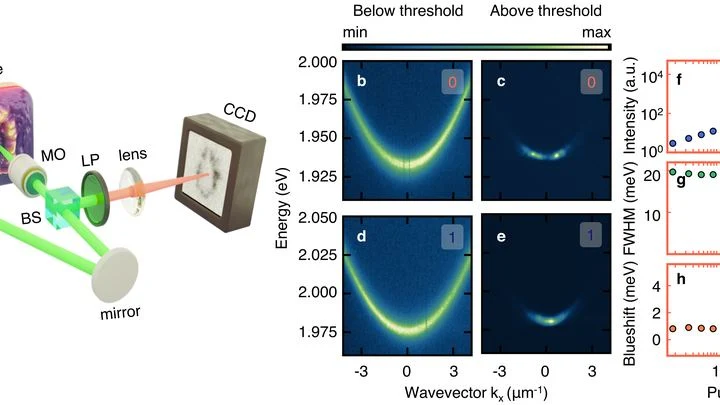
Generative neural networks that create images typically rely on digital randomness. But a team of researchers built a system where randomness is born not in code, but in a tiny optical cavity filled with an organic dye.
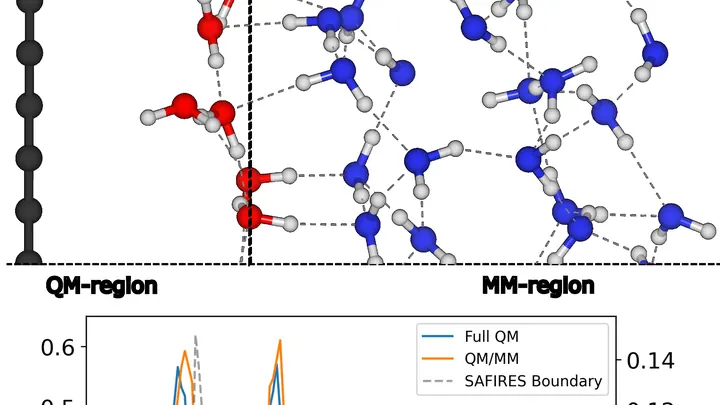
Imagine a huge swimming pool. In one corner, a chemical reaction is underway that needs to be calculated with jeweler-like precision. But the surrounding water is not just decoration: its molecules jostle, attract, and influence the reaction. How do you account for this endless dance of particles without drowning in calculations?
A heat engine doesn't have to be made of iron. In the microworld, a single electron can play the role of a piston, and the measurement process itself can serve as fuel. Two neighboring 'pockets' for electrons are connected by a narrow bridge.
Imagine a river that doesn't flow in an open channel but through the inside of a sponge, with its currents shifting from place to place. That's a good way to think about the brain's glymphatic system: a network of ultra-fine channels around blood vessels, through which cerebrospinal fluid seeps into the tissue and washes away the waste that has piled up during the day.
A translator gets distracted by every rustle in the hall, and a one-hour meeting stretches into two. Gluons, the particles that carry the strong force inside protons, behave much the same way. Usually, they dart back and forth, holding quarks together.
A chemical reaction resembles passing through a turnstile: a crowd creates chaos and gets stuck, while an orderly line moves. In the quantum world, however, when the jostling subsides, the barrier can become ghostly — a particle passes through it as if the turnstile has vanished.
Magnetic monopoles are like halves of a magnet that cannot exist alone in ordinary materials. But in spin ice, they appear in pairs connected by an invisible thread — a Dirac string. Previously, such monopoles were only seen in artificial systems at room temperature, but their quantum motion remained a mystery.
Plasma is a gas in which electrons are stripped from atoms, behaving like a soup of charged particles. To predict how such a soup flows and heats up, you need to know how particles collide and exchange energy.
Two people read the same book, but one turns the page first and then looks at the text, while the other does the opposite. It would seem the result is the same. But in the quantum world, the order of operations changes everything.
This work examines models that output sequences of symbols, like a ticket machine.
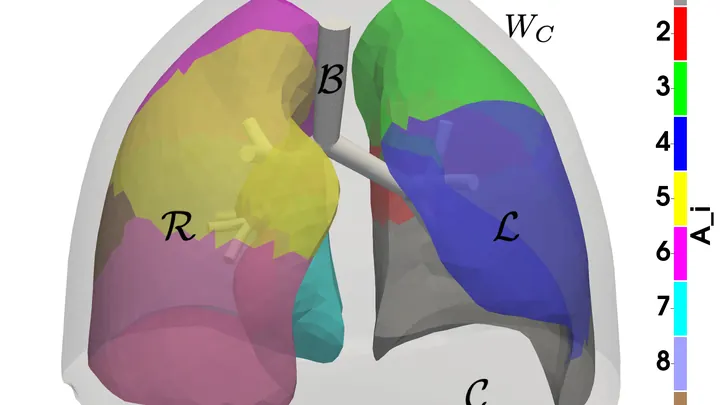
A lung scan reveals a tree: the trunk is the trachea, branches are the bronchi, and leaves are the alveoli. But how does air spread through these branches? Scientists built a computer model that replicates the lung's shape from images obtained via computed tomography.
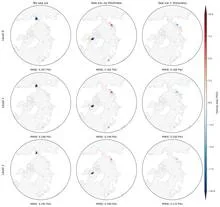
A student learned physics from a textbook and is taking an exam. The first two problems are solved brilliantly, but on the third, they err on something not covered in the book. That is roughly what the hybrid atmospheric model NeuralGCM faced when run through three levels of testing: cyclones, El Niño, and anomalous warming.
An epidemic is like a forest fire: the flames race toward where there are more dry branches. Similarly, a virus spreads faster where people live in closer quarters. But old mathematical models described infection as an ink blot spreading evenly across paper.
At the Large Hadron Collider, protons smash into each other like two trucks full of confetti. The debris, dozens of new particles, scatters in all directions. The detector records their tracks, and then the real work begins: piecing together a complete picture of the collision from those tracks.
Previously, this was done by a set of rules devised by physicists.
An ice core from Antarctica is a time machine that recorded the climate for 130,000 years straight, year after year, with no gaps. Air bubbles trapped in the ice preserve the carbon dioxide of those ancient eras.
Astronomers read the history of galaxies by their portraits. Previously, they used either lengthy analysis of light by colors or quick filtered snapshots, losing the details of shape.
Imagine an interpreter in a negotiation room who hears the tropics whisper and repeats it too loudly. That is how the neural-network climate model DLESyM behaves when forced with real Pacific sea surface temperatures. The ocean whispers "El Niño," and the atmosphere shouts back as if being shaken by the shoulders.
An orchestra of two musicians plays from the same score, but each hears only their own line. The atmosphere and ocean in a climate model resemble such a duet: they exchange heat and moisture every few hours, yet until recently their neural network counterparts could not keep a common rhythm.
A translator that learned the grammar of the wind, not just the vocabulary. The wind blows over the Pacific, and the water responds with waves, currents, and upwellings of cold depths. The KIST-Ocean neural network was taught not just to memorize how the ocean looked yesterday, but to understand why it will become what it is tomorrow.
A translator at a high-stakes negotiation doesn't just render words quickly; they make sure the meaning doesn't get lost. CAMulator does the same: it takes the complex climate model CAM6 and translates it into the language of a neural network that runs hundreds of times faster, without losing the physical essence.
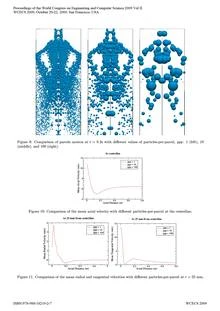
A vertical pipe with a sudden expansion is a classic testbed for turbulence. Air swirling like a tornado rushes into a wider chamber and spawns vortices, recirculation zones, and regions where glass particles 45 μm in diameter, about half the thickness of a human hair, dart along intricate paths.
In winter, air over the Northern Hemisphere does not move haphazardly; it spends days at a time in the same pattern before rearranging itself. These patterns are like rooms in a maze: the system enters, lingers, then finds a door to another room. Each room has its own weather: somewhere over Europe it is warm and humid, while over Siberia it is frosty and clear.
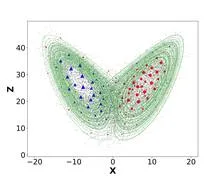
The orchestra plays the symphony of climate. Each violin, each wind instrument carries its own part: these are the Kolmogorov modes, the system's natural rhythms. Suddenly, a thunderclap bursts into the hall: a sharp jump, like a gust of wind or a downpour. Previously, we could only listen to the smooth sound, but we couldn't decipher such chords.
In the new work, mathematicians have completed the score.
An interpreter at a conference hears the noise of the hall but keeps translating. They don't repeat every word; instead, they find an intermediate language where complex phrases become simple, yet meaning is preserved.
Water remembers. Every current, every eddy, every degree of temperature in the ocean's depths does not vanish without a trace; it leaves a mark that can be read. But until recently, that mark was read only by bulky physical models that spent weeks on supercomputers and still got the details wrong.
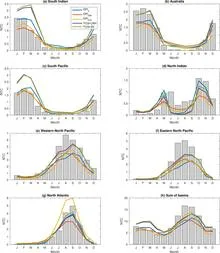
Over warm ocean waters, air rises, spins, and turns into a giant vortex that carries winds faster than a race car. For such a vortex to form, several conditions must align: rotation, heat, moisture, and calm winds aloft. Previously, meteorologists combined these conditions into complex indices, like a kitchen recipe with a dozen ingredients.
Every year, the same drama unfolds over West Africa: from June to September, the sky fills with moisture and releases rains that determine the harvests of millet, sorghum, and maize. This rainy season is driven by the West African monsoon, a giant atmospheric pump that pulls moist air from the ocean deep into the continent.
In 1960, a meteorologist at a station in Peru records water temperature, while a farmer in India watches the sky waiting for the monsoon. There is no direct link between these two events, but months later one will echo in the other.
Every summer, a giant atmospheric engine unfolds over India: moist ocean winds bring the rains that sustain crops and the lives of two billion people. But this engine sputters, and forecasting it a season ahead remains elusive. Models give only rough answers, and a monsoon forecast error can cost millions of tons of food.
A translator who hears only the meaning, not the noise in the hall, can convey a conversation accurately. Climatologists have long sought such a translator for the ocean–atmosphere pair: their interaction resembles a dialogue where voices drown in the roar of extraneous sounds.
The planet's winds are not free-flowing currents but rather obedient jets that can be nudged from an unexpected direction. The ocean surface, covered with waves, acts like a tuning knob: change its roughness, and giant air rivers shift by hundreds of kilometers.